Blog Content

22
Feb
2026

Public liability insurance for self employed builders protects you from costly third-party claims that could destroy your business. Whether you're framing houses in Newton or renovating kitchens in Wellesley, accidents happen - and without proper coverage, a single lawsuit could wipe out everything you've built.
Quick Answer: What You Need to Know
The construction industry is unforgiving when things go wrong. "I never thought it would happen on my site," is what most builders say after facing their first liability claim. In Massachusetts, where property values in towns like Brookline and Belmont can exceed $1 million, even minor accidents can result in massive financial exposure.
Why Massachusetts Builders Can't Afford to Skip This Coverage:
Public liability insurance for self employed builders glossary:
Picture this: you're renovating a beautiful colonial in Newton when disaster strikes. A piece of scaffolding topples over, damaging your client's prized rose garden and their neighbor's fence. Without public liability insurance for self employed builders, you'd be writing checks from your personal bank account – and trust me, those numbers add up fast.
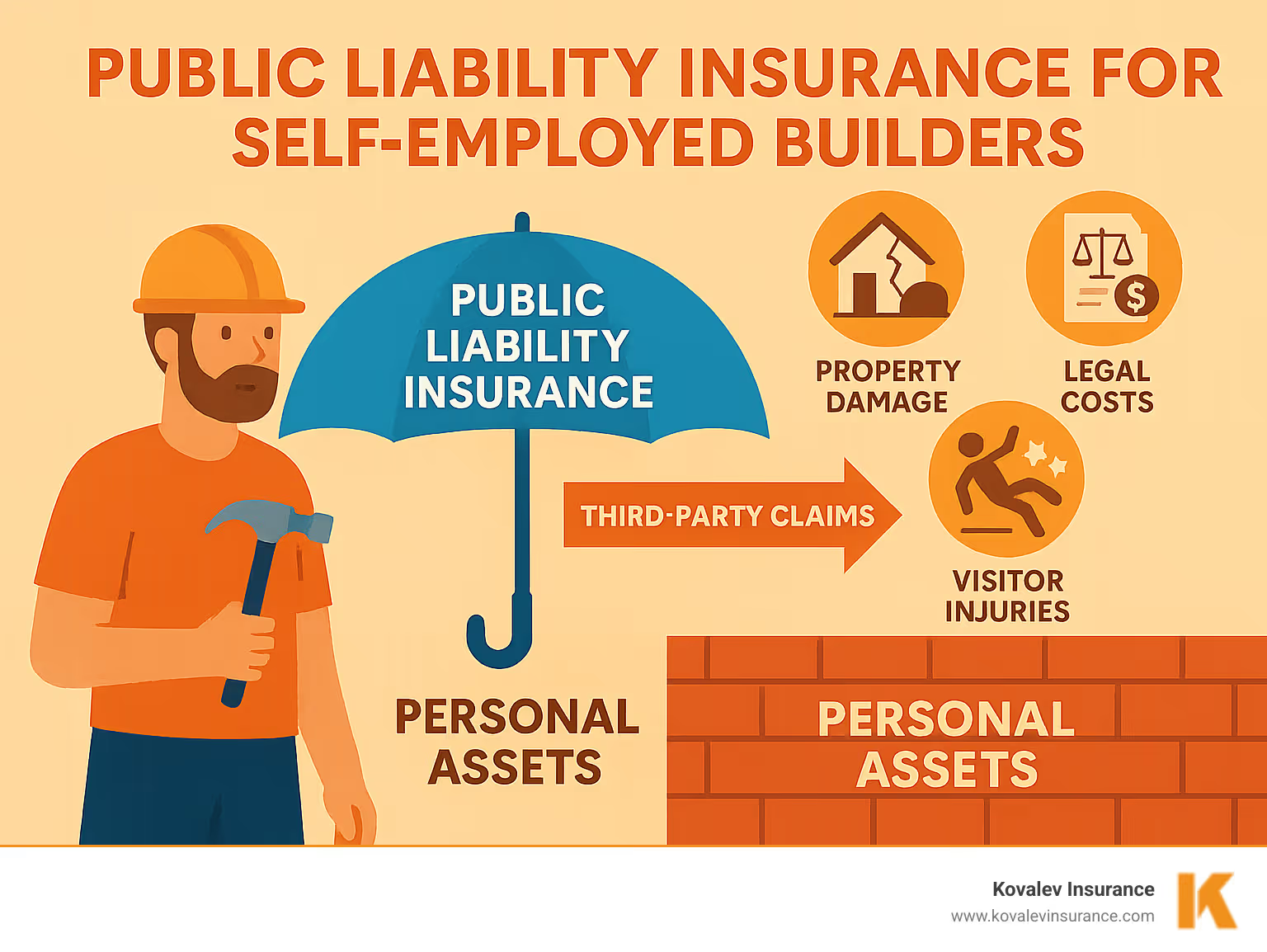
Public liability insurance for self employed builders is your financial shield against third-party claims. It protects you when clients, visitors, or the general public suffer bodily injury or property damage because of your work activities. Even better, it covers your legal defense costs whether you're found negligent or not.
This isn't just about accidents happening right now on your job site. The coverage extends to completed operations too. That means if faulty plumbing work you completed six months ago causes water damage, you're still protected. It's designed to keep your personal assets safe and ensure business continuity when life throws you a curveball.
Many client requirements and contractual obligations in the Massachusetts construction environment actually mandate this coverage before you can even start swinging a hammer. It's become as essential as your tool belt.
For a deeper dive into protecting your building business, check out our comprehensive guide on Building Contractor Insurance MA.
At its core, public liability insurance covers your legal liability to third parties – anyone who isn't you or your employee. We're talking about clients who trip over your tools, delivery drivers who slip on wet concrete, or curious neighbors who wander onto your site.
The magic happens during both on-site accidents and completed operations. Whether someone gets hurt while you're actively working or finds damage from your finished project months later, this insurance acts as your financial safety net.
Think of it as a protective bubble around your business. When something goes wrong, the insurance company steps in to handle the legal mess while you focus on what you do best – building.
Massachusetts isn't just any state – we're dealing with some seriously high property values in places like Brookline and Belmont. A simple mistake that might cost $5,000 to fix in another state could easily hit $25,000 here. When you're working on million-dollar homes, even minor accidents can create major financial headaches.
We live in what some call a litigious society. People know their rights and aren't afraid to use them. That innocent-looking homeowner in Wellesley might seem friendly, but if their antique hardwood floors get damaged, they'll expect full restoration – and they'll have the legal team to back it up.
Here's where it gets interesting: many subcontractor requirements now include proof of liability insurance before you can even bid on a job. It's become a standard way of proving professionalism in our competitive market.
Smart builders understand that carrying proper coverage isn't just about protection – it's about positioning yourself as a serious professional who takes responsibility seriously. Clients sleep better at night knowing their contractor is properly insured, and that peace of mind often translates into more referrals and repeat business.
Want to understand how this fits into your broader business protection strategy? Our guide on Business Liability Insurance Mass breaks down all the pieces of the puzzle.
As self-employed builders, we know that despite our best efforts and meticulous planning, accidents can and do happen. It's not about if, but when. Understanding the specific risks that public liability insurance for self employed builders covers, and what to do if an incident occurs, is vital for maintaining your peace of mind and business continuity.
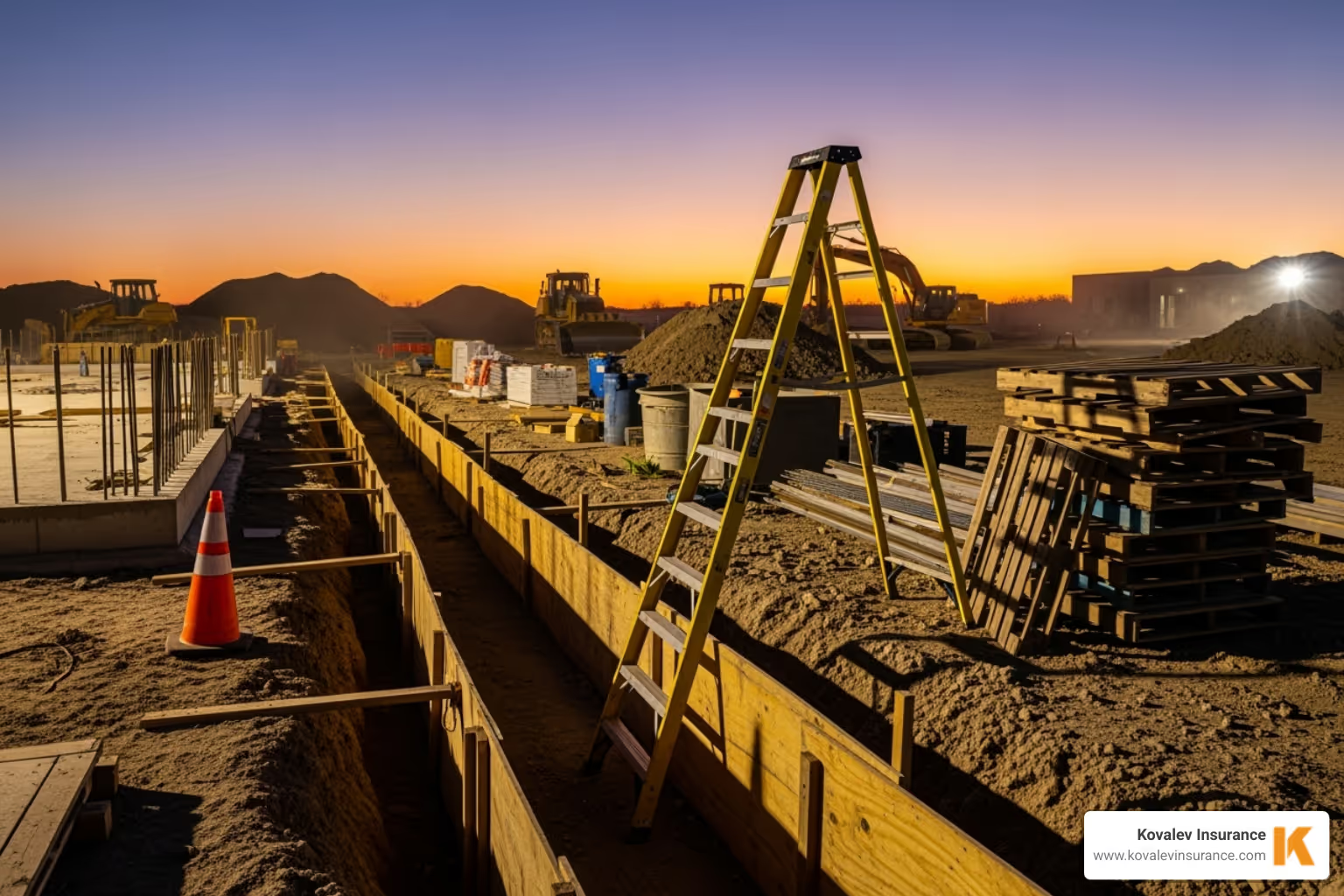
From a misplaced ladder to an unforeseen burst pipe, the construction environment is full of potential hazards. Slips and falls, falling debris, and even subtle vibrations that damage adjoining properties are all real concerns. For more details on common risks faced by various trades, visit our page on Risks Facing Artisan Contractors Mass.
Public liability insurance for self employed builders is designed to cover a broad spectrum of risks that could lead to third-party claims. Here are some common scenarios where your policy would likely step in:
Policies can vary. We always ensure your policy's business description is broad enough to cover all your activities, whether you're doing framing, roofing, remodeling, or specialized installations.
No one wants to experience a claim, but knowing the process can significantly reduce stress and improve the outcome. If an incident occurs, here's what to expect:
The importance of prompt communication and thorough documentation cannot be overstated. It makes the entire process smoother and helps ensure your claim is handled efficiently.
As a self-employed builder in Massachusetts, you're the backbone of your business. While public liability insurance for self employed builders is absolutely essential, it's just one vital piece of a larger puzzle when it comes to truly protecting your livelihood. Think of it like building a house: you wouldn't just put up walls; you'd need a roof, a foundation, and all the internal systems to make it safe and functional. Your insurance strategy should be just as comprehensive.
We face all sorts of risks in our line of work. A robust insurance plan means understanding how different policies fit together, creating a strong safety net for all those unique exposures.
Here’s a quick look at how public liability compares with two other crucial types of coverage:
For a deeper dive into construction insurance, refer to our Construction Insurance Cover Guide.
As builders, we often wear many hats. We don't just build; we might offer advice, help with design, or manage projects. This is where Professional Indemnity (PI) insurance, sometimes called Errors and Omissions (E&O) insurance, steps in. Unlike your public liability insurance for self employed builders, which covers physical injury or property damage, PI specifically handles claims of financial loss. These claims come from errors or omissions in your professional services.
Imagine you're advising a client on a tricky renovation in Belmont. If your advice on a structural change turns out to be faulty, leading to costly redesigns and delays, that's a financial loss for your client, not a physical injury. Or perhaps your design for a custom kitchen in a Brookline brownstone has a critical flaw, causing expensive rework. PI insurance protects you from these kinds of claims, covering legal fees and any resulting settlements. Many builders, especially those who offer design-build services, find this coverage incredibly valuable. Learn more about Professional Liability Insurance Mass.
If your business grows and you decide to hire even one person – full-time, part-time, or temporary – Employers' Liability (EL) insurance becomes a legal must-have in Massachusetts. This policy is different from public liability insurance for self employed builders because it specifically covers claims made by your own employees. It's there if they get injured or ill because of their work for you.
In Massachusetts, we have a system called Workers' Compensation. This system provides benefits to employees for work-related injuries or illnesses, no matter who was at fault. EL insurance then steps in to cover your legal responsibility if an employee sues you beyond what Workers' Comp provides, or for claims that aren't covered by Workers' Comp.
Even if you mostly work with subcontractors, it's really important to understand how Massachusetts classifies them. If a subcontractor operates in a way that makes them seem like an "employee" to the state (for example, working regular hours only for you, or using your equipment), you could still be responsible for their injuries. We always help our clients understand these distinctions to avoid unexpected problems. For more on worker safety and regulations, you can refer to the Massachusetts Department of Labor Standards.
To truly build a strong fortress of protection around your business, you'll want to consider a few more important types of insurance:
Each of these policies tackles a different risk that builders face every day. We're here to help you put together a complete insurance package that fits your unique business needs perfectly. For a comprehensive look at coverage options custom for various trades, check out our Artisan Contractors Insurance Mass page.
Let's be honest, one of the first questions on every self-employed builder's mind is, "How much is this going to cost me?" It’s a super valid question! While we'd love to give you one simple number, the truth is, public liability insurance for self employed builders is a bit like building a custom home. Every project is unique, and so is every insurance policy.

Generally, for basic coverage, you might see prices for public liability insurance for self employed builders start around $850 per year for $2 million in liability protection. If you need a bit more, say $3 million in coverage, that might go up to about $1100 per year. And for a robust $5 million in protection, you could be looking at roughly $1350 per year. Your deductible – that's the small amount you pay out-of-pocket if you make a claim – will also play a role, usually ranging from $250 to $1,500. It’s all about finding that sweet spot between protection and budget.
So, why the different prices? Several key things come into play when calculating your annual premium for public liability insurance for self employed builders:
First off, your specific trade makes a big difference. If you're doing higher-risk work like roofing or excavation, your premium might be a bit higher than someone focused on interior finishing or painting. Think of it this way: a handyman's insurance usually costs less than a plumber's, simply because of the different risks involved in their daily work.
Then there's the size and scope of your projects. Are you mostly tackling smaller residential renovations in charming towns like Belmont? Or are you diving into bigger, more complex commercial builds in busy downtown Boston? The scale and nature of your projects affect how much risk an insurer sees.
Your business revenue or turnover also matters. Insurers look at how much business you do each year as a sign of your activity and potential exposure. Generally, higher revenue means a slightly higher premium. And while you might be self-employed, if you frequently use subcontractors, their activities can influence your risk profile and, in turn, your premium.
The desired coverage limit you choose is a direct factor. The more protection you want – whether it's $1 million, $2 million, $5 million, or even more – the higher your premium will be. It's about how big of a safety net you want.
Finally, your past claims history plays a role. If you've had previous claims, it might suggest a higher future risk, which can lead to increased costs. But don't worry! Keeping good safety records and having clear procedures in place can really help keep those premiums stable. Even your location matters; operating in areas with high property values or a more litigious environment, like some of the affluent communities in Greater Boston, can sometimes influence costs.
At Kovalev Insurance, we pride ourselves on helping you find the best rates without ever compromising on the solid coverage you need. For more details on what affects general liability costs, check out our guide on General Liability Insurance MA Cost. We also share some handy tips on Ways to Reduce Cost of Artisans Insurance.
Choosing the right amount of public liability insurance for self employed builders isn't just about finding the cheapest option. It’s about making sure you have enough protection. Being underinsured can be just as risky as having no insurance at all!
First, always check your contract requirements. Many clients, especially for bigger projects, will spell out the minimum public liability coverage they expect. It’s super common to see requirements for $1 million, $2 million, or even $5 million in coverage. For really large commercial jobs, you might even need $10 million. Always, always read those contracts carefully!
We also encourage our clients to assess worst-case scenarios. What's the absolute maximum damage you could foreseeably cause to a high-value property in a place like Brookline or Needham? What if a serious injury happened on your job site? Thinking through these "what ifs" helps you understand the true level of protection you need.
While not legally required for self-employed builders in Massachusetts, public liability insurance for self employed builders is a widely accepted industry standard. Many builders carry more than the bare minimum because larger projects demand it, and honestly, a single big claim can easily blow past those minimum limits. While industry standards often hover around $5 million, we're seeing more and more builders opt for $10 million or even $20 million, especially here in our high-value Massachusetts market.
For most residential builders in Massachusetts, we usually recommend a minimum of $2 million to $5 million in public liability insurance for self employed builders. This gives you a really strong buffer against significant claims, especially considering the high cost of property and medical care in our state.
We're here to help you figure out your specific risks and nail down the perfect coverage limits for your business. That way, you're truly protected without paying for more than you need.
As a self-employed builder in Massachusetts, you've chosen a path that offers incredible rewards - the satisfaction of changing empty lots into dream homes, the pride of seeing families move into spaces you've created, and the freedom to be your own boss. But with those rewards comes real responsibility, especially when it comes to protecting what you've worked so hard to build.
Public liability insurance for self employed builders isn't just another line item on your business budget - it's the foundation that keeps your entire operation stable when the unexpected happens. Think of it as the safety harness that lets you work confidently at heights, knowing you're protected if something goes wrong.
Throughout this guide, we've walked through how this essential coverage acts as your financial shield against third-party claims, whether it's a visitor injury on your Newton job site or accidental damage to a neighbor's property in Wellesley. We've shown you how it differs from professional indemnity and employers' liability insurance, and why each plays a unique role in your overall protection strategy.
The reality is simple: in Massachusetts, where a single-family home in Brookline can easily top $1 million and medical costs continue to climb, even a minor accident can create major financial headaches. Without proper coverage, one lawsuit could wipe out years of hard work and potentially force you out of business entirely.
But here's the good news - public liability insurance for self employed builders gives you the confidence to bid on bigger projects, work with high-end clients, and sleep soundly knowing your personal assets are protected. It transforms you from just another contractor into a professional who takes business seriously.
At Kovalev Insurance, we've spent over two decades helping builders across Newton, Wellesley, Needham, Belmont, Natick, and the greater Boston area find the right protection at the right price. We understand that every builder's situation is unique - from the weekend warrior doing small renovations to the established contractor managing multiple crews.
Our approach is straightforward: we listen to your specific needs, explain your options in plain English, and work hard to get you the best rates available. No insurance jargon, no pressure tactics - just honest advice from people who understand your business.
The construction industry will always have its risks, but you don't have to face them alone. With the right insurance partner and proper coverage in place, you can focus on what you do best - building quality projects that make your clients happy and your business thrive.

Ready to protect your business and secure your peace of mind? Get a quote for your Artisan Contractors Insurance in Mass today and let us help you build a solid foundation for your financial future.



X