Unpacking Your Policy: A Deep Dive into Condo Association Insurance Coverage
30
Jun
2026
Author:
Michael Kovalev
What is Condo Association Insurance and Why is it Crucial?
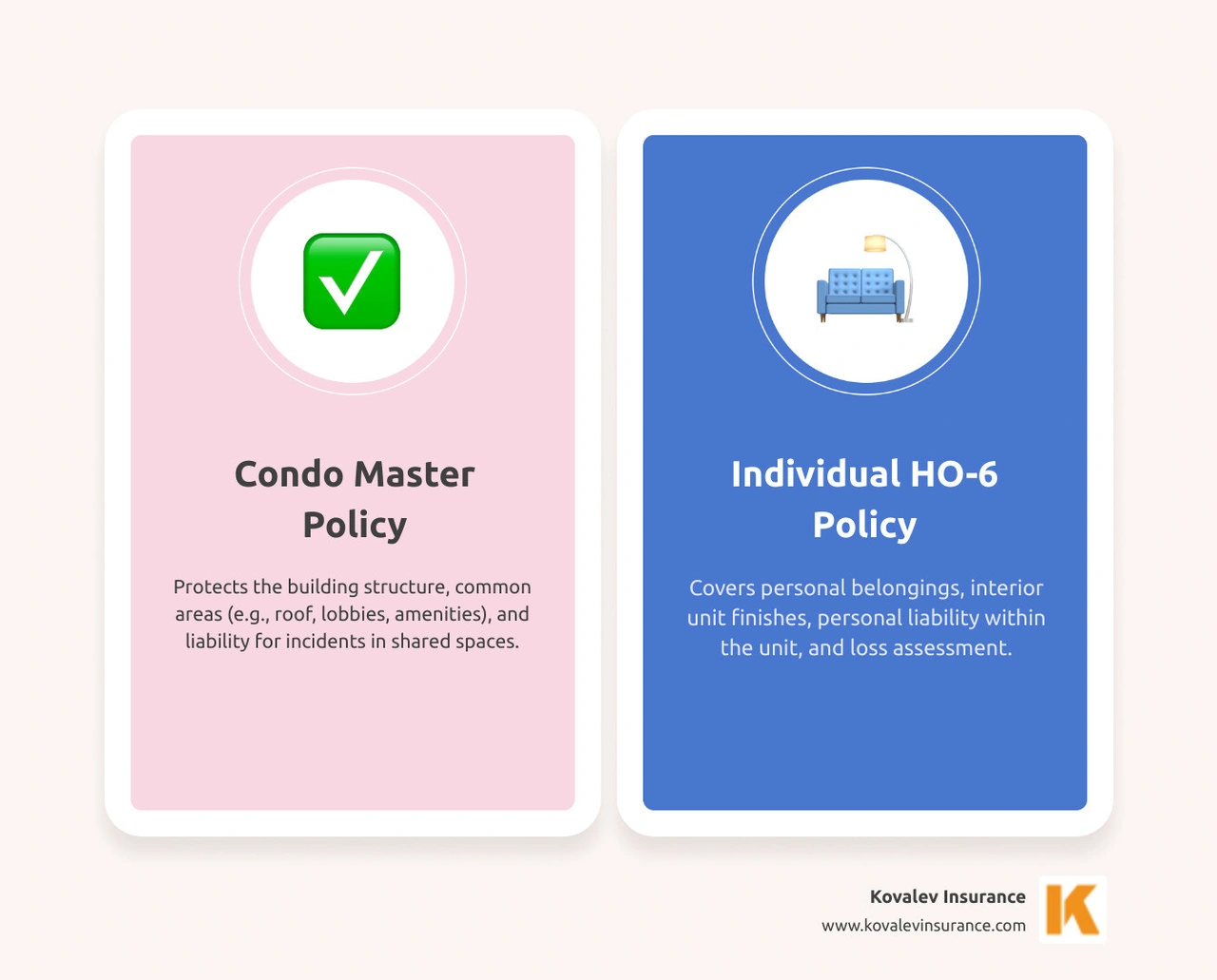
Condo association insurance is a master policy that protects the common areas and shared structures of a condominium building, including the exterior, roof, hallways, and amenities. It also covers liability for incidents in these shared spaces. This policy is purchased by the association and funded through condo fees, but it typically does not cover the interior of individual units or personal belongings—that's where individual HO-6 policies come in.
In Massachusetts, this is crucial. Water damage makes up more than 60% of all condominium insurance claims, with deductibles ranging from $5,000 to $100,000. In communities like Newton, Wellesley, and Brookline, understanding who pays for what can mean the difference between a minor inconvenience and a financial crisis. The master policy protects shared property, but gaps can leave owners exposed to major costs.
As Mikhail Kovalev, I've helped many Massachusetts condo associations secure adequate condo association insurance. At Kovalev Insurance Agency, we've seen how the right policy prevents costly disputes and special assessments.
The Master Policy vs. Your Personal HO-6 Policy
Understanding the roles of the master policy and your individual HO-6 policy is key. The condo association insurance (master policy) is a building insurance policy. It covers the physical structure, common elements (lobbies, elevators, roofs), and provides liability coverage for injuries in these common areas.
Your personal condo insurance, an HO-6 policy, covers what the master policy doesn't:
Personal Belongings: Furniture, electronics, and clothing.
Interior Finishes: Upgrades you've made, like custom cabinets or flooring.
Liability within Your Unit: Protection if someone is injured inside your condo.
Additional Living Expenses: Covers temporary housing if your unit is uninhabitable due to a covered loss.
Loss Assessment Coverage: Helps pay your share if the association's master policy limits are exceeded or a special assessment is levied for a covered loss.
While the association pays for the master policy through your fees, the HO-6 policy is your responsibility. It's essential to ensure your HO-6 complements the master policy to fill any gaps.
Feature
Master Policy Coverage (Condo Association Insurance)
HO-6 Coverage (Individual Condo Owner Insurance)
Building Structure
Yes (exterior, roof, common walls)
No (except for "bare-walls" policies, then individual unit structure)
Yes (for incidents in your unit, personal actions)
Loss Assessment
No (this is a risk for unit owners)
Yes (covers your share of a master policy deductible or special assessment)
Additional Living Exp.
No
Yes (if your unit is uninhabitable)
To protect your personal assets, explore our options for personal insurance.
Understanding the Three Types of Master Policies
The type of master policy dictates how much your HO-6 needs to cover. This is often defined in the association's bylaws and its "standard unit definition."
Bare-Walls Coverage: This basic policy covers only the building's primary structure and common areas. Unit owners are responsible for everything inside their unit, including drywall, flooring, and fixtures. If your association in Natick has this policy, you need a robust HO-6.
Walls-In Coverage (or Single-Entity Coverage): This policy covers the building, common areas, and the standard fixtures and finishes within each unit as originally built. It typically won't cover any upgrades or improvements you've made.
All-In Coverage (or Modified Single-Entity Coverage): This is the most extensive policy, covering the building, common areas, and everything within units, including fixtures, installations, and sometimes owner upgrades. It reduces what an HO-6 needs to cover, leaving just personal belongings and liability.
The "standard unit definition" in your condo documents is crucial, as it defines what the master policy covers. Anything beyond that, especially upgrades and betterments, falls to your HO-6 policy. We advise Massachusetts condo owners to review bylaws to understand their policy and prevent surprises.
Condo association insurance is a comprehensive shield for communal living. In Massachusetts, these coverages are essential for the financial stability and peace of mind of the community.
What Core Coverages are in a Condo Association Insurance Policy?
A robust condo association insurance policy includes several layers of defense:
Building Property Coverage: Covers physical damage to the condo buildings and common elements (exterior, roof, clubhouses, pools) from perils like fire, wind, and vandalism. Ensuring this is based on full replacement value is critical in high-value areas like Wellesley.
Commercial General Liability (CGL): Protects the association against claims for bodily injury or property damage on common property, like a visitor slipping on an icy walkway. Massachusetts requires at least $1,000,000 in coverage, though many associations opt for higher limits.
Directors and Officers (D&O) Liability: Protects board members from lawsuits arising from alleged wrongful acts or errors in their duties, such as mismanagement of funds or failure to maintain common areas.
Crime/Fidelity Insurance: Protects the association's funds against theft, fraud, or embezzlement by board members, employees, or property managers.
Equipment Breakdown (Boiler & Machinery): Covers damage to essential equipment like boilers, HVAC systems, and elevators due to mechanical or electrical breakdown.
Cyber Liability Insurance: Protects the association from costs associated with data breaches, hacking, and privacy violations involving sensitive owner data.
Flood Insurance: Standard policies exclude flood damage, making this a critical addition in many Massachusetts communities. It protects against rising water, storm surge, or sewer backup. We can help you steer National Flood Insurance Program (NFIP) options.
Understanding common claims and how deductibles work is crucial for boards and unit owners in places like Brookline or Newton.
Common claims include:
Water Damage: The most frequent claim, accounting for more than 60% of all claims. It can stem from burst pipes, leaky roofs, or appliance failures.
Slip and Fall Incidents: Common liability claims from injuries in lobbies, on sidewalks, or in other shared spaces.
Roof Damage: Harsh New England winters can cause leaks and structural damage.
Fire: While less frequent, fires can cause catastrophic damage to multiple units.
A deductible is the amount the association pays out-of-pocket before insurance covers the rest. For condo associations, these can be substantial, ranging from $5,000 to $100,000, especially for water damage.
Who pays this deductible?
The association is primarily responsible, using reserve funds or a special assessment levied on all unit owners.
However, a unit owner might be responsible for the deductible if the damage originated in their unit or if the bylaws assign this responsibility.
This is why your HO-6 policy's loss assessment coverage is so important; it can help cover your share of the master policy's deductible if you're assessed for it. We work with our clients in Newton, Wellesley, and surrounding areas to clarify these deductible responsibilities to avoid disputes when a claim arises.
Managing Your Association's Policy in Massachusetts
Effectively managing your condo association insurance requires a proactive approach, especially in Massachusetts. For condo boards in communities like Newton, Wellesley, and Brookline, this means fulfilling key responsibilities to protect the association and its residents.
Board Responsibilities and Legal Requirements
The condo board acts as a fiduciary steward for the association, making sound insurance decisions. Their responsibilities are significant:
Purchasing and Maintaining Coverage: The board is responsible for procuring and renewing adequate condo association insurance. In Massachusetts, General Laws Chapter 183A mandates that condominium organizations maintain hazard insurance for the common areas.
Annual Policy Review: The board should conduct an annual review of the policy to ensure it reflects current property values (especially replacement costs) and covers any new risks.
Communicating with Owners: Boards should inform unit owners about the specifics of the master policy, including coverage types, limits, and deductible responsibilities. This helps owners understand what their individual HO-6 policies need to cover.
Risk Management: A proactive board will work with their insurance broker to identify potential risks and implement measures to mitigate them, such as maintenance schedules or security upgrades.
Failure to uphold these responsibilities can have severe consequences, including personal liability for board members. We help Massachusetts condo boards navigate these complex requirements. Learn more about our support for local businesses and associations on our business insurance page.
Determining the Cost of Condo Association Insurance and Getting Coverage
The cost of condo association insurance is influenced by a variety of factors:
Location and Risk: Proximity to coastal areas in Massachusetts can increase premiums due to higher risks of windstorm or flood damage.
Building Age and Construction: Newer, well-maintained buildings with modern construction and safety features (like sprinkler systems) often qualify for lower rates.
Claims History: A history of frequent or large claims, particularly for water damage, will almost certainly lead to higher premiums.
Coverage Limits and Deductible Amount: Higher coverage limits mean higher premiums. Choosing a higher deductible can lower premiums, but the board must ensure the association has funds to cover it.
Types of Coverage Purchased: Adding specialized endorsements like cyber liability or flood coverage will increase the overall premium.
Who Pays? The cost of the condo association insurance is typically factored into the monthly or annual condo fees paid by all unit owners.
At Kovalev Insurance, we provide personalized commercial insurance for condo associations in Newton, Wellesley, Brookline, Needham, Belmont, and Natick. We understand the unique challenges these communities face and find custom coverage at competitive rates.
Ready to explore options for your condo association? Contact us for a quote today to secure the robust protection your community deserves. Learn more about our commercial insurance options and how we can support your association.