Blog Content

24
Mar
2026

Condominium insurance massachusetts is essential protection that covers what your condo association's master policy doesn't: your personal belongings, interior improvements, and liability risks. Here's what every Bay State condo owner needs to know:
Quick Answer for Massachusetts Condo Insurance:
Condo living in Newton, Wellesley, or Brookline offers homeownership without the maintenance headaches. But many owners make a costly mistake: assuming their association's insurance covers everything.
It doesn't.
Your association's master policy typically covers the building and common areas. Everything inside your unit—from furniture to kitchen cabinets—needs your own separate policy.
The good news is that condo insurance is budget-friendly. Averaging $669 per year in Massachusetts, it's a small price for protecting your largest investment.
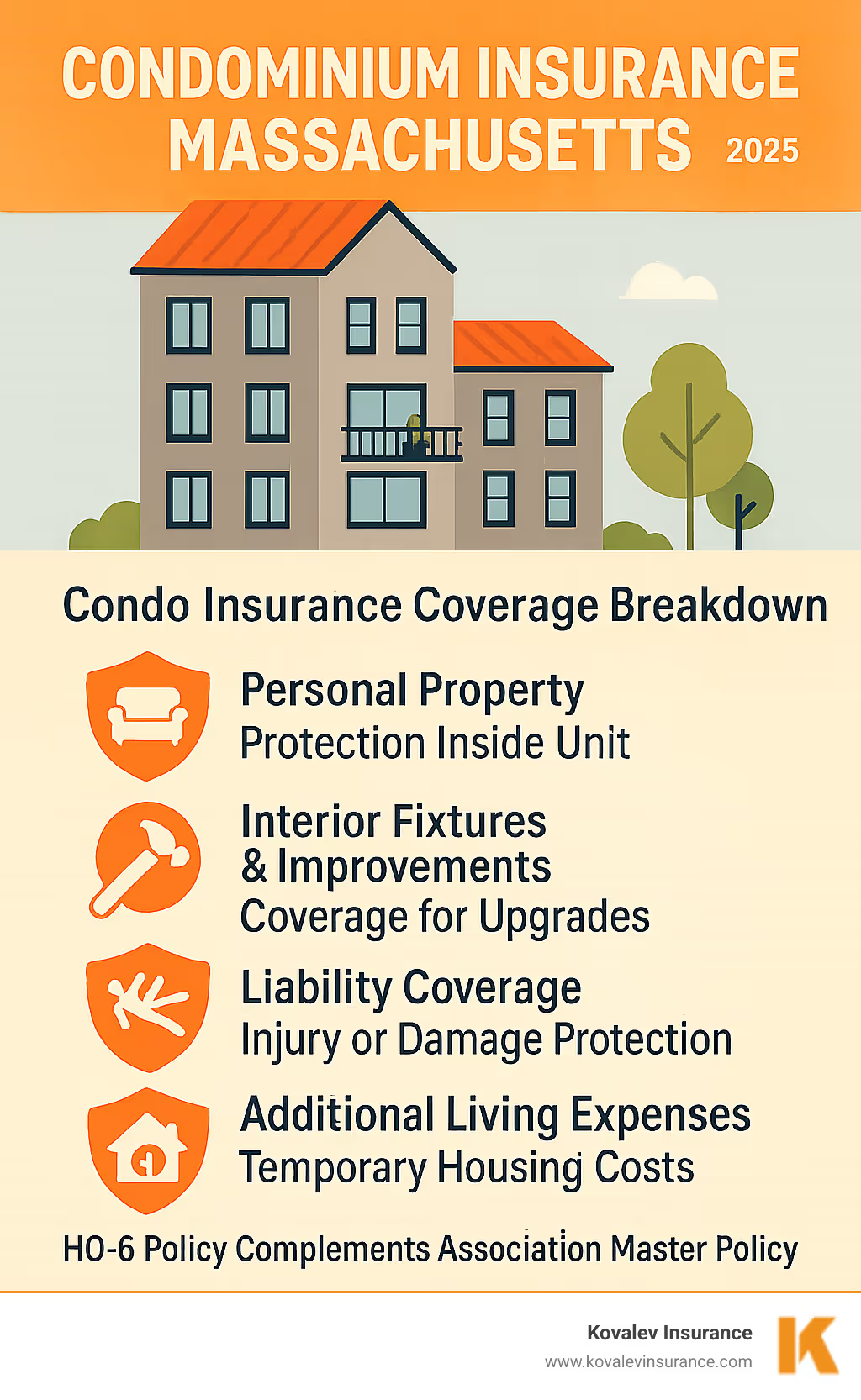
Think of condominium insurance massachusetts (also known as an HO-6 policy) as your personal safety net, designed specifically for condo owners. It's often called "walls-in" coverage. While your condo association's policy covers the building's exterior and common areas, your HO-6 protects everything inside your unit.
Your policy covers the interior structure (cabinets, flooring, fixtures) and all your personal belongings. To learn more about the broader scope of coverage, check out what MA home insurance covers.

Let's break down what your HO-6 policy covers:
This is the heart of your policy, protecting your furniture, electronics, clothing, and other valuables. Many Newton and Brookline condo owners don't realize this coverage is worldwide. If your laptop is stolen from your car or luggage disappears on vacation, your policy can help.
We'll help you choose between Replacement Cost (pays for a new item) and Actual Cash Value (pays for depreciated value). Most clients prefer replacement cost to avoid a financial shortfall after a loss.
While the association covers the building's structure, your HO-6 policy covers interior elements like cabinets, flooring (hardwood in Wellesley or tile in Needham), countertops, and fixtures. This includes interior walls (drywall, paint) and any upgrades or betterments you've made, like a renovated kitchen or bathroom.
Figuring out where your association's coverage ends and yours begins can be tricky. We'll review your condo documents to ensure there are no gaps. For more details, you can read about all-in coverage.
Accidents happen. Liability coverage protects you if a guest is injured in your unit or if you accidentally cause property damage to others. For example, if a friend slips in your Belmont condo, your liability coverage can help with legal defense costs and medical bills if you're found responsible.
This protection can also cover damage to a neighbor's unit, like from a water leak. For more insights, check our guide on MA auto and liability insurance.
If a disaster makes your condo temporarily unlivable, Loss of Use coverage (also called Additional Living Expenses) helps. If a fire or burst pipe from a covered peril forces you from your Natick condo, this coverage helps pay for temporary housing costs like hotel bills and restaurant meals.
The goal is to prevent a covered disaster from becoming a financial one, allowing you to focus on getting back to normal while your condo is repaired.
Imagine a pipe bursts in the unit above your Newton condo, damaging your floors and furniture. You call the condo association, but they say their policy only covers the building's structure, not your unit's interior. This is a common scenario in Massachusetts. Many condo owners mistakenly assume their association's master policy provides complete protection.
Your condo association's master policy protects shared elements: the exterior walls, roof, foundation, lobbies, hallways, elevators, and common amenities. As an individual owner, you're responsible for everything inside your unit, which is covered by your own HO-6 policy.
Here's how the coverage divides:
` tags:
```html
What is an HO-6 Policy?An HO-6 policy is the industry's name for condominium insurance. It's designed for condo owners in places like Wellesley and Brookline. Your HO-6 policy complements your master policy, filling in coverage gaps to ensure you're fully protected. This standardized system helps clarify coverage needs. Types of Master Policies and How They Affect YouIt's crucial to review your condo documents because the type of master policy your association has directly affects what your HO-6 needs to cover. There are three main types:
The key is to review your condo documents (Declaration or Bylaws) to understand your association's coverage. Then, we can tailor your condominium insurance massachusetts policy to fill any gaps without paying for duplicate coverage. Loss Assessment CoverageA "special assessment" from your condo association can mean unexpected costs. This often happens when the master policy can't cover a major loss or the association faces a large deductible. For example, if a nor'easter causes major roof damage to your Belmont building and the master policy deductible is $25,000, the association might assess each owner their share to cover it. Loss Assessment Coverage in your HO-6 policy helps pay your share of these shared losses. It's a financial safety net for surprise bills. We'll help you choose a limit based on your association's deductible and risks. How Much Does Condo Insurance Cost in MA?Condominium insurance massachusetts is typically more affordable than homeowners insurance because you're only insuring your unit's interior and belongings, not the entire building. The average cost in Massachusetts is around $669 annually, or $56 per month. Some of our clients in Newton and Wellesley pay as little as $35 to $40 monthly. That's less than $2 a day to protect your largest investment. For a more detailed breakdown, check our guide on MA condo and homeowners insurance costs.  What Factors Influence the Average Cost of Condominium Insurance in Massachusetts?While $669 is the average, your premium depends on several factors:
How Your Location in Massachusetts Affects Your PolicyMassachusetts' diverse geography means different insurance risks. A condo on the coast will likely have higher rates due to coastal risks like nor'easters. Urban versus suburban rates vary. Dense areas like Cambridge may have higher theft rates, while suburban areas like Wellesley or Natick may have different risk profiles. The proximity to fire services and local crime statistics also affect your premium. Condos near a fire station often get better rates. Similarly, neighborhoods with lower crime rates typically see lower insurance costs. Fortunately, many communities in the greater Boston area, like Newton and Belmont, have excellent fire protection and low crime rates. How to Save Money with DiscountsThere are several reliable ways to lower your condominium insurance massachusetts premium without sacrificing coverage.
Working with an agent who knows all available discounts is key. At Kovalev Insurance, we ensure you get every discount you qualify for to achieve the best possible rate. Special Considerations for Bay State Condo OwnersMassachusetts weather, from nor'easters to surprise snowstorms, presents unique insurance considerations for condo owners.  Is Flood or Earthquake Coverage Included?A standard condominium insurance massachusetts policy has key exclusions, most notably flood damage and earthquake damage. Generally, water damage from above (like a burst pipe) is covered, but water damage from the ground up (like a flood) is not. Massachusetts faces flood risks from nor'easters and heavy rain, affecting both coastal and inland communities like Needham and Wellesley. Flood protection requires a separate policy, usually from the National Flood Insurance Program (NFIP). These policies are often affordable for condo owners. Earthquake coverage is also separate. While the risk in Massachusetts is low, it's worth discussing, especially for owners in older buildings. The key is to understand these gaps and make informed decisions about additional protection. What Information Do You Need for a Quote?Getting a quote for condominium insurance massachusetts is a straightforward process we've streamlined for accuracy and ease. Here's what we'll typically need:
Don't stress about having every detail. We can start with the basics. Our goal is to get you protected easily and ensure you understand your coverage. Frequently Asked Questions about Massachusetts Condo InsuranceI've helped thousands of Bay State condo owners, from first-time buyers in Newton to seasoned owners in Brookline. Here are answers to the most common questions about condominium insurance massachusetts. What is the main difference between condo insurance and homeowners insurance?The main difference is what you're responsible for insuring. Homeowners insurance (an HO-3 policy) for a house in Wellesley covers the entire structure and property. As a condo owner, your association's master policy covers the building's exterior and common areas. Your condominium insurance massachusetts policy (an HO-6) covers your unit's interior, personal belongings, and liability. In short, condo insurance covers your portion of a shared building, which is why it typically costs less than homeowners insurance. For a cost comparison, see our guide on condo vs homeowner insurance cost in MA. Is condo insurance required by law in Massachusetts?While Massachusetts state law doesn't require condo insurance, you will almost certainly need it for other reasons.
Even if not required, condominium insurance massachusetts is essential. Without it, you'd be personally responsible for all losses and liability claims, a risk few can afford. How much liability coverage should I have?This is a critical question. While standard policies may offer $100,000 in liability coverage, that's rarely enough today. We recommend at least $300,000 to $500,000 in personal liability coverage. For those with significant assets, $1 million is a wise investment. The cost to increase limits is often surprisingly small. Higher limits are crucial because liability claims can be expensive, covering not just medical bills but also lost wages and legal fees. If a claim exceeds your limit, your personal assets are at risk. For those with substantial assets, an umbrella insurance policy provides an extra layer of liability protection (typically $1 million or more) over your condo and auto policies. Learn more about homeowners umbrella insurance cost to see if it's right for you. With liability coverage, it's better to have too much than too little. The peace of mind is worth the modest cost. Get the Right Protection for Your Massachusetts CondoCondo living in Newton or Brookline offers great convenience. Protecting your investment shouldn't be stressful, which is why we're here to guide you through condominium insurance massachusetts. Your HO-6 policy is a financial safety net. It protects your belongings, custom upgrades, and provides liability protection, whether you're in your Belmont condo or traveling. We help you understand how your policy works with your association's master policy, creating seamless protection without gaps or overlaps. For over a decade, we've helped MA condo owners, from decoding bylaws in Needham to explaining coverage in Natick. The right custom coverage provides peace of mind. Protecting your investment is about more than meeting requirements; it's about knowing you're prepared for the unexpected. Your condo deserves thoughtful protection. At Kovalev Insurance, we combine local expertise with personalized service in the greater Boston area. We build relationships and provide the swift, attentive service you deserve when protecting what matters most. Ready to find how affordable and comprehensive condominium insurance massachusetts can be? Let's chat about your specific needs and create a policy that fits your life perfectly. Contact us for a personalized Massachusetts condo insurance quote. Related Posts    ContactDisclosuresRequest an Insurance QuoteX Thank you! Your submission has been received! Oops! Something went wrong while submitting the form. |