Blog Content

18
Feb
2026
Understanding Massachusetts what does condo building insurance cover can be confusing. Unlike single-family homes, condos require two separate policies that work together to protect your investment.
Quick Answer: Massachusetts Condo Building Insurance Coverage
Many condo owners in Newton, Wellesley, and Brookline don't fully grasp the division between their building's master policy and their personal insurance needs. This knowledge gap can leave you financially exposed when disaster strikes.
Here's what makes Massachusetts condo insurance unique:
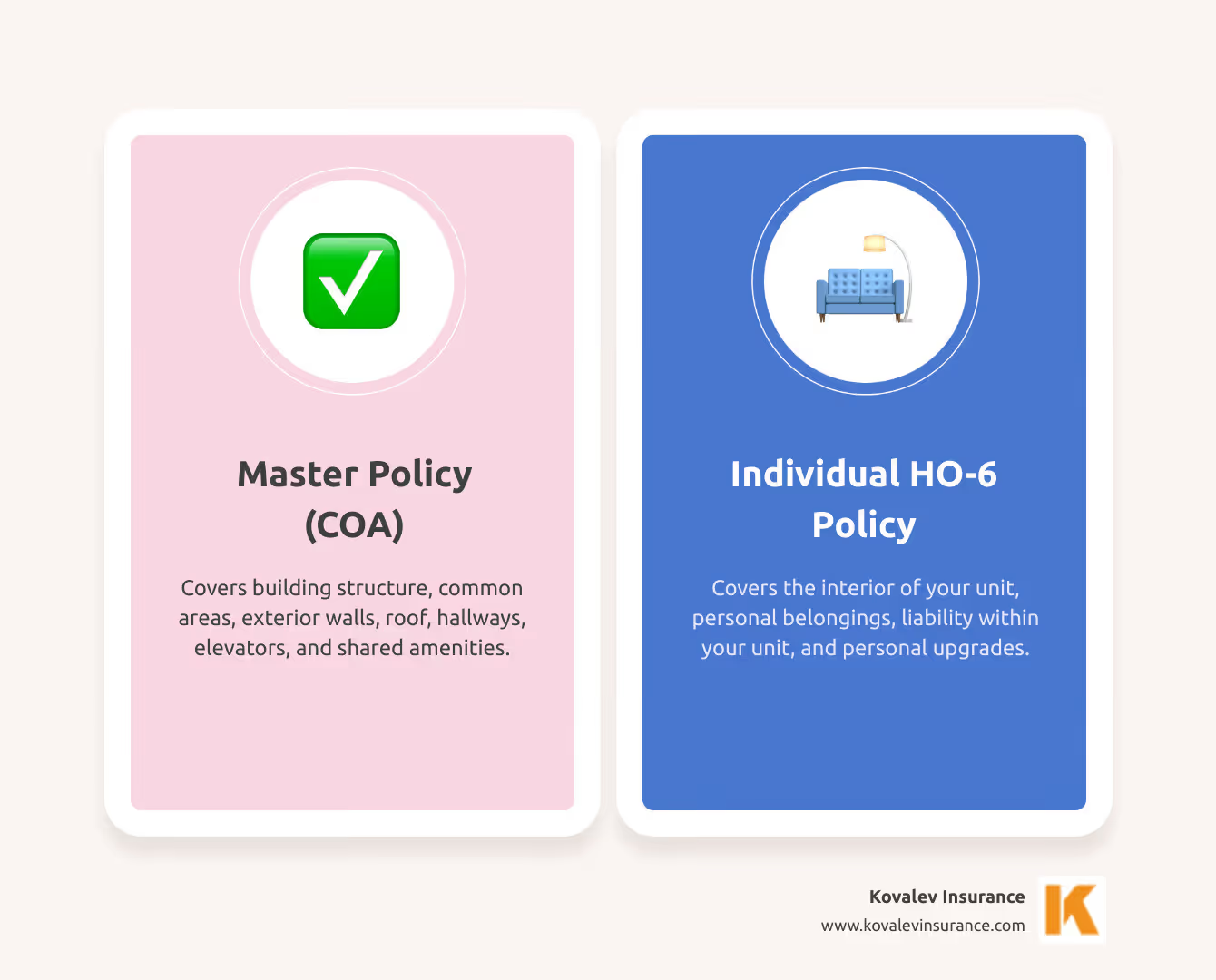
When you buy a condo in Massachusetts, you enter a world of shared ownership. Your condo association (COA) handles certain responsibilities, while you handle others. This shared model creates a unique insurance puzzle. The question of massachusetts what does condo building insurance cover depends on which of the two required policies we're discussing.
Your COA manages the master policy, which covers shared spaces and structural elements. You are responsible for your personal space and belongings with an individual HO-6 policy. While Massachusetts law doesn't mandate an HO-6 policy, your mortgage lender and condo association almost certainly will. In places like Newton or Wellesley, these requirements are written into the bylaws. The two policies work together to provide seamless protection.
For more details, you can review Understanding Homeowners Insurance in Massachusetts or explore More info about Massachusetts Home Insurance Terms.
So, massachusetts what does condo building insurance cover under the master policy? This policy is purchased by your condo association, funded by your condo fees, and protects everything you share with your neighbors. This includes the building's essential structure—exterior walls, roof, and foundation—along with common areas like lobbies, hallways, elevators, and amenities such as pools or fitness centers. The master policy also includes crucial liability coverage for the association. If someone is injured in a common area, this policy handles the medical and legal costs, protecting all unit owners from financial exposure.
Your HO-6 policy picks up where the master policy stops: at your front door. This personal policy is designed specifically for condo owners.
The HO-6 policy is custom for the unique needs of condo owners, providing protection beyond what a renter needs but without insuring the entire building. For more on this specialized coverage, see What is HO-6 Insurance?.
Understanding massachusetts what does condo building insurance cover means knowing the limits of your condo association's master policy. This policy is the protective umbrella for the entire building, covering the structural backbone and shared spaces.
The master policy protects the building's foundation, exterior walls, and framework. It also covers common areas like lobbies, hallways, stairwells, and amenities like pools or fitness centers in complexes from Natick to Needham. The critical detail for any condo owner in Wellesley or Brookline is knowing how far that coverage extends into your personal unit.
Not all master policies are the same. The type your association has determines how much individual coverage you need.
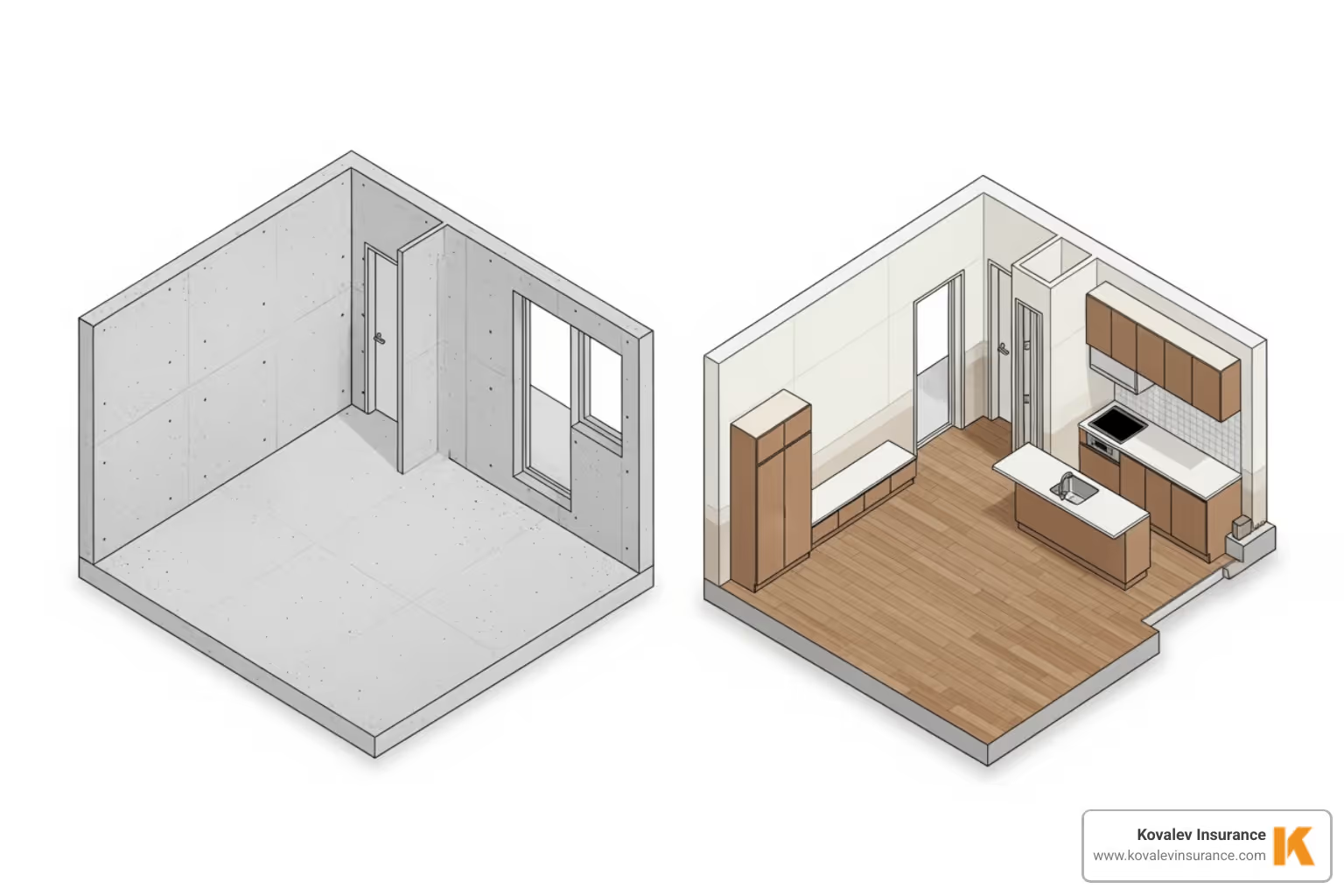
The master policy type directly impacts the dwelling coverage you need on your HO-6 policy. A "bare walls" policy requires more individual coverage, while an "all-in" policy means your HO-6 can focus more on personal property and liability.
When it comes to massachusetts what does condo building insurance cover for walls, windows, and ceilings, the answer lies in your master policy type. Generally, the master policy covers exterior walls, shared walls between units, and the exterior components of windows. Interior surfaces like drywall, paint, and interior window elements are your responsibility under a "bare walls" policy but may be covered by "all-in" policies. The only way to be certain is to review your condo association's governing documents, which you can often Find your condo bylaws through your local registry of deeds. These documents define where the master policy's protection ends and yours begins.
While the master policy protects the building, your individual HO-6 policy is your personal financial safety net. It protects everything that makes your condo your home from perils like fire, theft, and vandalism.

When considering massachusetts what does condo building insurance cover, this policy is about your space, your belongings, and your liability. It typically includes dwelling coverage, personal property coverage, liability protection, and additional living expenses.
The dwelling portion of your HO-6 policy covers parts of your unit not protected by the master policy. If your association has a "bare walls" master policy, your HO-6 needs to cover interior walls, fixtures, flooring, and any improvements you've made, like a kitchen renovation in your Newton condo. With an "all-in" master policy, you'll need less dwelling coverage, perhaps only enough to cover the master policy's deductible.
Personal property coverage protects your belongings, from furniture and electronics to clothing and decor. This coverage is portable—if your laptop is stolen from your car in Brookline, your HO-6 policy can help replace it.
You'll choose between Replacement Cost and Actual Cash Value. Replacement Cost pays to replace items with new ones of similar quality. Actual Cash Value pays the replacement cost minus depreciation. For example, if a fire destroys your five-year-old sofa, Replacement Cost buys you a new one, while Actual Cash Value only pays its depreciated worth. We always recommend Replacement Cost coverage. For more details, see More info on what MA home insurance covers.
Your HO-6 policy also provides crucial financial protection in other situations.
Even with a solid master policy and HO-6 coverage, some gaps can leave you financially exposed. Fortunately, most can be filled with affordable optional coverages.

Imagine a winter storm causes major roof damage to your Newton condo building. If the repair cost exceeds the master policy's coverage or falls within its large deductible, the condo association may levy a special assessment, dividing the cost among all unit owners.
Loss Assessment Coverage is your financial protection in these scenarios. It protects you when your association bills you for a share of unexpected expenses, such as covering the master policy deductible, costs that exceed policy limits, or liability claims against the association. Harsh Massachusetts winters often lead to assessments for ice dam damage or heating system failures in common areas. Without this coverage, you could face a bill for thousands of dollars. Standard HO-6 policies often include only minimal coverage ($2,000), but we recommend increasing it to at least $25,000. The small additional premium is well worth it. Learn more at What is Loss Assessment Coverage?.
When asking massachusetts what does condo building insurance cover, it's important to consider valuable endorsements and be aware of what's not covered.
Valuable Optional Coverages:
Common Exclusions:
Knowing massachusetts what does condo building insurance cover is the first step. Understanding your premium and how to handle a claim are just as important for any savvy condo owner.
Your premium is calculated based on your specific risk profile. Key factors include:
For more on costs, see More info on condo insurance costs in MA.
A claim denial is frustrating, but it's not always the final word. Here's what to do:
Choosing the right insurer means finding one with a strong reputation for fair claims handling. At Kovalev Insurance, we only work with financially strong, AM Best Rated A Insurance Companies to ensure our clients are protected when they need it most.
Over the years, I've found that condo owners from Newton to Brookline often have the same questions about massachusetts what does condo building insurance cover. Here are the answers that matter most.
No, Massachusetts state law doesn't require you to have individual condo insurance (an HO-6 policy). However, it's practically a necessity. Your mortgage lender will almost certainly require it to protect their investment. Furthermore, your condominium association's bylaws will mandate it to ensure the entire community is financially protected. So, while not legally required by the state, you won't be able to get a mortgage or comply with your condo rules without it.
This choice significantly affects your payout after a loss.
We strongly recommend replacement cost coverage for personal property to ensure you can fully recover from a loss.
This is a common point of confusion, and the answer is that it's a split responsibility. The master policy typically covers the exterior components of windows and shared walls between units. Your individual HO-6 policy covers the interior surfaces of your walls and windows (drywall, paint) and any upgrades you've made. The exact division of responsibility depends on whether your association has a "bare walls" or "all-in" master policy. The best way to know for sure is to review your condo's governing documents.
Navigating massachusetts what does condo building insurance cover is simpler than it seems once you understand the dual-policy system. The master policy acts as an umbrella for the entire building, protecting shared structures, common areas, and the exterior. Your individual HO-6 policy is your personal shield, safeguarding your belongings, interior unit, and personal liability.
The key is to know whether your association has "walls-in" or "all-in" coverage, as this dictates how much dwelling coverage you need. We've also highlighted essential add-ons like loss assessment coverage, which can protect you from unexpected bills for common area repairs, a frequent issue in areas from Needham to Wellesley.
At Kovalev Insurance, we specialize in helping Greater Boston condo owners steer these complexities. Our expertise ensures you get the right coverage without overpaying, giving you peace of mind that your investment is secure.
Your condo is a significant asset. Don't leave its protection to chance. Make an informed decision that fits your budget and your needs.
Ready to ensure your condo insurance is working as hard as you are? Get a personalized MA condo insurance quote today and see how proper coverage can protect everything you've built.


X