Blog Content

16
Dec
2025

Cyber policy definition encompasses the comprehensive guidelines and procedures that protect your organization's digital assets, establish employee responsibilities, and create a framework for managing cybersecurity risks. At its core, a cyber policy is your business's digital roadmap—defining what's allowed, what's forbidden, and how to respond when things go wrong.
Key Elements of a Cyber Policy:
With cybercrime costs estimated at $9.22 trillion in 2024, Massachusetts businesses from Newton to Natick can't afford to steer the digital landscape without a clear policy compass. Consider Sony's PlayStation Network breach in 2011—77 million users' data was exposed, costing the company over $171 million in damages that proper cyber insurance could have covered.
Cyber threats don't discriminate by business size. Your employees are your first line of defense, but without clear guidelines, they can become your biggest vulnerability. A well-crafted cyber policy transforms confusion into clarity, turning every team member into a security asset.
As Mikhail Kovalev, I've helped countless Massachusetts businesses understand that cyber policy definition isn't just about IT rules—it's about creating a culture of security that protects your livelihood. With over 20 years of experience in risk management and insurance, I've seen how the right policy foundation can mean the difference between a minor security hiccup and a business-ending catastrophe.
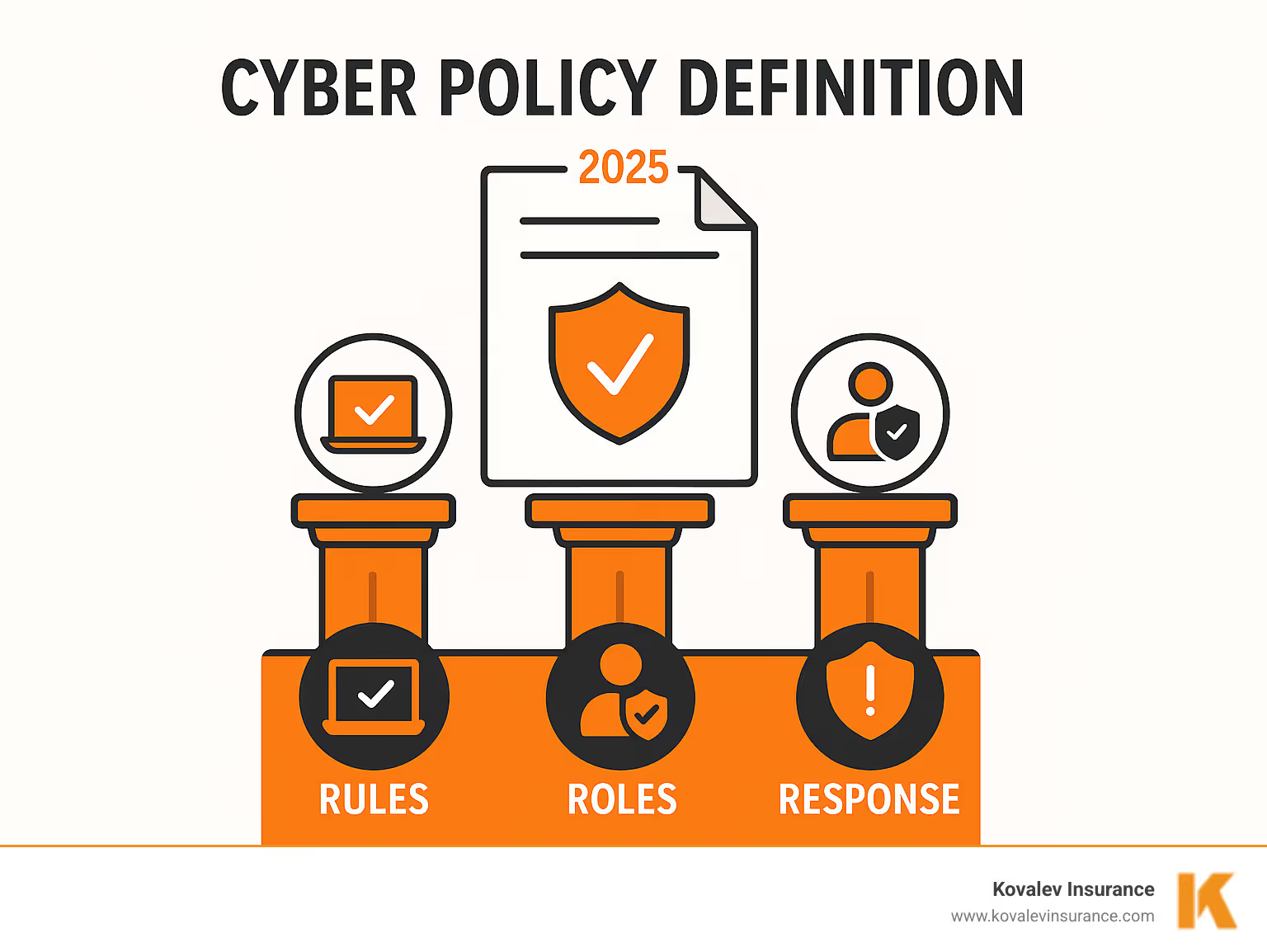
Think of a cyber policy definition as your business's digital constitution. It's the living rulebook that keeps your Massachusetts business safe, whether you're in Newton or Wellesley. This framework stands between your valuable data and the cybercriminals who want it.

At its core, a cybersecurity policy exists to protect your digital assets—from customer emails to financial records. It establishes clear rules for online behavior, device use, and handling sensitive information.
Even your most trustworthy employees can accidentally become security risks without proper guidance. A solid cyber policy transforms these potential vulnerabilities into your strongest defense.
With cybercrime costs projected to reach $9.22 trillion in 2024, having clear security expectations is essential for survival. Your policy creates a roadmap that everyone can follow to keep your business secure.
Every effective cybersecurity policy is built on the CIA Triad: Confidentiality, Integrity, and Availability.
Confidentiality means keeping your secrets secret. Sensitive data like customer databases and financial records should only be accessible to authorized personnel.
Integrity ensures your data remains accurate and unaltered. A good policy prevents unauthorized modifications, keeping your information trustworthy.
Availability guarantees that your team can access necessary data and systems when they need them, preventing costly downtime.
Beyond these technical goals, your policy guides employee actions, creating a security-conscious culture that reduces human error—a common entry point for cybercriminals.
Crucially, your policy provides a clear framework for incident response. When an incident occurs, your team will have a step-by-step playbook to minimize damage and get back to business quickly.
A well-crafted cyber policy is like having a security guard who never sleeps. It works proactively, preventing problems before they happen, rather than simply reacting after the damage is done.
By establishing clear protocols, your policy eliminates ambiguity. Employees know what's expected, from creating strong passwords to recognizing phishing emails.
For businesses across Greater Boston, whether in Belmont or Natick, these guidelines demonstrate due diligence. Customers, partners, and insurers recognize that you're actively managing risk, which builds trust.
This proactive approach sets a baseline for all security measures. It gives your team the tools and knowledge to make the right decisions consistently, actively protecting your business.
When you have a solid cyber policy definition woven into your daily operations, you're not just checking a compliance box—you're building a culture of security that makes your business a much less attractive target for cybercriminals.
Here's something that might surprise you: a robust cyber policy definition isn't just for Fortune 500 companies. Whether you're running a cozy café in Wellesley, managing a medical practice in Newton, or operating a business in Natick, you need strong cybersecurity policies.

Small and medium-sized businesses are often prime targets because they may have fewer security measures. A strong cyber policy is your essential tool for risk management—it helps you stay compliant, protect your reputation, build customer trust, and avoid hefty fines. This is exactly why cyber insurance has become so critical for businesses of all sizes.
Massachusetts has strict data protection laws, and your business must keep up. A well-crafted cyber policy is your roadmap for meeting these demands and avoiding costly penalties.
For healthcare providers in Brookline or Belmont, HIPAA compliance is law. For retailers and restaurants, PCI DSS compliance is required for credit card processing. Your policy must document how you meet these standards.
Your business may also need to comply with GDPR if you handle data from EU citizens. State-specific laws like Massachusetts' 201 CMR 17.00 add another layer of requirements for protecting personal information.
Even local governments like the Town of Needham have implemented comprehensive IT policies. If municipal governments need these protections, your business certainly does too.
Here's where my experience at Kovalev Insurance comes into play. Many business owners mistakenly think cyber insurance replaces good security practices. This is like thinking car insurance means you can ignore traffic laws.
Your cyber policy and cyber insurance work together. Insurers increasingly require businesses to demonstrate proactive risk management before they'll offer coverage. A well-documented policy is proof that you're taking security seriously.
This proactive approach can lead to better insurance terms and potentially lower premiums. More importantly, it helps ensure your claims are covered, as many are denied due to a lack of documented security measures.
We work with businesses across Massachusetts to make sure their cyber policies align with insurance requirements. It's about creating a security posture that protects your business while ensuring you're eligible for comprehensive coverage. To learn more, check out our Mass Cyber Liability Insurance Coverage.
The bottom line? A strong cyber policy is essential for protecting your business, meeting legal requirements, and ensuring you're covered when you need it most.
Creating a comprehensive cyber policy is like assembling a puzzle; each component works together to create a complete security picture that protects your Massachusetts business.

Whether you're in Needham or Belmont, your cyber policy definition must be customized to your specific business needs and risks, adapting to your unique circumstances while covering all essential security bases.
An effective policy addresses both technical safeguards and the human element. Businesses across Greater Boston benefit when their policies include these critical components:
Risk Assessment is the foundation. It's an ongoing process of identifying digital assets, assessing threats, evaluating vulnerabilities, and analyzing the potential impact of a breach.
Access Control determines who can access what. It defines authentication methods, sets authorization levels, and enforces the principle of least privilege. Use tools like multi-factor authentication.
Data Classification and Handling categorizes data (e.g., public, confidential) and outlines procedures for storing, transmitting, and disposing of each type based on its sensitivity.
Incident Response Planning is your playbook for a security breach. It details steps for detection, containment, recovery, and review to minimize chaos and speed up recovery.
Backup and Disaster Recovery ensures you can recover from a major incident. It outlines backup schedules, storage requirements, and tested recovery procedures for business continuity.
Employee Training and Awareness turns your team into your first line of defense. It mandates regular training on best practices, phishing recognition, and individual security roles.
Acceptable Use of Assets sets boundaries for using company devices, networks, and software to prevent misuse that could create security vulnerabilities.
Many organizations use several specific policy types that work together for complete protection:
Acceptable Use Policies (AUP) define rules for using company IT resources, including internet, email, and software.
Password Policies establish requirements for password complexity, length, and change frequency to prevent common attacks.
Email Security Policies govern email use, including rules for attachments, phishing recognition, and encryption for sensitive data.
Remote Access Policies define secure practices for employees accessing company networks remotely, covering VPN use and device security.
BYOD policies (Bring Your Own Device) outline security requirements for employees using personal devices for work.
Social Media Policies guide employees on appropriate social media use to prevent accidental data disclosure and protect the company's reputation.
For specialized industries, additional policies may be necessary. Restaurants, for example, face unique challenges discussed in our guide on Cyber World and Mass Restaurant Insurance.
The key is ensuring all these policy types work together seamlessly to form a cohesive framework that makes security a natural part of daily operations.
Defining your cyber policy definition is the first step. The real protection comes from implementation, maintenance, and ensuring everyone in your organization follows it. A cyber policy needs ongoing attention and updates, just like any critical business asset.
Policy management requires a cross-functional team including IT, HR, legal counsel, and senior management to ensure it's both technically sound and practical.
Treat your policy as a living document, evolving with new threats. Leveraging frameworks like NIST provides a solid foundation for continuous improvement.
Here is a practical roadmap for developing and managing your cybersecurity policy:
1. Assess Risks and Needs – Understand your unique digital footprint, critical assets, and threats. This assessment guides the entire policy development process, whether for a Brookline restaurant or a Needham healthcare practice.
2. Draft the Policy – Have your cross-functional team draft the policy, defining technical controls, ensuring compliance, and outlining responsibilities. Use a template as a starting point, but always customize it for your business.
3. Solicit Feedback – Share the draft with employees from all departments. This ensures the policy is clear and practical, which helps build buy-in for implementation.
4. Finalize and Approve – After incorporating feedback, get formal approval from senior leadership. This gives the policy the necessary authority.
5. Distribute and Train – Make the final policy easily accessible and conduct mandatory training for all employees. Explain the "why" behind the rules to ensure understanding and compliance.
6. Review and Update Annually – The threat landscape is always changing. Schedule annual reviews to assess the policy's effectiveness and make necessary updates to keep it relevant.
A policy is useless if employees don't follow it. Fostering compliance and buy-in is essential. Here’s how:
Here are common questions we receive from businesses across Massachusetts regarding how a strong cyber policy definition can protect their organization.
A cyber policy is the foundation of your risk management strategy. It formally identifies digital assets, outlines threats, and establishes the controls and procedures to mitigate risks. This shifts your approach from reactive to proactive, as you systematically identify vulnerabilities before they are exploited. The policy defines your acceptable risk level and provides a roadmap for security investments, reducing your overall security exposure.
Your policy is a living document. Review it at least annually, or more frequently if significant changes occur, such as adopting new technologies, facing new threats, or new Massachusetts regulations. For example, if your Needham-based company implements new remote work tools, your policy must be updated. Regular reviews ensure your policy remains effective and compliant, which is crucial for demonstrating due diligence.
Yes, small businesses can start with a template from a reputable source like the SANS Institute. However, customization is essential. A generic template won't account for your unique business risks, industry regulations (like those for a Brookline restaurant vs. a Belmont healthcare practice), or technologies. You must tailor the template to your specific operational realities to make it effective. A well-customized policy not only protects your business but can also support your cyber insurance applications.
A well-defined cyber policy definition is your organization's compass in the complex digital world. It's a foundational element that protects your assets, empowers your employees, and secures your reputation. By defining clear rules, you turn cybersecurity into a core business function that protects your bottom line.
Your policy creates a unified front against cyber threats. Whether your business is in Newton, Wellesley, or Brookline, these guidelines make you a harder target by turning every employee into a security asset.
A comprehensive policy brings clarity to a complex landscape. It serves as a steady North Star, telling everyone what's expected, which reduces risk and helps create a culture where security becomes second nature.
For Massachusetts businesses looking to pair a strong policy with comprehensive protection, the experts at Kovalev Insurance can help you steer your Mass Cyber Liability Insurance Coverage options. We understand the unique challenges facing businesses in our community—from the specific regulatory requirements in Massachusetts to the particular threats that Greater Boston companies face.
Our team is committed to providing custom solutions that offer genuine peace of mind in the digital age. We know that every business is different, whether you're in Needham, Belmont, or Natick. That's why we take the time to understand your specific needs and help you build a comprehensive approach that combines solid policies with the right insurance coverage.
Let us help you steer the complexities of cyber risk, ensuring your business is prepared for whatever the digital future holds. Because when it comes to cybersecurity, being prepared isn't just smart business—it's essential for survival.


X