Beyond the Basics: Understanding Your DP3 Home Insurance
26
Apr
2026
Author:
Michael Kovalev
Why DP3 Dwelling Coverage Matters for Massachusetts Property Owners
DP3 dwelling coverage is a specialized insurance policy for property owners who don't live in the homes they own. If you're a Massachusetts landlord, property investor, or own a vacation home, this policy protects your investment with open-peril protection and replacement cost coverage.
Quick Answer: What is DP3 Dwelling Coverage?
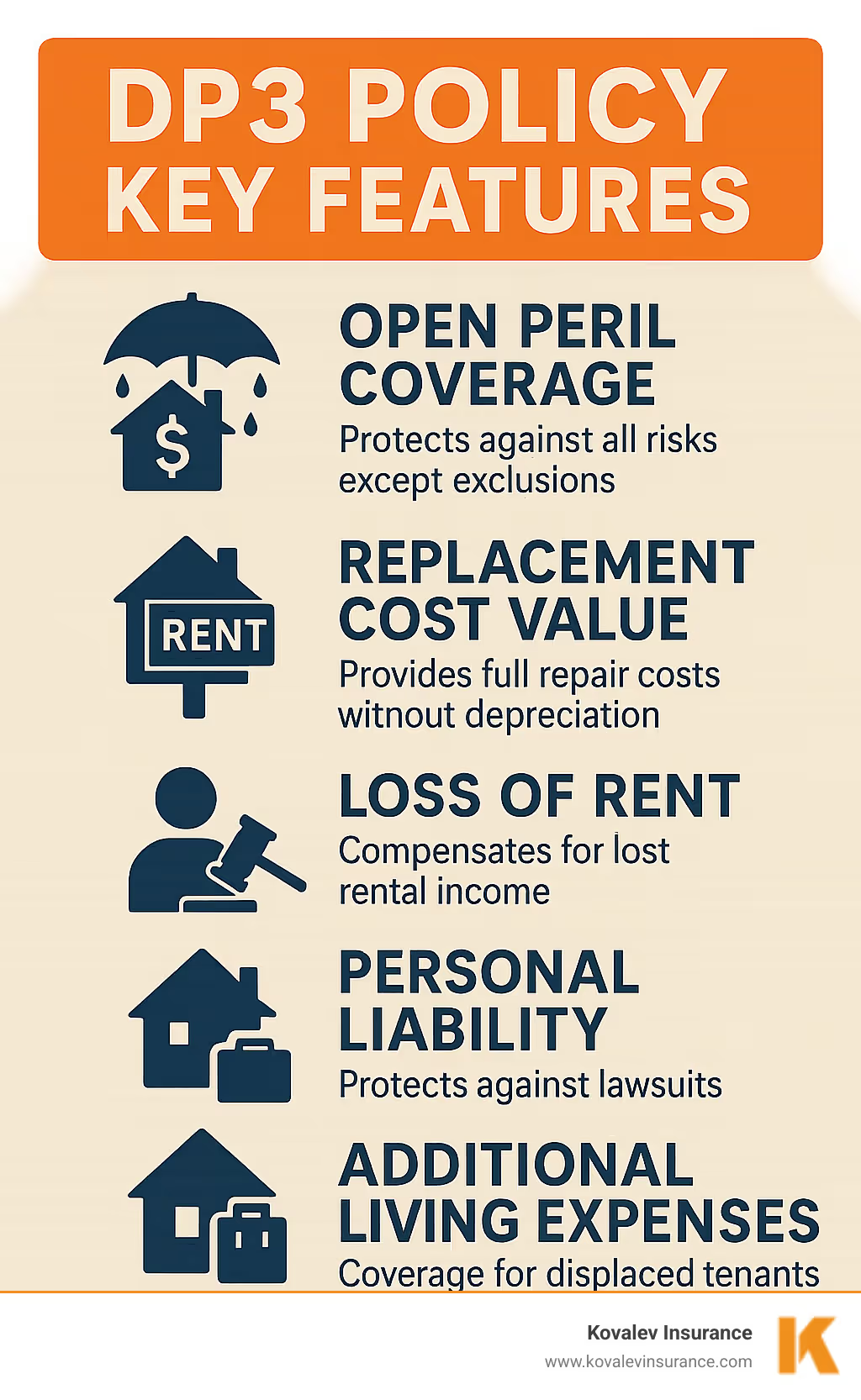
Open Perils Coverage: Protects against all risks except those specifically excluded.
Replacement Cost Value: Pays full repair/rebuild costs without depreciation.
Loss of Rent: Covers lost rental income when a property becomes uninhabitable.
Who Needs It: Landlords, property investors, vacation home owners, Airbnb hosts.
What It Covers: Dwelling structure, other buildings, landlord's personal property, liability.
Whether you own rental property in Newton, a duplex in Wellesley, or short-term rentals in Brookline, DP3 policies offer the most comprehensive protection for non-owner-occupied homes. Unlike standard homeowners insurance, DP3 coverage addresses the unique risks property investors face.
With approximately 34% of Americans renting their homes, the rental market is a significant part of the real estate landscape. Massachusetts property owners need insurance that matches their investment strategy.
Understanding your DP3 dwelling coverage doesn't have to be complicated. This guide will break down what a DP3 policy is, who needs it, and what it protects (and what it doesn't). Whether you're managing a rental in Newton or own a vacation home in Natick, you'll learn how to protect your investment.
What is a DP3 Policy and Who Needs It?
A DP3 policy, or Dwelling Fire Form 3, is the most comprehensive insurance designed for residential properties you own but don't live in. The risks of a rental property are different from an owner-occupied home, and DP3 coverage is built to handle them.
Its key feature is "open perils" coverage, which means it protects against all risks except those specifically listed as exclusions in the policy. This provides broad protection for your investment.
So who needs a DP3 policy in Massachusetts?
Landlords and property investors: If you own a duplex in Wellesley or a multi-family in Brookline that generates rental income, DP3 is your go-to protection. With approximately 34 percent of people in the U.S. renting, the need for proper landlord insurance is clear.
Vacation home owners: A retreat in Natick or a family getaway in Belmont that isn't your primary residence often requires a DP3 policy.
Short-term rental hosts: Standard homeowners policies typically exclude commercial activities like Airbnb or VRBO rentals. DP3 provides the appropriate coverage for this business use.
Owners of properties with unique challenges: Older homes or properties that don't qualify for standard insurance can often find a solution with a DP3 policy.
If you own residential property where you don't sleep most nights, DP3 dwelling coverage is likely what you need. Learn more below.
A DP3 policy's "open perils" approach covers everything except for specific exclusions. Here are the core protections:
Coverage A (Dwelling): Protects the main structure, including the foundation, walls, roof, and attached structures. It is typically written with replacement cost coverage, paying to rebuild or repair without deducting for depreciation.
Coverage B (Other Structures): Covers structures not attached to the main house, like a detached garage, shed, or fence.
Coverage C (Landlord's Personal Property): Covers personal property you own and provide for tenant use, such as appliances or furnishings. This is usually covered at actual cash value, which includes depreciation.
Coverage D (Fair Rental Value): This is crucial for landlords. If a covered event makes your rental uninhabitable, this compensates you for lost rental income during the repair period.
Personal Liability Coverage: Protects you financially if you're held responsible for an injury on your property, covering legal fees and medical bills.
Medical Payments Coverage: Covers minor medical expenses for people injured on your property, regardless of who is at fault.
DP3's open perils nature covers risks like fire, windstorms, hail, vandalism, theft-related damage, falling objects, weight of ice and snow, and accidental water discharge from plumbing, among many others.
Understanding DP3 Policy Exclusions and Limitations
No policy covers everything. Understanding exclusions helps you identify gaps where you might need optional coverage.
Flood Damage: Standard DP3 policies exclude damage from floods. Separate flood insurance is required for this protection.
Earth Movement: Earthquakes, landslides, and sinkholes are not covered.
Sewer and Drain Backup: Water backing up from external sewers or drains is typically excluded. However, this can often be added as an optional endorsement, which Forbes highlights as a real lifesaver.
Ordinance or Law: If building codes require costly upgrades during a repair, those extra costs may not be covered without a specific endorsement. This is relevant for older properties in historic Massachusetts towns.
Neglect: Insurance covers sudden and accidental losses, not damage resulting from deferred maintenance, like an ignored leaky roof.
Tenant's Personal Property: Your DP3 policy protects your property, not your tenant's belongings. It's essential to require tenants to carry their own renters insurance.
Other common exclusions include mold, war, nuclear hazards, and intentional damage. Recognizing these limitations allows us to tailor a policy with the right endorsements for your situation. For more on Massachusetts coverage, see our guide on Homeowners Insurance Coverage in Massachusetts.
Comparing DP3 Insurance and Securing Your Policy
Choosing the right insurance for your Massachusetts rental property is essential. Let's compare DP3 dwelling coverage against other policies, review the financial aspects, and explain how Kovalev Insurance can help you secure the perfect policy.
DP3 vs. Other Common Policies: DP1, DP2, and HO3
The right insurance policy depends on occupancy—who lives in the home. HO3 policies are for owner-occupied primary residences. DP policies are for non-owner-occupied properties, like rentals or vacation homes in Wellesley or Natick.
DP1 policies offer basic, "named peril" protection (often just fire) and pay claims at actual cash value (ACV), which includes depreciation. They are budget-friendly but can leave significant coverage gaps.
DP2 policies are also "named peril" but cover more risks than a DP1. They typically pay replacement cost for the dwelling, which is a major improvement.
DP3 policies are the gold standard for rental properties. Their "open perils" and replacement cost coverage provide the most comprehensive protection for serious property investors in Massachusetts.
Key Financial Considerations for Your DP3 Dwelling Coverage
Understanding the financial details of your DP3 dwelling coverage is key to managing your investment.
Replacement Cost Value (RCV) vs. Actual Cash Value (ACV): This is a critical distinction. RCV, standard for the dwelling on a DP3 policy, pays to repair or replace damaged property with new materials, without deducting for depreciation. For example, it would cover a brand-new roof on your Brookline rental. ACV, often used for a landlord's personal property, pays only the depreciated value, leaving you to cover the difference.
Policy Costs: Landlords can expect to pay about 25% more for insurance than for a standard homeowners policy, reflecting the increased risks of rental properties.
Factors Influencing Cost: Your premium is affected by location (e.g., Newton vs. Needham), property age and condition, coverage limits, and your chosen deductible. A higher deductible lowers your premium but increases your out-of-pocket cost for a claim.
Discounts: You may be eligible for discounts for risk mitigation features like security systems, smoke detectors, or wind-resistant construction.
Finding the Right DP3 Dwelling Coverage in the Boston Area
If you own rental, vacation, or investment property in Massachusetts, DP3 dwelling coverage is essential for protecting your financial future. However, insurance is not one-size-fits-all; a multi-family in Brookline has different needs than a vacation home in Belmont.
That's where custom coverage from an expert becomes crucial. At Kovalev Insurance, we understand the local Massachusetts market. As an independent agent, we are not tied to one company. We shop multiple providers to find you the best combination of coverage and price, custom to your specific property.
We combine speed and efficiency with deep insurance industry knowledge, ensuring you get a thorough analysis without delay. Don't leave your valuable investment vulnerable with a cookie-cutter policy. We take the time to understand your goals and craft a DP3 dwelling coverage solution that fits perfectly.
Ready to secure comprehensive protection for your Massachusetts investment property? Get a quote for your Massachusetts investment property today. Let's build a policy that protects your investment and supports your success.