Blog Content

15
Feb
2026

Income protection for self employed contractors is an insurance policy that replaces a portion of your income if you're unable to work due to illness or injury. For contractors, who typically lack employer-provided sick pay, it offers a vital financial safety net.
Here’s a quick look at what it means for you:
If you’re a self-employed contractor in Massachusetts, you know the hustle. You're your own boss, your own team, and your own safety net. Unlike traditional employees, you don’t get paid sick leave or employer-provided benefits.
This means if you can’t work, your income stops.
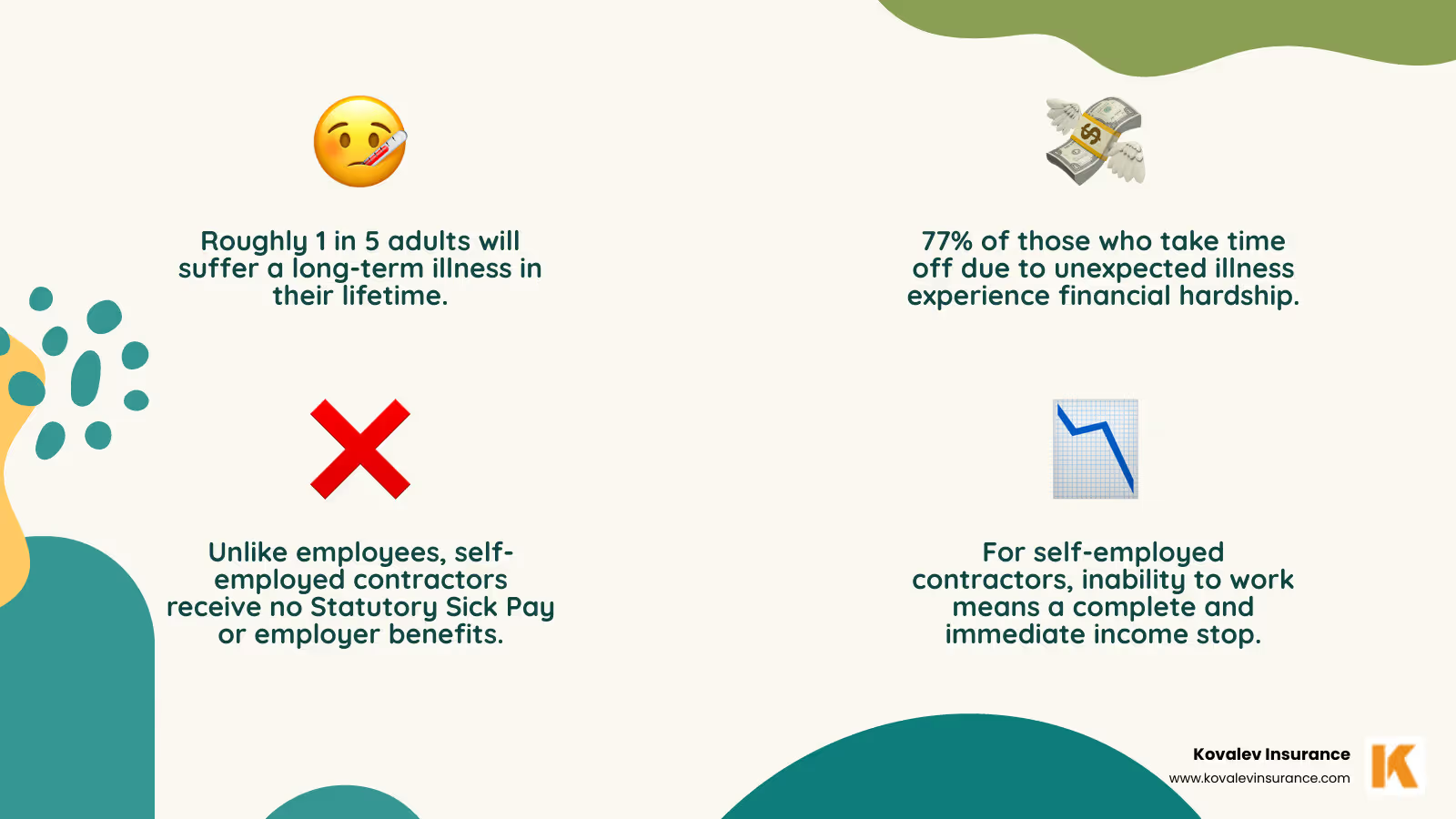
And the risks are real. Statistics show that roughly 1 in 5 men and 1 in 6 women will suffer a long-term illness in their lifetime. Plus, nearly one in three UK adults have had to take time off due to unexpected illness. A shocking 77% of them saw their finances suffer.
For many contractors, their income is directly tied to their ability to physically or mentally perform their job. If an illness or injury sidelines you, even temporarily, the financial impact can be devastating. Your livelihood, your business, and your family’s security depend on your ability to work.
Explore more about income protection for self employed contractors:
Here's the hard truth: if you're self-employed in Massachusetts, there's no safety net waiting to catch you. While traditional employees might have sick leave, short-term disability, or other employer benefits, income protection for self employed contractors becomes your only lifeline when illness or injury strikes.
Statutory Sick Pay (SSP) doesn't apply to self-employed individuals at all. That means when you can't work, your income stops immediately – no gradual reduction, no partial payments, just nothing. Massachusetts has specific laws about independent contractors, but these focus mainly on worker classification and rights, not on providing income support during health crises.
This reality puts contractors at significantly higher financial risk than their employed counterparts. Think about it: if you're a plumber in Needham or a consultant in Belmont, and you suddenly can't work for three months, where does that leave you?
Your personal savings become your emergency room. That retirement fund you've been building? The college fund for your kids? Without income protection, these could disappear just to cover basic living expenses. It's not just about losing future wealth – it's about watching years of hard work evaporate because of circumstances beyond your control.
But here's what many contractors don't realize: your business overhead doesn't pause when you do. Your office rent in Wellesley keeps coming. Equipment leases, professional licenses, utility bills – these fixed costs continue whether you're working or recovering. Income protection helps cover these ongoing business expenses, preventing your operation from collapsing while you focus on getting better.
Perhaps most importantly, income protection for self employed contractors provides something you can't put a price on: peace of mind. When you know there's a financial buffer in place, you can actually focus on recovery instead of lying awake at night wondering how you'll pay next month's mortgage in Newton.
The statistics are sobering. One in four working adults will become disabled during their careers, and nearly one in three adults have had to take unexpected time off due to illness. Without protection, 77% of them see their finances suffer significantly.
Think of income protection for self employed contractors as creating your own personalized sick pay system. You're essentially paying to guarantee yourself an income if life throws you a curveball.
Monthly premiums work like any other insurance – you pay a regular amount based on your age, health, occupation, and coverage choices. The beauty is in the customization; you can adjust various factors to find a premium that fits your budget.
When you become unable to work due to illness or injury (certified by a medical professional), the policy kicks in with regular income replacement. This typically covers 50% to 70% of your pre-tax income, providing a substantial foundation to maintain your lifestyle and business operations.
The deferred period (or waiting period) is your choice of how long to wait before payments begin. Options usually range from 4 weeks to 52 weeks or longer. Think of this as the bridge your emergency savings need to cover – the longer you can wait, the lower your premiums will be.
Your benefit period determines how long payments continue. You might choose short-term coverage (1-2 years) for temporary setbacks, or long-term protection extending to retirement age for more serious conditions.
The claim process is straightforward: notify your insurer, provide medical documentation, and once approved, payments begin after your deferred period ends. The good news? Most legitimate claims get approved – industry statistics show approval rates consistently above 90%.
Living and working in Greater Boston means dealing with one of the country's higher costs of living. This makes reliable income protection even more critical for local contractors.
Your housing costs don't negotiate. Whether you're paying a mortgage in Newton or rent in Brookline, these substantial monthly payments continue regardless of your health status. Income protection ensures you can maintain your housing stability during recovery periods.
Daily living expenses add up quickly in Massachusetts. Your utilities, groceries, phone bills, and other necessities in areas like Belmont or Natick represent significant monthly costs that income protection helps cover, maintaining your family's standard of living.
Business continuity becomes possible when you have income protection. If you operate as an LLC or sole proprietor, you can use benefit payments to cover essential business expenses, keeping your operation viable while you recover.
Recovery becomes your focus instead of financial survival. When you know your income is protected, you can dedicate energy to getting better rather than scrambling for emergency funds or taking on debt.
Multiple claims are possible throughout your policy's lifetime. Unlike some insurance types that only pay once, income protection can be claimed multiple times for different conditions or recurring issues, providing ongoing security throughout your career.
For additional insights into related coverage options, explore our information on Business Interruption Insurance for Small Businesses.
When it comes to income protection for self employed contractors, there's no cookie-cutter solution. Your policy should be as unique as your business. Whether you're a plumber in Newton or a consultant in Belmont, your coverage needs will vary significantly.
The beauty of income protection lies in its policy customization. You can adjust everything from the waiting period to the benefit duration, tailoring the policy to match your financial situation and risk tolerance. But here's the thing – with great flexibility comes great responsibility.

Reading the fine print isn't just important – it's essential. This is where you'll find the real meat of your policy: what's covered, what's not, and exactly how claims get processed. I know it's about as exciting as watching paint dry, but trust me, those details matter when you're filing a claim.
Many policies offer riders and add-ons that can significantly improve your coverage. Think of these as upgrades to your basic policy. For instance, an inflation protection rider ensures your benefits keep pace with rising costs in Massachusetts. Another popular add-on is the increasing claims option, which gradually increases your benefit payments during a long-term claim.
If you're providing professional services as a contractor, you'll also want to understand your broader risk profile. Check out our guide on Professional Liability Insurance for Massachusetts to see how different types of coverage work together.
Here's where things get really important for contractors. The "definition of incapacity" is the heart of your policy – it determines whether you qualify for benefits when you can't work. Get this wrong, and you might find yourself without coverage when you need it most.
Why 'Own Occupation' is critical for specialized contractors becomes clear when you think about real scenarios. Imagine you're a roofer in Needham who injures your back. With an "own occupation" definition, you'd receive benefits even if you could theoretically work a desk job. That's because you can't perform your specific occupation.
On the flip side, if you're an IT consultant in Brookline with carpal tunnel syndrome, an "own occupation" policy would pay out even if you could do other types of consulting work. The policy recognizes that your specialized skills are what generate your income.
For tradespeople versus consultants, the stakes are different. A carpenter who loses the use of their dominant hand faces a completely different challenge than a marketing consultant with the same injury. The consultant might adapt their work methods, but the carpenter's entire livelihood could be at risk.
Let's talk about what income protection for self employed contractors typically won't cover. Understanding these exclusions upfront prevents nasty surprises later.
Pre-existing conditions are usually excluded for a certain period – often the first 12-24 months of your policy. If you have a bad back that flares up regularly, you'll need to declare this when applying.
Self-inflicted injuries won't be covered, which makes sense. Neither will injuries or illnesses resulting from drug or alcohol misuse. Insurers take a dim view of preventable claims.
Normal pregnancy is typically excluded, though complications from pregnancy may be covered. This distinction matters for female contractors planning families.
Risky hobbies or travel can void your coverage. If you're planning to go bungee jumping in New Zealand or climb Everest, check with your insurer first.
Here are other typical policy exclusions:
The key is being honest during the application process. Insurers would rather know about potential risks upfront than find them during a claim.


X