Blog Content

24
Jan
2026
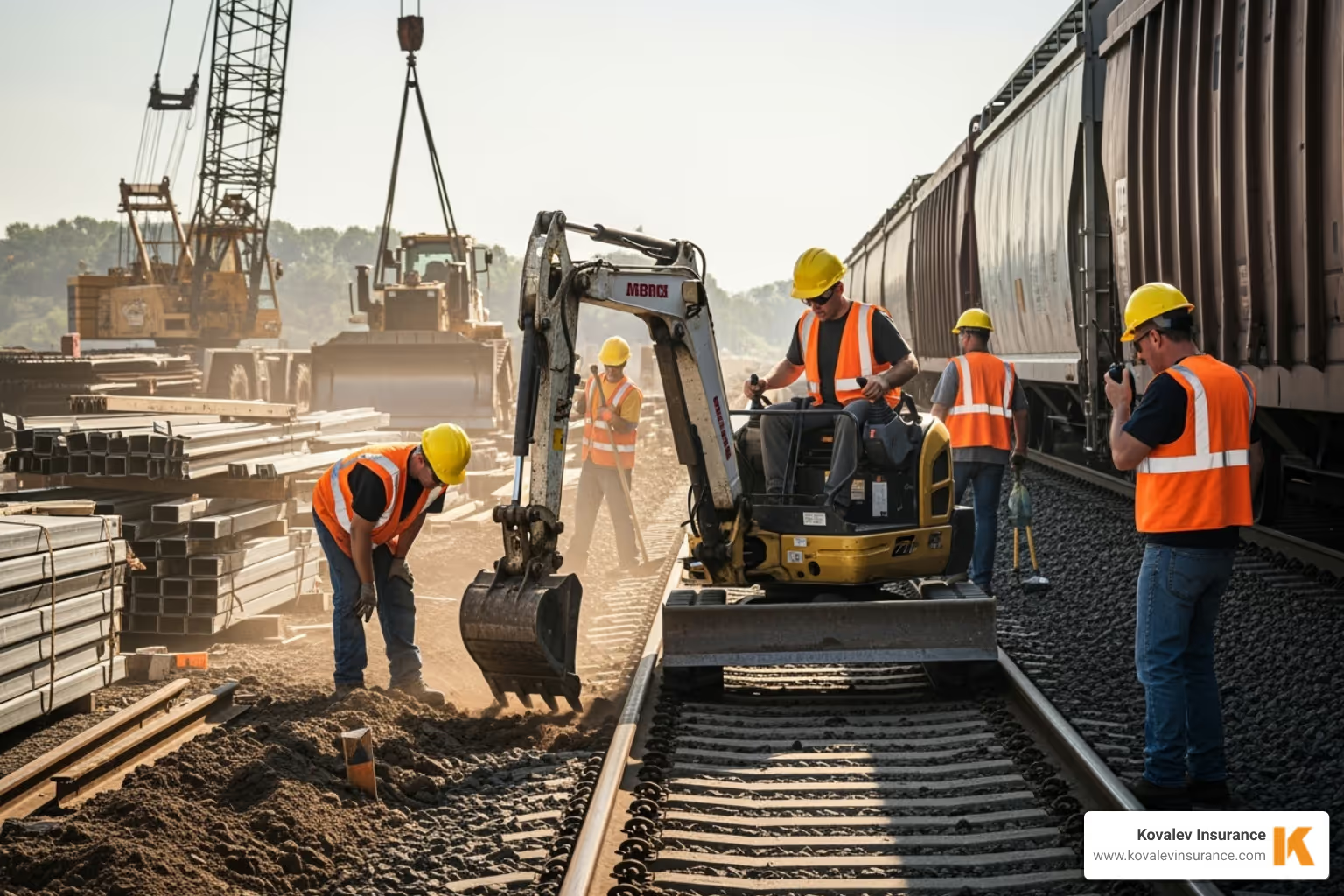
Railroad contractor insurance is specialized coverage protecting contractors and railroad companies during construction near active rail lines. If you work within 50 feet of railroad tracks in Massachusetts—whether it's MBTA Commuter Rail, Amtrak, or freight lines—your standard general liability policy won't cover you.
Here's what you need to know:
Railroad work is inherently high-risk. In 2013, a runaway train carrying crude oil killed 47 people in Lac-Mégantic, Quebec. Construction incidents near Boston's rail lines can disrupt thousands of daily commuters and expose contractors to massive liability claims.
The bottom line: Working near railroads without proper insurance leaves you completely exposed to potentially catastrophic financial losses.

Imagine starting a construction project in Newton, 30 feet from MBTA Commuter Rail tracks. The contract is set, your crew is ready, but the railroad requires Railroad Protective Liability insurance before you can begin.
This isn't an obscure product designed to drain your wallet. Railroad contractor insurance, specifically RRP, is your lifeline when working near active rail lines in Massachusetts.
Railroad Protective Liability (RRP) insurance is a specialized policy that protects railroad companies from liability claims arising from your construction work. Think of it as a safety net the railroad requires you to provide—not for your protection, but for theirs.
RRP is unique: it's written on a standardized ISO coverage form, is project-specific (not annual), and operates on an occurrence basis. This means if an incident occurs during your project, you're covered even if the claim is filed months later.
The railroad isn't being difficult; they're being smart. One mistake near their tracks could derail trains, injure passengers, or shut down service for thousands of commuters. That's the kind of high-risk scenario that makes RRP insurance essential for any work within their right-of-way.
You might think, "But I have Commercial General Liability insurance. Isn't that enough?"
Unfortunately, no. Here's why this matters for Massachusetts contractors.
Most standard CGL policies include a "50-foot exclusion." This means your general liability coverage stops when you're working within 50 feet of railroad property. It's like an umbrella with a hole right where you need it most.
For example, if your demolition work in Brookline near the Green Line tracks damages the signal system, your CGL policy would likely deny the claim due to this exclusion, leaving you responsible for massive costs.
This coverage gap is intentional. Insurers know railroad work carries unique risks requiring specialized coverage, which RRP provides.
For more details about general liability coverage outside of railroad work, you can explore our guide on General Liability Coverage Massachusetts.
Here's where RRP insurance gets confusing: you pay for the policy, but it doesn't protect your business.
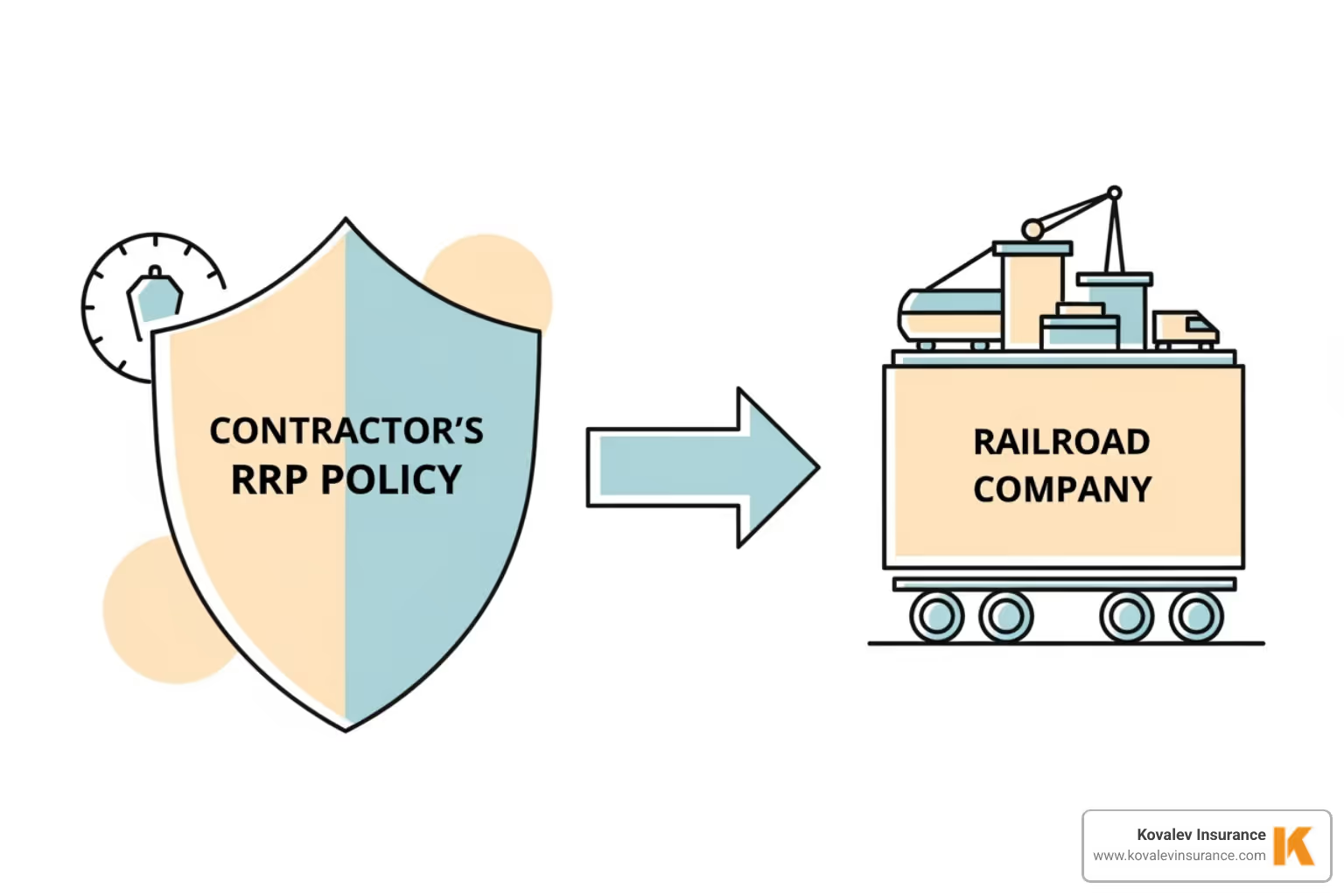
The railroad company is the named insured on your RRP policy. This means the coverage protects them, not you. It's like buying a security system for your neighbor's house—you pay, but they benefit.
What does RRP cover for the railroad? It covers third-party bodily injury claims. If a pedestrian is hurt due to your work and sues the railroad, your RRP policy responds. It also covers third-party property damage, such as if your work causes a derailment that damages nearby businesses.
The policy also covers physical damage to railroad property like tracks, signals, and bridges. Plus, defense expenses are usually covered outside the policy limits, a huge relief since railroad legal battles can be long and costly.
Your business still needs separate protection through other policies. RRP is purely for the railroad's benefit, even though you pay for it.
When shopping for RRP insurance in Massachusetts, you'll find unique features.
Most RRP policies start with $2 million per occurrence and $6 million aggregate limits. The per-occurrence limit covers a single incident, while the aggregate is the total paid during the project. For larger projects, like work near South Station, higher limits up to $25 million or more are available.
Unlike annual policies, RRP coverage is project-specific. You buy protection for one job at one location. The policy is active only for the duration of your work on site.
Minimum premiums usually start around $2,500, varying by project complexity and duration. You'll also find a Self-Insured Retention (SIR), often around $25,000, meaning the railroad retains some initial risk.
A key feature is that defense costs are usually covered outside the policy limits. If you have a $2 million policy and face a $1.5 million claim plus $300,000 in legal fees, you won't exhaust your limit. Legal costs are handled separately, providing more protection.
These features reflect the unique risks of railroad work and the specialized nature of railroad contractor insurance in Massachusetts.
While RRP insurance is non-negotiable for work near rail lines, it's just one piece of your risk management strategy. Think of railroad contractor insurance as a symphony—each policy plays a vital part in protecting your business from the unique risks of working around Massachusetts rail lines.

The reality is RRP protects the railroad, not your business. It's like buying a bodyguard for your neighbor while leaving your door open. For Massachusetts contractors from Newton to Natick, a comprehensive insurance portfolio is essential for survival.
Railroad construction demands layered protection. Working within 50 feet of active MBTA or freight lines means a single incident can cause massive financial exposure. Your complete insurance portfolio acts as multiple safety nets, ensuring another policy steps in to protect your business assets if one doesn't cover a risk.
To understand why you need both, let's compare how RRP and CGL work together and why neither is sufficient alone.
The key takeaway is that these policies complement each other. Your CGL handles daily business liability, while RRP fills the critical gap CGL policies exclude near railroad property.
Beyond RRP and CGL, Massachusetts contractors need more coverage to protect against all risks. Whether working on a bridge in Brookline or track maintenance in Wellesley, these policies are the backbone of your protection.
Workers' Compensation is a legal and moral obligation. Massachusetts law requires it for employers. Given the dangers of working near active rail lines, robust coverage is non-negotiable. It covers medical bills and lost wages for injured employees. For details, see our guide on Worker Compensation Insurance Massachusetts.
Commercial Auto Insurance protects your mobile assets like trucks and hi-rail vehicles. A single accident can shut down your business without proper coverage. Our team helps you find the Best Massachusetts Commercial Auto Insurance for your fleet.
Inland Marine Insurance covers your tools and equipment in transit, at job sites, or in use. If your excavators or track equipment are damaged, stolen, or lost, Inland Marine steps in. This is crucial for contractors working at remote sites with expensive machinery.
Builders Risk Insurance is essential for projects involving new structures or major alterations. It protects the building during construction from fire, theft, and vandalism. For details, see our guide on What Is Builders Risk Insurance Massachusetts.
Commercial Umbrella Liability adds extra protection above your primary policies. Catastrophic railroad claims can exceed standard limits. Umbrella coverage, typically $2 million to $10 million or more, provides crucial protection when stakes are high.
Equipment Breakdown Coverage protects your machinery from sudden mechanical failures. Understanding What Is Equipment Breakdown Coverage can save you thousands if critical equipment fails during a time-sensitive project.
For specialized trades, our Artisans Contractors Insurance guide offers insights into custom coverage for contractors on railroad projects in the Greater Boston area.
The bottom line: Railroad contractor insurance isn't just about meeting contractual requirements; it's about building a fortress of protection around your business, employees, and financial future.
Getting an RRP policy isn't like buying standard auto insurance. It requires a detailed application and careful underwriting due to the specialized risk. We make this complex process smooth for Massachusetts contractors, whether your project is in Newton, Brookline, or elsewhere in Greater Boston.
First, work with a broker specializing in railroad contractor insurance. They guide you through the application to ensure accuracy. Once bound, you'll get a Certificate of Insurance (COI) to provide the railroad as proof of coverage. This document is critical; no railroad (MBTA, Amtrak, or CSX) will let you start work without it.
For accurate underwriting, insurers need specific project details. Precision smooths the process. Here's what you'll typically need:
Having this information ready will expedite securing your RRP policy.
RRP insurance is specialized, not a blanket policy. It's vital to know what's typically excluded. These exclusions exist for activities that carry exceptionally high risks or fall outside the policy's intended scope.

Here are some common exclusions you might encounter:
Always review your policy carefully with your insurance professional to understand any limitations or exclusions for your project.
Beyond insurance, the best way to protect your business and employees on a railroad project is through rigorous safety protocols and risk mitigation. No insurance can compensate for a severe accident or loss of life.
Here are some best practices:
A strong safety culture protects lives and property and can positively impact your insurance premiums. Insurers favor businesses with strong safety records, potentially leading to lower costs. For railroad safety resources, we recommend you Learn more about how Operation Lifesaver is working to save lives by changing people’s behavior around railroad tracks and crossing.
We understand railroad contractor insurance can feel overwhelming. With RRP policies, coverage gaps, and complex requirements, questions are natural. We've helped countless contractors in Newton, Brookline, and throughout Massachusetts steer this. Here are the most common questions and straightforward answers to help you.
This is a major misconception. No, RRP insurance does not cover your employees if they get hurt on the job.
RRP is like buying a security system for your neighbor's house—you pay the bill. The policy exists only to protect the railroad company from claims arising from your work. It's their safety net, not yours.
If your crew member is injured near MBTA tracks, your Workers' Compensation insurance responds. That's why robust Worker Compensation Insurance Massachusetts coverage is critical for railroad work. The risks are real, and your employees need protection.
The short answer is yes, almost always. If your work is on railroad property or within the 50-foot zone in Massachusetts, the railroad owner will likely require RRP insurance in your contract.
This applies to work with the MBTA in Wellesley, Amtrak, or freight lines. Every railroad company—from MBTA to CSX—knows RRP is their best protection against the risks of construction near active rail lines.
The requirement isn't a suggestion. It's a hard stop. No RRP certificate means no work authorization. Railroads won't let you begin until they have proof their interests are protected.
We hear this question often. Adding an additional insured to your CGL policy is standard for many projects. Unfortunately, it rarely works for railroad projects.
The problem is the 50-foot exclusion. Even if you add the railroad as an additional insured to your CGL, the exclusion remains. If an incident happens within that 50-foot zone—where most railroad work occurs—your CGL policy will likely deny coverage.
It's like using an umbrella with a giant hole. The railroad would be an additional insured, but they'd still get soaked because the necessary coverage isn't there.
This is why railroads insist on separate RRP policies. They know from experience that additional insured endorsements on standard CGL policies don't provide the needed protection for work near their critical infrastructure. The RRP policy fills that gap, giving them the peace of mind to let you work on their property.
With railroad contractor insurance, you're not just buying a policy—you're investing in your business's future. Specialized contractor insurance can feel overwhelming, especially when juggling deadlines, safety protocols, and the complex requirements of working near Massachusetts rail lines.
At Kovalev Insurance, we've mastered contractor insurance, especially for high-stakes projects near MBTA, Amtrak, and freight lines in Greater Boston. We know every project is unique, from a bridge repair in Newton to a utility installation in Wellesley or upgrades in Brookline.
Here's what sets us apart: We build relationships. When you call about a railroad project, we take time to understand your specific needs, timeline, and risks. We know a contractor in Needham faces different challenges than one in Belmont.
Our team has guided hundreds of Massachusetts contractors through the RRP application process, securing coverage quickly. We understand the urgency of railroad work—delays are costly, and railroads won't wait for paperwork.
Speed matters. We've streamlined our process to get you quotes and coverage fast. We work with multiple carriers specializing in railroad risks, finding you the best rates without sacrificing protection.
Whether your next project is in Natick or elsewhere in Greater Boston, we're here to ensure you're protected. From RRP to Workers' Comp, Commercial Auto to Umbrella coverage, we'll help you build a complete insurance portfolio.
Ready to start? Let's discuss your needs and get you the protection you deserve. Get your custom Artisan Contractors Insurance Massachusetts quote today and see why Massachusetts contractors trust Kovalev Insurance.




X