Blog Content

20
Jan
2026

Does renters insurance for temporary housing cover your costs if you can't live in your home? Yes, it typically does.
This coverage, often called 'loss of use' or 'additional living expenses' (ALE), helps pay for:
Life can throw unexpected curveballs. Imagine a sudden fire, a burst pipe, or a major storm in Massachusetts that makes your rental home unlivable. Where do you go? How do you manage the extra costs? This is where renters insurance steps in.
It acts as a crucial financial safety net. It helps cover the unexpected expenses that come with being forced out of your home. Understanding this key part of your policy is vital for your peace of mind.
Renters insurance for temporary housing further reading:
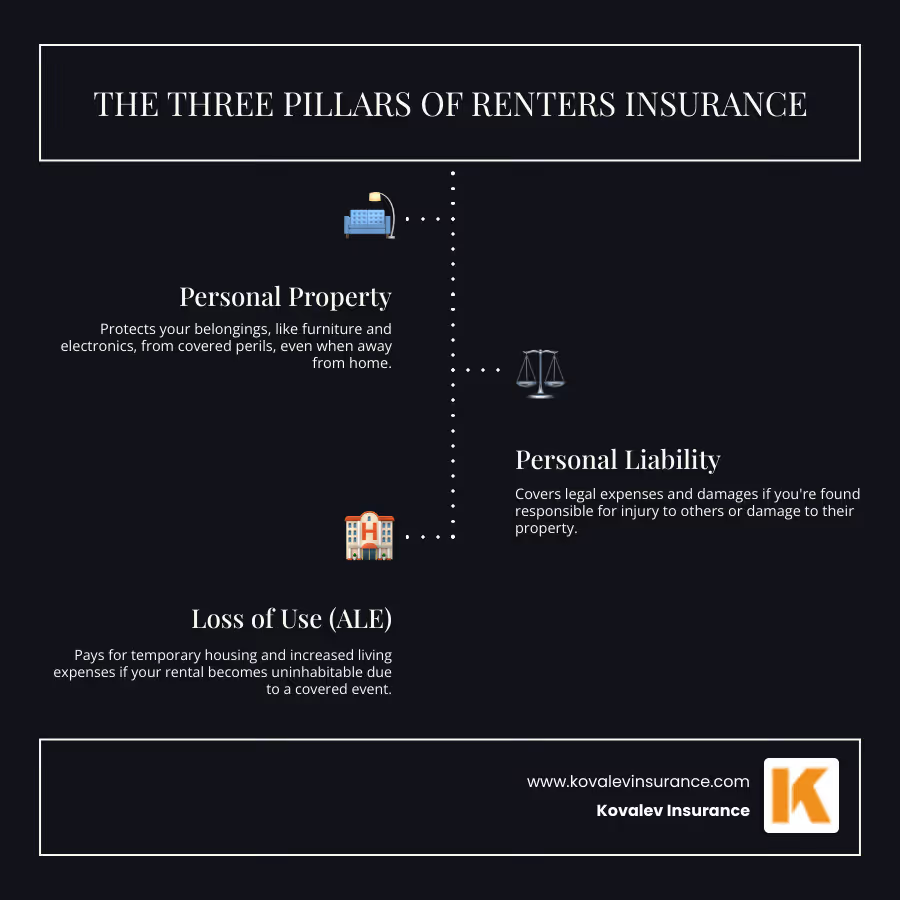
At its core, a standard renters insurance policy is built upon three essential pillars designed to protect you, the tenant, from a variety of financial risks. We like to think of them as your personal financial superheroes:
These three pillars work in concert to provide a comprehensive safety net. It’s important to remember that your landlord’s insurance policy only covers the physical building itself, not your personal belongings or your liability as a tenant. So, while your landlord is responsible for the structure, you're responsible for your world within it.
For a more detailed look at what these policies entail, especially in Massachusetts, we encourage you to explore our comprehensive guide: Renters Insurance Policy Mass.
"Loss of Use" or Additional Living Expenses (ALE) coverage is your policy's way of saying, "Don't worry, we've got you covered when you can't be home." Its primary purpose is to allow you to maintain your normal standard of living as closely as possible, even when your home is temporarily out of commission. Think of it as a financial bridge to normalcy.
So, what exactly does ALE cover? It kicks in for expenses that are above and beyond your normal living costs. This includes:
ALE is not a blank check. It covers additional living expenses, not your regular monthly rent or mortgage payment, which you would still be responsible for. Insurers typically reimburse you for these expenses after you've paid them, so keeping meticulous records and receipts is absolutely vital. We can't stress this enough – hold onto every single receipt!

When life throws an unexpected curveball and your comfy rental home suddenly becomes unlivable, that's when your renters insurance for temporary housing truly shines. But it's not just any hiccup that triggers this crucial coverage. It needs to be what your policy calls a "covered peril."
Here in Massachusetts, we're all too familiar with Mother Nature's mood swings! From those blustery Nor'easters that can send shingles flying to the deep winter freezes that, let's face it, sometimes lead to burst pipes. These are exactly the kinds of scenarios where your renters insurance steps up to become your financial superhero.
This coverage is designed to help you keep your life as normal as possible when your home is deemed "uninhabitable." That simply means it's unsafe, impossible, or just not fit for human living due to significant damage from a covered event. At Kovalev Insurance, we're here to walk you through these challenging times, making sure you understand exactly how your policy works, whether you're in Boston, Newton, or anywhere else in the Greater Boston area.
For specific insights into local coverage, check out our guide: Renters Insurance Boston MA.
The secret sauce to activating your renters insurance for temporary housing is that your displacement must stem from a "covered peril." These are the specific events your insurance policy promises to protect you from. While every policy is a little different, there are some common culprits that would make your rental uninhabitable and kick your Additional Living Expenses (ALE) coverage into action.
Imagine a fire breaking out in your kitchen in Belmont, or smoke damage from a neighbor's unit making your apartment unlivable. Even less common but equally devastating events like explosions would certainly trigger coverage. What if your home in Wellesley was so severely damaged by theft and vandalism that it's no longer safe or secure to live in? Your policy could help.
Then there's the weather! Strong windstorms and hail from a Massachusetts storm can cause major roof or window damage, leaving your home exposed. And let's not forget the bane of many cold-weather dwellers: water damage from internal sources. That's right, those dreaded burst pipes, an overflowing bathtub (oops!), or even a faulty appliance like a washing machine can cause extensive water damage, forcing you out. Even the sheer weight of ice and snow that piles up during our legendary Massachusetts winters can sometimes cause structural damage, compelling a temporary move.
So, what does "uninhabitable" really mean? It's not just a minor inconvenience, like your dryer breaking. It means your home is unsafe, unsanitary, or truly unfit for people to live in because of the damage. This decision is usually made by an insurance adjuster, often in partnership with local authorities like the fire department or building inspectors. It's about a serious disruption that makes a temporary move a necessity.
Once your home is officially declared uninhabitable due to a covered peril, here's the good news: your renters insurance for temporary housing gives you flexibility in where you can stay. The main goal is to provide "reasonable" accommodations that allow you to maintain a lifestyle similar to what you had before the displacement. We're not talking about a five-star luxury vacation, but rather practical comfort.
For those shorter displacements, or when you need immediate shelter, a hotel or motel is usually the first stop. If repairs are going to take weeks or even months, a short-term rental apartment can be a more comfortable and often cost-effective solution than a long hotel stay. Think of places that cater to extended stays, not necessarily vacation spots.
Sometimes, corporate housing – those furnished apartments often used for business travelers – can also serve as temporary homes for displaced individuals. Similarly, extended-stay hotels offer more amenities like kitchenettes, making them perfect for longer periods. In unique situations, perhaps after a widespread disaster or if you want to stay super close to your damaged home, an RV housing option might even be considered.
The key phrase to remember is "reasonable costs." Your insurer will reimburse expenses that are comparable to your normal living situation, not necessarily the most lavish option available. For instance, if your rent in Needham was $2,000 a month, your insurer isn't likely to cover a $5,000 a month luxury penthouse in the Seaport District. They're looking for an equivalent, practical solution that helps you stay comfortable. While Massachusetts doesn't have specific short-term rental insurance for tenants, the fact that regulations exist for property owners (see Information on short-term rental insurance in MA) means these types of rentals are recognized and can be a valid temporary housing option.
While renters insurance for temporary housing is an incredible lifeline, it's not a magic wand for every housing problem. There are specific situations and perils that your policy typically won't cover, meaning you'd be responsible for those temporary housing costs yourself. Knowing these exclusions is just as important as knowing what is covered.
For example, standard renters insurance policies generally don't cover flooding from natural disasters. This means if your apartment in Natick is flooded by rising river water or heavy rain overwhelming drainage, you'd need a separate flood insurance policy to cover the damage and your temporary housing. If you're in a flood-prone area of Massachusetts, we highly recommend checking your flood risk with tools like the FEMA map. Similarly, earthquakes are usually excluded and require specialized coverage, though thankfully, they're less common here in Massachusetts.
What about everyday nuisances? If your apartment becomes uncomfortable due to a leaky faucet, a broken appliance from normal wear and tear, or a general lack of maintenance by your landlord, your policy likely won't cover it. Insurance is for sudden, accidental damage, not ongoing issues. Also, pesky pest infestations, like bed bugs, are generally considered a maintenance or landlord responsibility, not a covered event under renters insurance.
And some situations are simply not covered because they're not unexpected accidents. If you're evicted from your rental property, your insurance won't cover relocation or temporary housing. The same goes for voluntary relocation – deciding to move because you found a better apartment, want a change of scenery, or your lease simply ended. Your renters insurance won't pay for temporary housing during such moves. Finally, if the damage to your home was a result of your own serious negligence or intentional acts, coverage might be denied.
It's always a smart move to review your specific policy documents or simply chat with your friendly Kovalev independent Insurance agent in Newton. We're here to help clarify any uncertainties you might have about your coverage in Massachusetts.

When disaster strikes and you're suddenly without a home, the stress can feel overwhelming. The good news? Your renters insurance for temporary housing is designed to help you through this challenging time. But here's what many people don't realize upfront: it's typically a reimbursement process, not an immediate cash advance.
This means you'll need to pay for your hotel, meals, and other expenses first, then submit receipts to get your money back. Think of it like using a credit card for business expenses - you pay upfront, then get reimbursed later. This is exactly why keeping every single receipt becomes so crucial to your financial recovery.
As your Newton-based insurance team, we've helped countless Massachusetts residents steer these claims. We know how stressful it can be when you're staying in a Brookline hotel while your apartment gets repaired, wondering if that restaurant bill will be covered. That's why we're here to guide you through every step of the process.
For context on what you might expect to pay for coverage, our guide on Average Cost of Renters Insurance in Mass provides helpful insights.
The moment your home becomes unlivable, your first call should be to your insurance company - or better yet, to us at Kovalev Insurance. We'll help you start the claim immediately because timing matters. The sooner you report the incident, the faster you can get the help you need.
Document everything with photos and videos before any cleanup begins. That water damage from the burst pipe in your Wellesley apartment might look obvious to you, but your insurance adjuster needs to see the full extent of the damage. Take pictures from multiple angles, and don't forget to capture any damaged personal belongings too.
Here's where organization becomes your best friend: keep every single receipt. We're talking about hotel bills, restaurant receipts, laundry service costs, storage unit fees, and even parking receipts if you're staying somewhere that requires paid parking. One of our clients in Needham kept a small envelope in her purse specifically for displacement receipts - it saved her hundreds of dollars in reimbursements she might have otherwise lost.
Working with your insurance adjuster is a partnership, not a battle. This person will assess whether your home is truly uninhabitable and review your expenses to ensure they're reasonable and covered. Be honest about your costs and maintain regular communication. If you're staying at a hotel in Natick because it's close to your job, explain that reasoning.
Track your daily expenses beyond just keeping receipts. A simple notebook where you jot down "Hotel: $180, dinner: $45 (normally spend $15 on groceries)" helps paint a clear picture for your adjuster. It also helps you stay aware of your spending and coverage limits.
Submit your documentation regularly rather than waiting until the very end. Many adjusters prefer to process expenses in batches, which can speed up your reimbursements. Plus, if there are any questions about specific expenses, you can address them while the details are still fresh in your mind.
Your renters insurance for temporary housing coverage isn't unlimited, and understanding your specific limits can save you from unpleasant surprises down the road. The amount you have available for Additional Living Expenses is typically calculated as a percentage of your personal property coverage.
Let's say you have $40,000 in personal property coverage with a 20% ALE limit. This gives you $8,000 to cover all your temporary housing and additional living expenses. Here's how that might look in practice:
In the greater Boston area, where hotel costs can easily run $200+ per night, that $8,000 might cover about a month of hotel stays plus meals and other expenses. This is why knowing your limits upfront is so important - it helps you make informed decisions about your temporary housing choices.
Duration matters just as much as dollar limits. Your policy covers expenses for the shortest time needed to either repair your home to livable condition or for you to find permanent new housing. This isn't indefinite coverage. If repairs on your Belmont apartment are taking longer than expected, or if you're being picky about finding the perfect new place, you might hit your time limit before hitting your dollar limit.
What happens if you exceed your coverage? You'll be responsible for paying the difference out of pocket. We've seen this happen when clients choose luxury hotels instead of reasonable accommodations, or when they take several months to find new housing when a few weeks would have been sufficient. The key word insurance companies use is "reasonable" - both in terms of cost and timeline.
This is why we always recommend reviewing your policy limits with us before you need them. It's much easier to increase your ALE coverage when you're sitting comfortably in your home than when you're displaced and stressed, trying to figure out if you can afford another week at a hotel.

When you're suddenly forced out of your home, questions flood your mind faster than water from a burst pipe. We get it – and we're here to help. As your local Massachusetts insurance experts, we've guided countless clients through these challenging situations in Newton, Wellesley, and throughout the Greater Boston area. Let's tackle the most common concerns about renters insurance for temporary housing.
Here's the straightforward answer: your renters insurance for temporary housing will cover your costs for the shortest time needed to either repair your home or help you permanently relocate – but only up to your policy's dollar limit.
Think of it this way: if your Brookline apartment needs two weeks of repairs after a kitchen fire, your coverage lasts those two weeks. If the damage is so severe that you decide to find a new place entirely, coverage continues until you've moved into your new permanent home. The key word here is "reasonable" – insurers won't pay indefinitely if you're taking your sweet time choosing between dozens of apartments in Needham.
The exact duration depends on factors beyond your control, like how extensive the damage is and how long repairs actually take. Unfortunately, construction delays happen, especially in our busy Massachusetts market. Your policy understands this and typically provides coverage for these reasonable delays.
This is probably the biggest misconception we encounter, and the answer is a firm no. Your landlord's insurance policy has one job: protecting the physical building structure and sometimes their own property within it (like the appliances they provide).
Your landlord's policy does not care about your personal belongings, your temporary housing costs, your restaurant bills, or your laundry expenses. It's like expecting your neighbor's car insurance to cover your vehicle – it just doesn't work that way.
This is exactly why you need your own renters insurance policy with Additional Living Expenses coverage. You're responsible for protecting yourself and your lifestyle when disaster strikes. It's your financial safety net, not your landlord's responsibility. For more insight into this topic, check out our guide: Is renters insurance required in Mass?.
Documentation is your best friend when it comes to getting reimbursed for renters insurance for temporary housing. We always tell our clients: "If you don't have a receipt, it didn't happen" – at least as far as your insurance company is concerned.
You'll need to save every single receipt for hotel stays or short-term rental agreements, showing dates and costs. Keep all restaurant meal receipts, but remember – only the additional cost beyond your normal grocery budget gets covered. If you typically spend $100 weekly on groceries but now spend $250 on restaurant meals, you can claim that extra $150.
Don't forget about storage unit fees if you need to store your belongings, moving costs for getting your stuff to and from temporary housing, and pet boarding expenses if your furry friends can't stay with you. Even laundry service costs count if your temporary place doesn't have facilities.
The more organized your documentation, the smoother your reimbursement process will be. We recommend keeping a dedicated folder or envelope for all displacement-related receipts. Your future self (and your insurance adjuster) will thank you for this simple step.
Nobody likes surprises, especially when they shake up your home life. Imagine a burst pipe in your Brookline apartment, or a sudden fire in your Newton rental. Scary thought, right? But here's the good news: with the right renters insurance for temporary housing, you're not left scrambling. It's more than just a policy; it's your peace of mind, a true financial safety net when the unexpected happens.
Think back to those three pillars we talked about: protecting your personal belongings, shielding you from liability, and, of course, that incredible 'loss of use' coverage that pays for your temporary home. This isn't something you want to think about after disaster strikes. Instead, let's be proactive! Take a moment now to truly understand your policy. Do you know your limits? Is your renters insurance for temporary housing truly ready to support your lifestyle if you suddenly can't live in your home in Needham or Wellesley?
That's where we come in! At Kovalev Insurance, we're not just selling policies; we're building relationships and offering real peace of mind to our neighbors across the Greater Boston area – from Newton to Wellesley, Needham to Brookline, Belmont to Natick. We take the time to understand your unique situation. We offer custom coverage options with competitive rates, backed by expert knowledge and a promise of speedy, unparalleled customer service. Our mission is simple: to make sure you feel truly protected, no matter what life throws your way.
So, why leave your financial security up to chance? Let's chat! We'll help you explore the perfect renters insurance policy, custom-fitted for your unique needs right here in Massachusetts. It’s about protecting your home, your belongings, and your precious peace of mind.
Ready to take that step?Get a personalized renters insurance quote today.


X