Blog Content

6
Nov
2025

Trampoline insurance massachusetts is a complex topic that affects thousands of homeowners across the state. Most Massachusetts homeowners don't realize that adding a trampoline to their backyard can dramatically impact their insurance coverage - or even lead to policy cancellation.
Quick Answer for Massachusetts Homeowners:
The stakes are high. Over 1 million people went to the emergency room due to trampoline-related injuries between 2002 and 2011, with total costs exceeding $1 billion. In Massachusetts, where homeowners in Newton, Wellesley, and Brookline face some of the highest property values in the nation, the liability risks are even more significant.
Massachusetts law treats trampolines as "attractive nuisances" - meaning you can be held liable for injuries even to trespassing children. This legal reality makes insurers extremely cautious about covering homes with trampolines, especially in densely populated areas like Needham, Belmont, and Natick.
As Mikhail Kovalev, owner of Kovalev Insurance Agency, I've helped hundreds of Massachusetts families steer the complexities of trampoline insurance for homeowners in massachusetts coverage over the past decade. My team regularly works with homeowners to find insurers willing to provide coverage while ensuring they understand their liability risks and safety requirements.
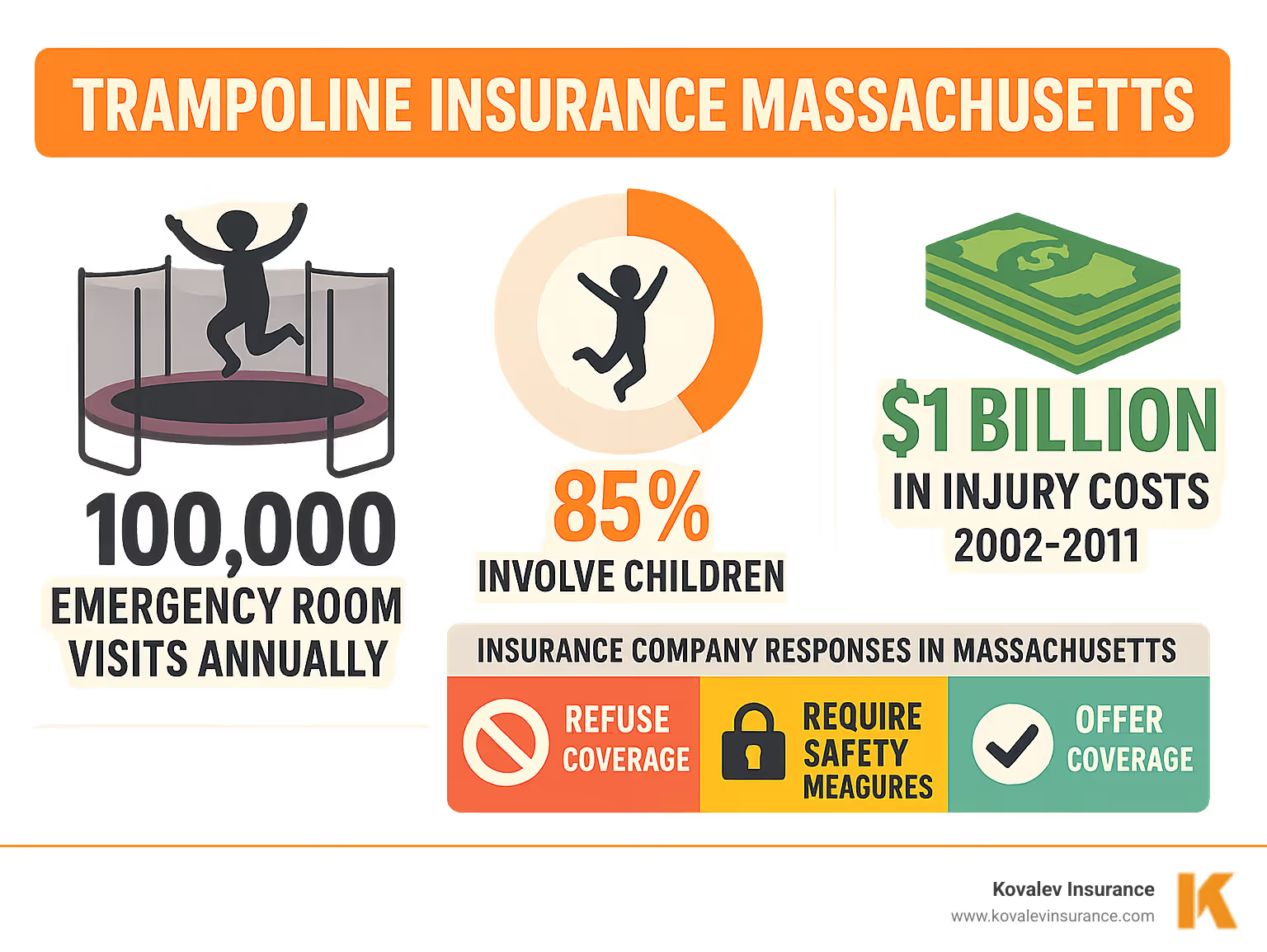
Ever wonder why your insurance company raises an eyebrow at the mention of a trampoline in your backyard? It's not because they're against fun! The truth is, trampolines are seen as one of the highest-risk items a homeowner can own, and for good reason. The numbers tell a pretty clear story: trampolines send approximately 100,000 people to the emergency room each year, and a staggering 85% of those injuries involve children.
This creates a serious headache for insurers, especially here in Massachusetts. Think about it: our state has a dense population and some of the highest property values in the nation. If an injury happens on a trampoline in a town like Newton, Wellesley, or Brookline, the potential costs from a lawsuit can be enormous. This financial exposure makes insurers very cautious about offering trampoline insurance massachusetts.
The overall financial hit from trampoline injuries is massive. Between 2002 and 2011, the total cost of trampoline-related injuries across the country exceeded a billion dollars. When you consider that many of these injuries lead to serious issues like broken bones, sprains, or even lasting neurological damage, requiring extensive medical care, it's easy to see why insurance companies get nervous. They're trying to protect themselves from huge payouts, which in turn affects what they're willing to cover.
Adding to the complexity in Massachusetts is a specific legal concept called the "attractive nuisance" doctrine. This doctrine really ramps up the liability concerns for homeowners. For a deeper dive into what your standard homeowners insurance policy typically covers, you can always refer to our helpful guide on What Does MA Home Insurance Cover?.
The "attractive nuisance" doctrine is a key legal concept that significantly impacts how trampoline insurance massachusetts is viewed. In simple terms, it means that if you have something on your property that naturally draws children in – even if they're trespassing – you have a legal responsibility to protect them from harm.
Trampolines are a prime example of an attractive nuisance. They're just so appealing to kids, who might not fully understand the dangers. This means that if a child from the neighborhood, perhaps from Needham or Belmont, climbs your fence and gets hurt on your trampoline, you could be held liable for their injuries. Even though they weren't invited, the law says you should have taken reasonable steps to prevent that injury.
This legal reality creates a tricky situation for insurance companies. They're not just covering accidents involving your invited guests. They could potentially be on the hook for injuries to any child drawn to your trampoline. This expanded liability is a major reason why many insurers in Massachusetts either refuse to cover trampolines or demand very strict safety measures before they'll even consider it. It's all about protecting your family and your assets from unexpected legal challenges.
This doctrine applies particularly to things that are both tempting to children and inherently risky, like swimming pools and, yes, trampolines. Courts in MA have consistently reinforced that homeowners must take precautions, such as proper fencing with locked gates, to keep kids safe from these hazards.
The numbers surrounding trampoline injuries are pretty eye-opening and clearly explain why insurance companies are so hesitant to provide coverage. According to the U.S. Consumer Product Safety Commission, about 100,000 people visit emergency rooms each year due to trampoline-related incidents. The vast majority of these injuries involve children under the age of 16.
The types of injuries are particularly concerning from an insurance standpoint. Common trampoline injuries include:
The most severe incidents often happen when too many people are jumping at once, or when someone attempts flips or other acrobatic moves without proper supervision. These types of injuries can lead to long-term issues, sometimes even permanent disability, requiring continuous medical care and leading to massive insurance claims.
From a financial perspective, even a single serious trampoline injury can easily run into hundreds of thousands of dollars for medical bills, lost wages (for parents caring for injured children), and pain and suffering. When you multiply that by the sheer number of trampoline injuries each year, it becomes crystal clear why insurers see them as such a significant financial risk, and why your insurance premiums might be affected if you have one.
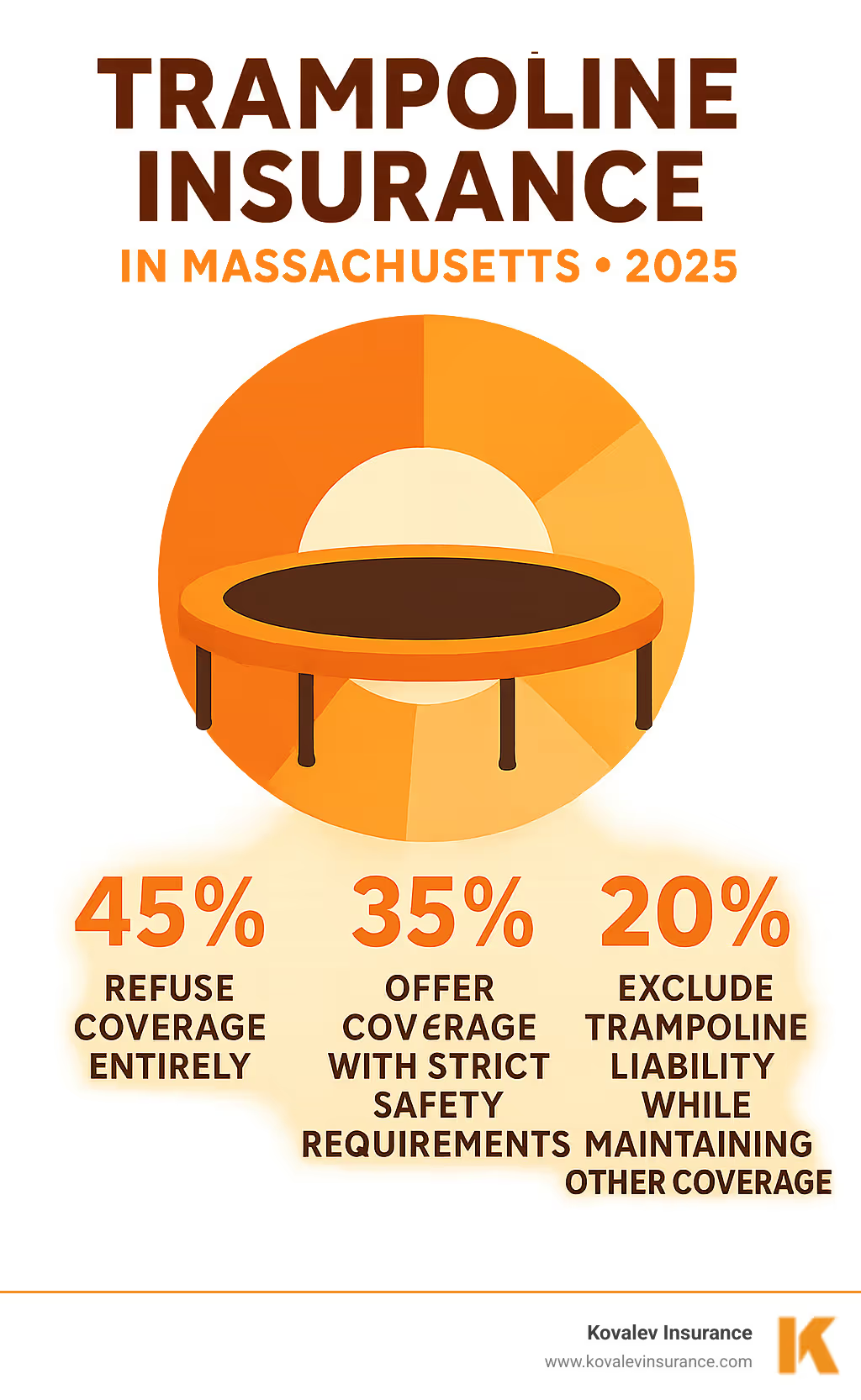
When it comes to trampoline insurance massachusetts, carriers I've worked with typically respond in one of three ways. Your insurer's approach can mean the difference between backyard fun and a policy cancellation notice.
There's no standard playbook for how Massachusetts insurers handle trampolines. What one company deems an acceptable risk with proper safety measures, another may view as an automatic deal-breaker. This inconsistency can be frustrating for homeowners trying to plan ahead.
Here's what I typically see in the Massachusetts market:
The reality is that most Massachusetts insurance companies won't cover a home with a trampoline. I've seen it happen many times: a family in Newton or Wellesley buys a trampoline, and their carrier drops them, forcing a scramble for new insurance.
The cancellation process typically involves a written notice giving you 30 to 60 days to either remove the trampoline or find alternative coverage. Some insurers are stricter, refusing to renew policies if they find a trampoline during an inspection.
This puts families in a tough spot, especially in competitive markets like Brookline where finding replacement coverage is challenging. Disclosing the trampoline upfront complicates the shopping process, as many carriers will decline to quote.
Frustratingly, some homeowners only find their insurer's stance after buying and installing the trampoline. The importance of checking with your agent before making the purchase cannot be overstated.
Some Massachusetts insurers will work with trampoline owners, but they require comprehensive safety measures that must be documented and maintained.
The safety requirements are extensive and non-negotiable. Insurers typically demand a mandatory safety enclosure or net around the entire trampoline, secure ground anchoring to prevent movement during storms, and padded springs and frame edges. Many also require a locked fence around either the yard or specifically around the trampoline area.
Beyond physical safety measures, these insurers often require strict usage rules like no-flip policies, one-jumper-at-a-time rules, and mandatory adult supervision for younger children. Some carriers even specify maximum weight limits and age restrictions.
You may need to provide photos showing compliance, and some insurers conduct periodic inspections. Failure to maintain these standards can result in immediate policy cancellation, making it an ongoing commitment.
For homeowners willing to invest in proper safety equipment and maintain strict usage rules, this can be a viable path to maintaining coverage. You can learn more about finding the right coverage in our guide on Best Homeowners Insurance Massachusetts.
This third approach seems like a compromise but is the most dangerous for homeowners. Under this scenario, your policy remains active, but any injuries or damages related to the trampoline are completely excluded from coverage.
This creates a false sense of security. You still have homeowners insurance, but if someone gets hurt on your trampoline, you're personally on the hook for all medical bills, legal fees, and damages. In Massachusetts, where medical costs and lawsuit awards can be substantial, this exposure can be financially devastating.
The exclusion typically covers both liability coverage for injuries to others and medical payments coverage for immediate medical expenses. This means if a neighbor's child breaks their arm on your trampoline, you're paying for everything out of pocket.
I've seen families in Needham and Belmont think they were covered under this type of policy, only to find during a claim that they had no protection. The "Trampoline At Your Own Risk" (TAYOR) approach leaves you with all the liability and none of the protection.
This option keeps your policy active but transfers all the financial risk from the insurer directly to you. Given the potential for catastrophic injury claims, this is rarely a wise choice for Massachusetts homeowners.
When you decide to add a trampoline to your Massachusetts backyard, you're not just buying a piece of recreational equipment - you're taking on a significant set of responsibilities that could impact your family's financial security for years to come.
I've worked with countless families across Newton, Wellesley, and Brookline who thought they could simply set up a trampoline and enjoy it without considering the insurance implications. The reality is that trampoline insurance massachusetts coverage requires active participation from homeowners who understand their duties and take them seriously.
The good news is that many families successfully maintain both their trampolines and their insurance coverage. The key lies in approaching trampoline ownership with the same level of care and attention you'd give to any other major household decision. This means understanding your legal obligations, implementing proper safety measures, and maintaining open communication with your insurance provider.
Here's the mistake that costs Massachusetts homeowners thousands of dollars every year: they buy a trampoline first and call their insurance agent later. By the time they reach out, they've already invested in the equipment and their children are bouncing away in the backyard.
Always contact your local independent Massachusetts insurance agent before you purchase a trampoline. This single phone call can save you from policy cancellation, claim denial, and the stress of scrambling to find new coverage after you've already made the investment.
When you fail to disclose a trampoline to your insurer, you're not just risking your coverage for trampoline-related incidents - you're potentially voiding your entire policy. Insurance companies view undisclosed trampolines as misrepresentation, which can result in complete policy cancellation and claim denial for any loss, even if it's completely unrelated to the trampoline.
I've seen families lose coverage for house fires, theft, and storm damage simply because an undisclosed trampoline was finded during the claims investigation. The insurer's logic is straightforward: if you weren't honest about the trampoline, what else might you be hiding?
The consequences extend beyond just your current policy. When you apply for new coverage, insurers will ask about previous cancellations. A cancellation for misrepresentation makes you a high-risk applicant, which means higher premiums and fewer coverage options.
When insurers do agree to provide trampoline coverage, they're essentially betting that you'll be responsible enough to minimize the risks. This means implementing specific safety measures and enforcing strict usage rules that many families find challenging to maintain.
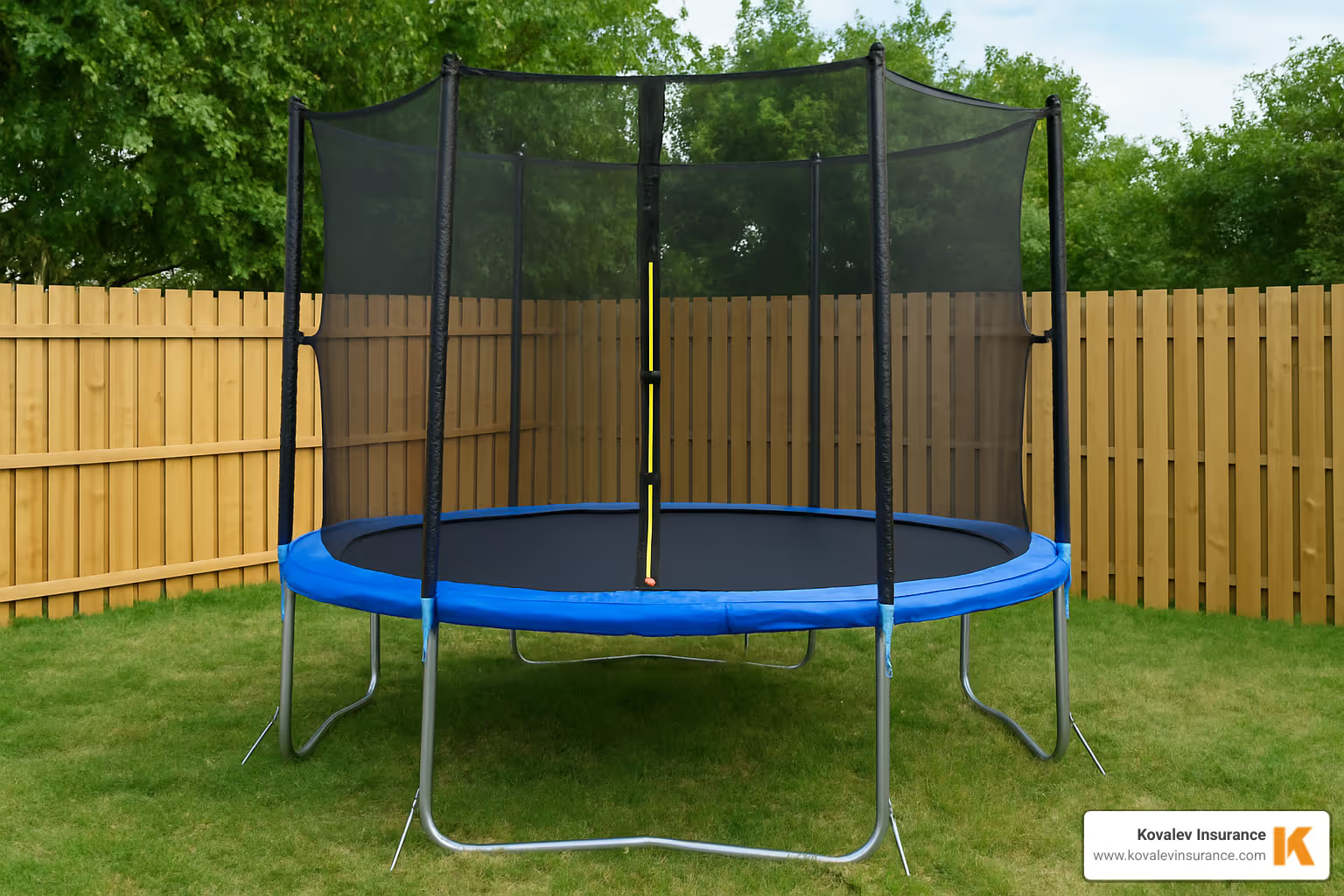
The mandatory safety enclosure is non-negotiable with most insurers. This isn't just a suggestion - it's typically a requirement for coverage. The enclosure must completely surround the trampoline and be properly secured to prevent children from falling off. Along with this, you'll need secure ground anchoring to prevent the trampoline from moving during Massachusetts' notorious nor'easters and summer storms.
Padded springs and frame edges are essential for preventing cuts and bruises, while a locking gate around your yard or the trampoline area helps satisfy the attractive nuisance concerns that make insurers so nervous about trampoline coverage.
The usage rules are where many families struggle. The one-jumper-at-a-time policy is particularly difficult to enforce when you have multiple children or when neighborhood kids come over to play. However, most trampoline injuries occur when multiple people are jumping simultaneously, making this rule critical for both safety and insurance purposes.
Adult supervision is another requirement that sounds simple but can be challenging to maintain consistently. This doesn't mean an adult needs to be standing next to the trampoline at all times, but it does mean that children shouldn't be using the trampoline when no adults are present on the property.
The no-flip rule is perhaps the most important safety measure from an insurance perspective. Flips, somersaults, and other acrobatic maneuvers are responsible for many of the most serious trampoline injuries, particularly head and neck injuries that can result in permanent disability.
Local ordinances in towns like Brookline and Needham may impose additional requirements, such as specific setback distances from property lines or height restrictions. These requirements vary by municipality, so it's important to check with your local building department before installation.
Even with perfect safety measures and strict rule enforcement, trampoline ownership exposes you to liability risks that standard homeowners insurance may not adequately cover. The typical homeowners policy includes liability coverage of $100,000 to $300,000, but a serious trampoline injury can easily exceed these limits.
Consider this scenario: a neighborhood child suffers a serious head injury on your trampoline, resulting in permanent cognitive impairment. The medical bills alone could reach $200,000, and if the family pursues a lawsuit for future care costs and lost earning capacity, the total damages could easily exceed $1 million.
This is why we strongly recommend that trampoline owners consider increased liability limits and umbrella insurance for additional protection. An umbrella policy provides an extra layer of coverage that kicks in when your homeowners policy limits are exhausted.
Personal umbrella insurance is particularly valuable for trampoline owners because it provides broad liability coverage that typically doesn't exclude trampolines the way some homeowners policies do. Our comprehensive overview of Personal Umbrella Insurance Massachusetts can help you understand how this coverage works.
The cost of umbrella coverage is often surprisingly affordable, especially when compared to the potential financial exposure of trampoline ownership. Our detailed analysis of Homeowners Umbrella Insurance Cost can help you understand the investment required for this additional protection.
Beyond the big questions of liability and keeping your coverage, there are a few other important things Massachusetts homeowners need to know when it comes to trampoline insurance Massachusetts. These details can really change how your policy works and what you might have to pay out of pocket.
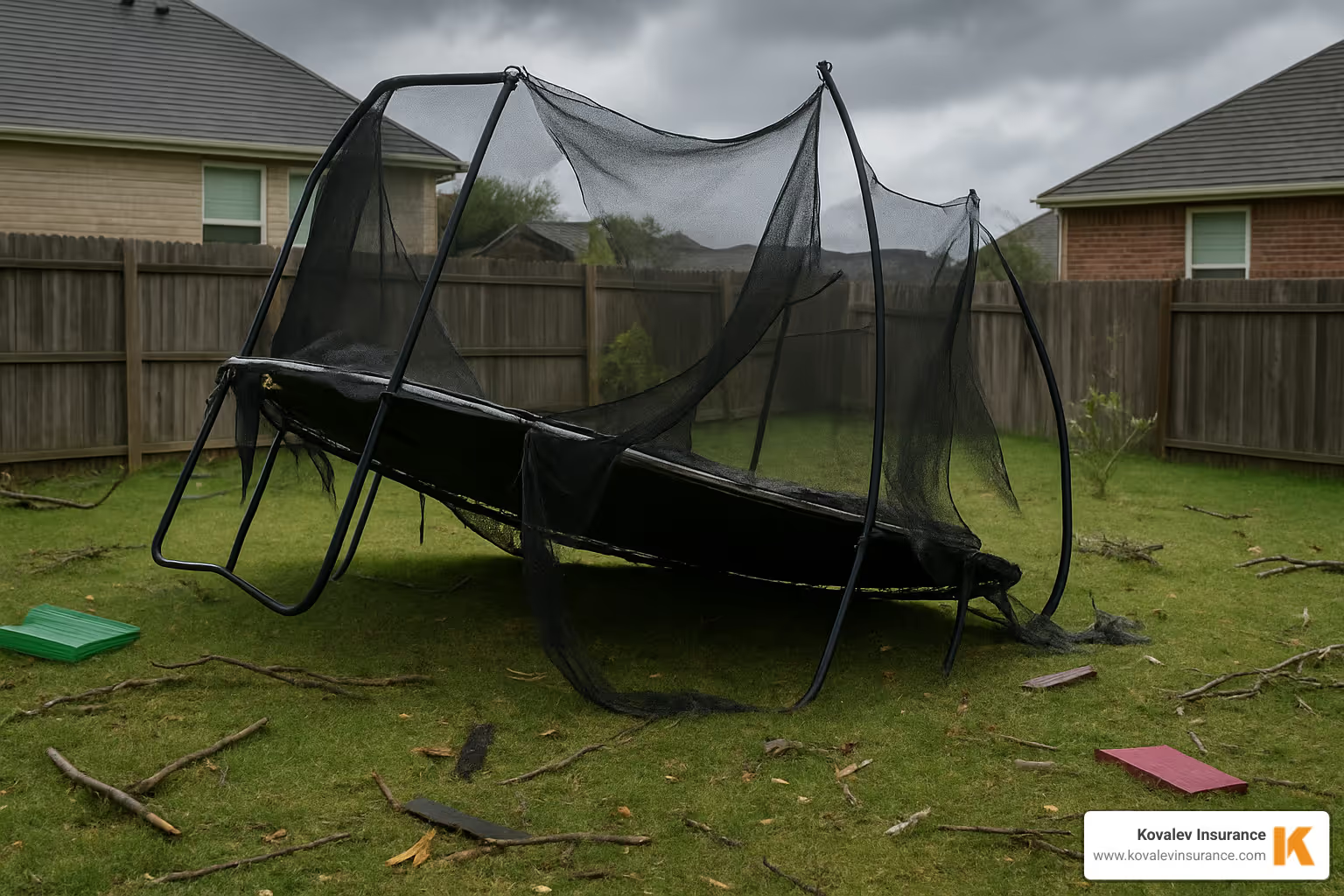
Many folks assume that if their insurer says "no" to trampoline liability, then the trampoline itself isn't covered if it gets damaged. But that's not always true! Your trampoline is usually considered "personal property" under Coverage C of your homeowners policy. This means it might be covered for certain types of damage.
Think about a nasty windstorm that rips through your yard, or a heavy snowfall that bends the frame. What if a tree branch falls on it, or someone steals it, or even vandalizes it? These kinds of events, often called "named perils," can sometimes be covered.
However, there's a catch. Any claim would be subject to your policy's deductible. Also, the payout might be limited to the trampoline's "actual cash value" (what it's worth today) rather than the cost to buy a brand new one. A good trampoline can cost hundreds, even thousands, so it's worth thinking about if the property coverage is worth the risk of serious liability issues. Coverage for the trampoline itself is completely separate from coverage for injuries someone might get while using it.
The world of trampoline insurance Massachusetts gets even more interesting when rental properties are involved. Both landlords and renters have unique things to consider.
For landlords, especially in towns like Natick or Belmont, owning a rental property with a trampoline on site can create big headaches. Even if your tenant owns the trampoline, you could still be pulled into a lawsuit if someone gets hurt. Your own property insurance might even be canceled! We often advise landlords to add specific clauses to their lease agreements, either outright prohibiting trampolines or requiring tenants to show proof of strong renters insurance. Sometimes, landlords even ask to be added as an "additional insured" on the tenant's policy for extra peace of mind.
Now, for renters, it's equally important to be aware. Your standard renters insurance might not cover trampoline-related incidents. And if you put up a trampoline without your landlord's permission, you could be breaking your lease, which might lead to eviction. Always, always get written permission from your landlord first. Then, make sure your renters insurance has enough liability coverage to protect you. We can help you explore your options for Renters Insurance Coverage Massachusetts.
It's true, finding an insurer willing to cover a trampoline in Massachusetts can feel like a treasure hunt. The insurance world is always changing, and what one company sees as too risky, another might be willing to cover if the right safety steps are in place.
That's where working with an independent insurance agent really shines. We're not tied to just one company. Instead, we have access to many different insurance carriers. This means we know which companies are more flexible when it comes to trampolines. We can compare different coverage options and prices to find the best fit for your family and your budget. Plus, we're here to offer ongoing support if your insurance needs change down the road.
The most important tip? Be completely honest about your trampoline from the very beginning. Trying to hide it or adding it later without telling your insurer will only lead to big problems, like your policy being canceled. At Kovalev Insurance, we're here to give you expert advice and help you steer these tricky waters. For personalized assistance and to get started finding the right coverage, don't hesitate to request a Massachusetts Personal Insurance Quote.
Deciding whether to bring a trampoline into your Massachusetts backyard is a big step, isn't it? It's about weighing up the joy and laughter it can bring against some very real financial risks. For families in places like Newton, Wellesley, or Brookline, where property values and potential lawsuit costs are high, this balance is even more crucial.
So, what are the most important things to remember when it comes to trampoline insurance massachusetts?
First and foremost, always, always, inform your Newton, MA insurance agent before you even think about buying a trampoline. This isn't just a suggestion; it's a golden rule. Hiding it or "forgetting" to tell them could void your entire policy, leaving you completely unprotected if something goes wrong – even for unrelated claims. Proactive communication is key to maintaining trust with your insurer and ensuring your coverage stays intact.
Next, safety comes first. We've talked a lot about the "attractive nuisance" doctrine in Massachusetts – meaning you can be held responsible for injuries, even to children who trespass. This makes strict safety measures non-negotiable. Think secure safety netting, padded springs, and especially a locking gate. And let's not forget the rules for jumpers: one at a time, no flips, and always adult supervision. These aren't just good ideas; they're often mandatory requirements for any insurer willing to cover you.
Consider your financial safety net. A standard homeowners policy might not offer enough liability protection for a serious trampoline injury. Increasing your liability limits and adding a Personal Umbrella Insurance Massachusetts policy can be a smart move, providing millions in extra coverage for a relatively small annual cost. It's truly an investment in your peace of mind and protection for your assets. You can learn more about this vital coverage in our guide on Homeowners Umbrella Insurance Cost.
At Kovalev Insurance, we understand the unique challenges facing homeowners in Needham, Belmont, Natick, and across the greater Boston area. We know you want to create fun memories for your family, but you also need to protect your home and your financial future. That's why we specialize in providing expert guidance and custom insurance solutions, helping you steer the sometimes-tricky world of trampoline insurance massachusetts.
The decision to own a trampoline should never be taken lightly. But with the right planning, a strong commitment to safety, and the right insurance partner, you can make an informed choice that balances fun with financial security.
Ready to discuss your specific situation and explore your options? Contact Kovalev Insurance today. We're here to help you find the best homeowners insurance options for your Massachusetts home, ensuring you're well-protected. You can explore our comprehensive guide on Best Homeowners Insurance Massachusetts for more details.



X