Blog Content

22
Dec
2025

Workers comp for independent contractors is often misunderstood, but it can be the difference between financial security and bankruptcy after a workplace injury. While Massachusetts doesn't require most independent contractors to carry workers' compensation insurance, the lack of coverage leaves you vulnerable to devastating costs.
Quick Answer: Do You Need Workers' Comp as an Independent Contractor?
The gig economy has transformed how we work, with more professionals choosing the flexibility of independent contracting. In Massachusetts towns like Newton, Wellesley, and Brookline, skilled contractors are thriving - from electricians to consultants to handymen. But this freedom comes with a hidden risk.
When you're self-employed, there's no safety net if you're injured on the job. A single accident can drain your savings, force you into debt, and threaten your family's financial future. Your personal health insurance likely excludes work-related injuries, leaving you to pay thousands in medical bills out of pocket.
The financial stakes are real. A construction accident requiring surgery can cost $50,000 or more. Lost wages during recovery can stretch for months. Without workers' comp protection, these costs fall entirely on you.
We've I've helped hundreds of Massachusetts contractors steer workers comp for independent contractors over the past decade, seeing how the right coverage protects both livelihoods and peace of mind. The decision to get coverage isn't just about compliance - it's about taking control of your financial future.
Understanding whether you're classified as an employee or an independent contractor is fundamental to grasping your workers' compensation needs. This isn't just a legal formality; it's the crucial distinction that dictates insurance requirements, liabilities, and potential benefits. In Massachusetts, this distinction is particularly important, as our state employs specific criteria to make this determination.
The law generally presumes that a worker is an employee unless specific conditions are met. This is where the Massachusetts ABC Test comes into play. This three-pronged test is designed to prevent businesses from misclassifying employees as independent contractors to avoid responsibilities like workers' compensation insurance, unemployment contributions, and payroll taxes.
Here are the three prongs of the Massachusetts ABC Test:
If a business cannot prove all three of these conditions, the worker is legally presumed to be an employee. This test is a cornerstone of our state's labor laws, aiming to protect workers and ensure fair labor practices. You can learn more about these guidelines directly from Independent contractors | Mass.gov.
For businesses in the Greater Boston area and across Massachusetts, correctly classifying your workforce is not just a suggestion – it's a legal imperative. Misclassifying an employee as an independent contractor carries significant risks and severe penalties.
First, there are the tax implications. When you classify someone as an independent contractor, you avoid paying employer-side payroll taxes (like Social Security and Medicare contributions) and unemployment insurance. If reclassified, you could be on the hook for years of back taxes, plus interest and penalties. The IRS has clear guidelines on the differences between an employee and an independent contractor, and they don't take misclassification lightly.
Then there are wage and hour laws. Employees are entitled to minimum wage, overtime pay, and other protections under state and federal law. Independent contractors are not. If a misclassified worker successfully sues, you could face massive payouts for unpaid wages, liquidated damages, and legal fees.
And, of course, there's workers' compensation. If a worker you classified as an independent contractor gets injured and is later determined to be an employee, your business could be liable for their medical expenses and lost wages. This can happen even if you thought you were doing everything right. We've seen businesses face catastrophic financial consequences because of this. This is precisely why we often recommend exploring Employment Practices Liability Insurance (EPLI) to protect against claims arising from employment practices, including misclassification.
The penalties for misclassification can be severe. In New York, civil penalties for non-coverage can be as high as $2,000 per violation for each 10-day period of non-compliance, up to two times the cost of compensation. While Massachusetts has its own rules, the message is clear: the cost of misclassification far outweighs the perceived savings.
Generally speaking, no. In Massachusetts, as in most states, businesses are not legally required to provide workers' compensation insurance for true independent contractors. Workers' comp is typically reserved for employees (W-2 wage earners).
However, there's a significant "but" here: the exception is misclassification. If a business treats an independent contractor like an employee (e.g., controlling their work, providing tools, setting hours, integrating them into the core business operations), and that worker gets injured, a state agency or court might reclassify them as an employee. In such a scenario, the business would then be held liable for workers' compensation benefits, along with potential fines and penalties for failing to provide coverage.
This risk is particularly acute for general contractors, especially in busy communities like Needham and Belmont. If a general contractor hires a subcontractor (who operates as an independent contractor) and that subcontractor doesn't have their own workers comp for independent contractors, the general contractor can become the "statutory employer." This means if the subcontractor gets injured, the general contractor's workers' comp policy could be on the hook, and their premiums could increase. It's a common practice for general contractors to require proof of workers' comp from their subcontractors precisely to avoid this liability.
To protect themselves, many businesses in Massachusetts choose to ensure their independent contractors have their own coverage. This isn't just about avoiding legal trouble; it's about smart risk management. For a broader understanding of how this fits into your overall protection strategy, consider reviewing our insights on Business Liability Insurance in Massachusetts.
Even if you're a legitimate independent contractor and businesses aren't legally required to cover you, there are powerful reasons why getting your own workers comp for independent contractors is one of the smartest moves you can make. This isn't about checking a legal box – it's about protecting everything you've worked to build.
Here's something that catches many independent contractors off guard: your personal health insurance policy probably won't help you if you get hurt on the job. In fact, it might make things worse.

Most health insurance policies have what's called a "work-related injury exclusion." This means if you fall off a ladder while fixing a client's roof in Newton or hurt your back moving equipment for a job in Wellesley, your health insurance can legally refuse to pay. Even worse, if they accidentally pay first and later find it was work-related, they can demand you pay them back every penny.
Think about that for a moment. You're already dealing with an injury, lost income, and mounting medical bills. Then your health insurance company sends you a bill for $25,000 because they want their money back. It's a nightmare scenario that happens more often than you'd think.
Workers' compensation fills this dangerous gap. It covers your medical expenses at 100% – no deductibles, no copays, no surprises. While your disability insurance might replace some lost income, it won't touch those medical bills. Only workers' comp provides the complete protection you need.
Want to know a secret about winning more work? Having your own workers comp for independent contractors can be your competitive advantage. Many general contractors and clients in towns like Needham, Belmont, and Natick simply won't hire you without it.
Here's why: if you get injured on their job site and don't have coverage, guess who might be on the hook? The general contractor. Their insurance premiums could spike, and they could face legal headaches that last for years. Smart contractors have learned to avoid this risk entirely by requiring proof of insurance upfront.
This proof comes in the form of a Certificate of Insurance (COI). When you can hand over that COI, you're not just meeting a requirement – you're showing that you're a professional who takes business seriously. You're demonstrating that you understand risk management and that you're prepared for the unexpected.
The contractors who can provide COIs often get first dibs on the bigger, more profitable jobs. They're seen as reliable partners, not potential liabilities. In the competitive Massachusetts market, this small investment in coverage can open doors to opportunities that would otherwise be closed to you.
Let's talk about what really matters: protecting your family's financial future. As an independent contractor, you're essentially the CEO of your own company. And like any good CEO, you need to think about risk management.
Without workers comp for independent contractors, a single serious injury can create a financial disaster. You're facing two massive problems at once: skyrocketing medical bills and zero income while you recover.
Medical costs can be staggering. A construction accident requiring surgery can easily hit $50,000 or more. Physical therapy, prescription medications, follow-up appointments – it all adds up fast. Meanwhile, you're not working, which means no money coming in. How long can your family survive on savings alone?
For many independent contractors, even a few weeks without income means struggling to pay the mortgage, put food on the table, or keep the lights on. We've seen hardworking professionals forced into bankruptcy because one bad day on the job wiped out years of financial progress.
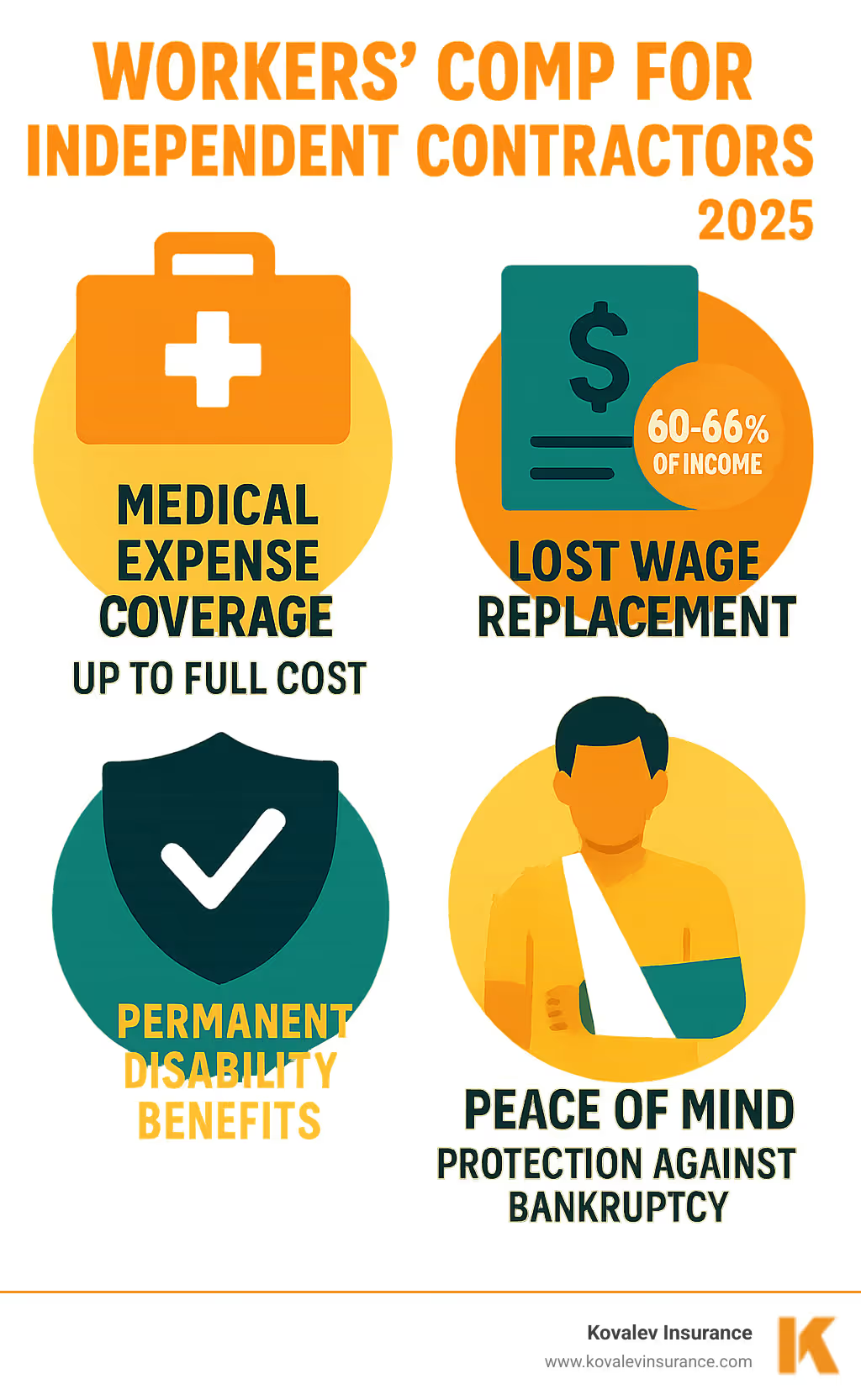
Workers' compensation changes everything. It covers your medical expenses completely and provides about two-thirds of your average weekly wages while you recover. In severe cases, it can provide permanent disability benefits or even survivor benefits for your family.
This isn't just insurance – it's peace of mind. It means you can focus on getting better instead of worrying about how you'll pay for treatment. It means your family can maintain their standard of living while you recover. It means one accident won't destroy everything you've built.
The cost of coverage is surprisingly affordable – often less than what you'd spend on coffee each month. But the protection it provides? That's priceless.
We understand that as an independent contractor, every dollar counts. So, when considering workers comp for independent contractors, the first question is always: "How much is this going to cost me?" And for businesses, the question is, "What happens if I don't comply?" Let's break down the financial aspects from both perspectives.

The cost of a workers' compensation policy for a single independent contractor varies significantly based on several factors:
While costs can vary, we've seen very affordable rates. In 2023, the median monthly price for workers' compensation insurance through one major provider was $67 per month. The average monthly rate was $119. Some contractors can find coverage for as little as $21 monthly. A self-employed business can expect to pay less because their payroll is typically smaller than a larger company's.
Massachusetts does not have a state-run workers' compensation fund, meaning policies are purchased on the open market from private insurers. This means shopping around is key to finding the best rates. At Kovalev Insurance, we specialize in finding custom coverage options and the best rates for our Massachusetts clients. You can learn more about how we help with Workers' Compensation Insurance in Massachusetts.
For businesses, failing to carry required workers' compensation insurance for employees (or for workers who are later reclassified as employees) can lead to severe consequences in Massachusetts. Our state takes this very seriously, and the penalties are designed to be a strong deterrent.
If the Department of Industrial Accidents (DIA) determines that a business has failed to provide required workers' compensation coverage, they can issue a "stop-work order," immediately halting all business operations. This can be financially devastating, effectively shutting down your business until compliance is met.
Beyond stop-work orders, the financial penalties are substantial:
For example, in Arizona, you can be assessed a civil penalty of $1,000 for failing to carry workers' comp insurance. In Oklahoma, a fine of $1,000 per day can be imposed. These examples highlight the serious repercussions.
As a business owner, understanding Who is covered by workers' compensation insurance - Mass.gov is crucial to avoid these harsh penalties. It's far cheaper and less stressful to ensure compliance upfront than to face the consequences of non-compliance.
We get plenty of questions from independent contractors and businesses throughout the Greater Boston area about workers' compensation. After helping hundreds of contractors over the years, I've noticed the same concerns come up again and again. Let me address the most common ones with straight answers.
The short answer? Generally, no - Massachusetts doesn't legally require sole proprietors without employees to carry workers' compensation insurance for themselves. If you're flying solo as a partnership without employees, the same rule typically applies.
But here's where it gets interesting (and why I always tell clients to keep listening after that "no"):
High-risk fields change the game. If you're swinging hammers in construction or working with heavy machinery, some regulations or client requirements might still demand coverage, even without employees. The construction industry has its own set of rules that don't always follow the general guidelines.
Client contracts are king. This is the big one. Many businesses and general contractors in Newton, Brookline, and Wellesley will flat-out require proof of workers comp for independent contractors before they'll hire you. It's their way of protecting themselves if you get hurt on their property. No certificate of insurance? No job.
Personal protection is priceless. Even when not legally required, I strongly recommend sole proprietors consider covering themselves. Your health insurance won't cover work-related injuries, and a serious accident could mean crushing medical debt and zero income while you recover. Electing to cover yourself creates a safety net that could save your financial future.
This scenario plays out constantly for skilled workers throughout our area. The legal requirement might be "no," but the practical reality often makes coverage essential.
Absolutely, yes. A general contractor, client, or any hiring entity can legally require you to provide proof of your own workers' compensation coverage before they'll work with you. They'll typically ask for a Certificate of Insurance (COI) to verify your coverage.
Why do they care so much? It's all about protecting themselves from liability. If you get injured on their job site without your own coverage, that business could become liable for your medical expenses and lost wages. This is especially true if there's any gray area in how you're classified or if a court later decides you were actually an employee.
When a subcontractor is uninsured, the general contractor may become liable for their injuries. The general contractor's insurance company may even charge premiums for that uninsured subcontractor. Requiring proof of workers' comp coverage from subcontractors helps avoid these liabilities entirely.
This practice is completely legal and incredibly common in the industry. Think of it as a business protecting itself the same way you protect yourself with insurance.
A "ghost policy" (sometimes called an "if-any" policy) is a workers' compensation policy with a very low premium designed for independent contractors or sole proprietors with no employees. The "ghost" name comes from the fact that there's essentially no payroll to cover - just a nominal amount for the owner.
The main purpose? To provide a Certificate of Insurance (COI) to clients who require proof of workers' comp coverage, even when the independent contractor doesn't have employees.
Ghost policies can be issued in Massachusetts, but here's the critical part many contractors miss: a ghost policy provides no actual workers' compensation benefits for you, the policyholder, if you get injured. It's designed to cover potential employees who might be finded during an audit, but not the owner.
The risks are real. Many independent contractors mistakenly believe a ghost policy protects them personally. It doesn't. If you get hurt, you're still facing medical bills and lost wages entirely on your own. You're also at risk during audits - if you hired someone temporarily and didn't report them, you could face significant back premiums and penalties.
While a ghost policy might satisfy a client's COI requirement, it leaves you personally exposed to financial devastation from a work-related injury. For true personal protection, especially in physically demanding trades, a traditional policy with proper coverage is far safer.
The bottom line: Ghost policies exist and are legal, but relying on one without understanding its limitations is risky business. Make sure you know exactly what you're getting - and what you're not getting - before you sign up.
As an independent contractor, you're essentially the CEO of your own career. That's exciting - but it also means you're responsible for protecting yourself in ways that traditional employees never have to worry about. Throughout this guide, we've unpacked the complexities of workers comp for independent contractors, from understanding Massachusetts classification laws to recognizing why your health insurance won't help if you get hurt on the job.
The key takeaways are clear: even if Massachusetts doesn't legally require you to carry workers' compensation as a sole proprietor, the financial risks of going without coverage are enormous. A single serious injury could wipe out years of hard work and savings. Meanwhile, having your own policy opens doors to bigger contracts and gives you the professional credibility that clients in Newton, Wellesley, and throughout the Greater Boston area expect.
Taking control of your risk management isn't just smart business - it's essential for your peace of mind. When you know you're protected, you can focus on what you do best: delivering excellent work for your clients. You won't lie awake at night wondering what would happen if you fell off a ladder or threw out your back moving equipment.
At Kovalev Insurance, we've spent over a decade helping independent contractors in communities like Brookline, Needham, Belmont, and Natick steer these exact challenges. We understand that every contractor's situation is unique - a freelance consultant has different needs than a residential electrician. That's why we focus on personalized solutions that fit your specific work, budget, and risk profile.
We're not just insurance providers; we're your partners in building a sustainable, protected business. Our expertise lies in translating complex insurance concepts into clear, actionable advice. We pride ourselves on finding you the best rates while ensuring you get the coverage you actually need - not just the cheapest policy that leaves you exposed.
Don't leave your livelihood to chance. The cost of workers comp for independent contractors is often much less than people expect - sometimes as low as $21 per month. Compare that to the potential cost of a single emergency room visit or months of lost income, and the math becomes pretty clear.
Contact us for your personalized artisan contractors insurance quote today. Let's have a conversation about your specific needs and find the right path to protection for your contracting business.



X