Blog Content

7
Feb
2026
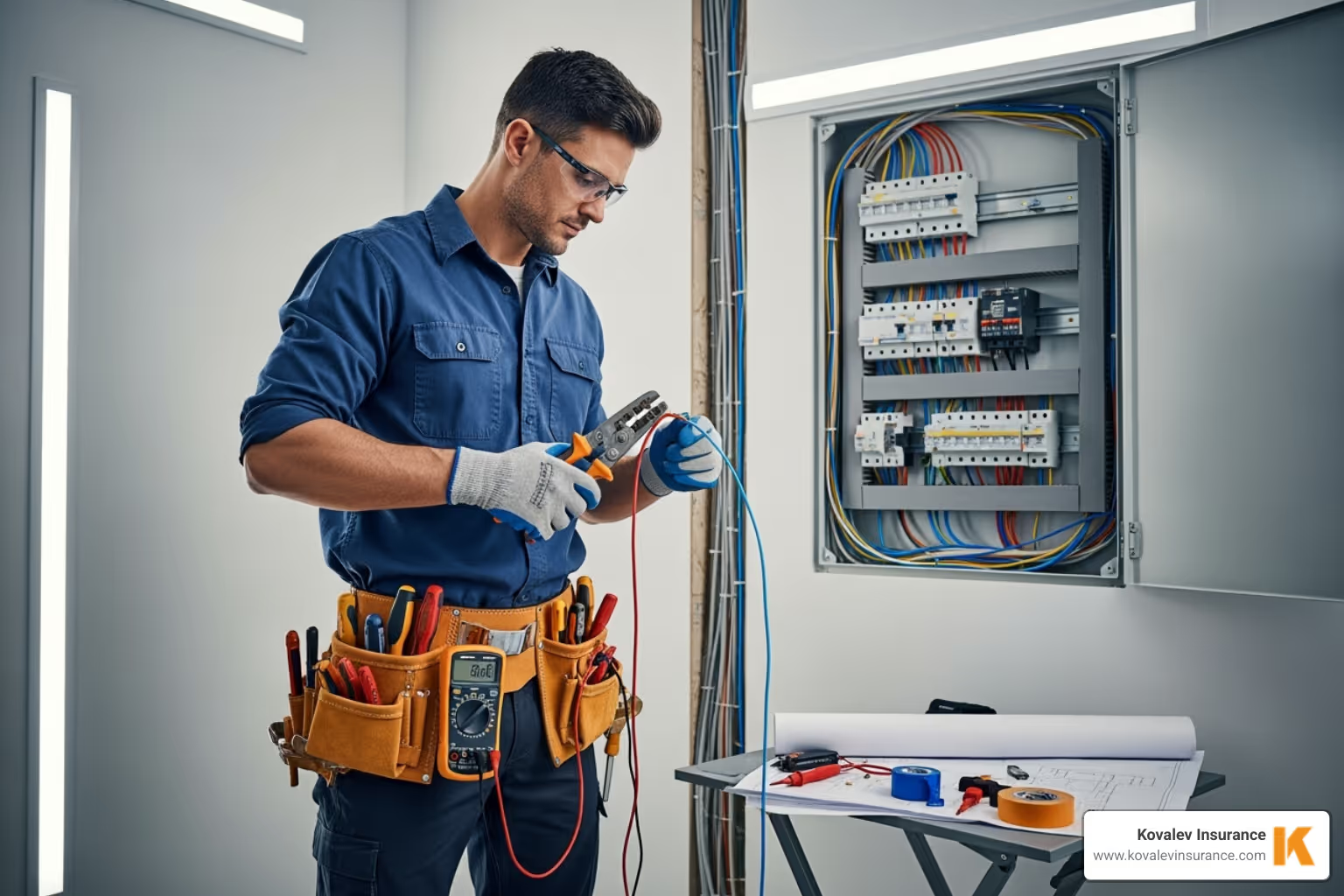
Electrical contractor general liability insurance protects electricians from costly lawsuits when their work accidentally injures someone or damages property. Whether you're rewiring a home in Newton or upgrading commercial systems in downtown Boston, this coverage is your financial shield against third-party claims.
Quick Answer: What Does Electrical Contractor General Liability Insurance Cover?
As a Massachusetts electrician, one honest mistake—like cutting the wrong wire in a Wellesley basement or leaving tools where a client might trip in Brookline—could result in thousands in damages and legal fees.
The stakes are high in electrical work. Fire departments respond to approximately 32,000 home electrical fires per year, causing $1.2 billion in direct damage. Even skilled professionals can face claims from accidents or alleged faulty workmanship.
Most Massachusetts cities require proof of insurance for permits, and many general contractors won't hire subcontractors without it. More importantly, a single lawsuit could force you to close your business.

Key terms for electrical contractor general liability insurance:
Think of electrical contractor general liability insurance as your business's safety net against claims from third parties—anyone who isn't you or an employee. When customers, property owners, or even passersby allege that your work caused them harm, this coverage steps in to protect you financially. Here’s what it typically covers:
It's also important to know what general liability doesn't cover. Employee injuries fall under workers' compensation, damage to your own tools requires separate equipment coverage, and claims of bad professional advice are handled by professional liability insurance. For more details on how these policies work in Massachusetts, visit our General Liability Coverage Massachusetts page.
When a lawsuit arises, your electrical contractor general liability insurance acts as your financial bodyguard.
Legal defense coverage is the most immediate benefit. Attorney fees for a typical lawsuit can be staggering, but your policy covers these costs, assigning experienced lawyers to defend you. This means you don't have to find or fund your own legal team.
If you are found liable, the policy covers settlements and judgments up to your coverage limits. This prevents a single accident from wiping out your business savings or forcing you to sell equipment to pay damages.
This financial protection shields your business assets from being seized to satisfy a judgment. Without it, your work trucks, tools, and even personal assets could be at risk, depending on your business structure.
This insurance can prevent business closure. Litigation costs are a primary reason small businesses fail; a U.S. Small Business Administration study found that even a single lawsuit can cost a small firm between $3,000 and $150,000 in legal expenses. A general liability policy ensures that one mistake or false claim doesn't end the business you've worked so hard to build, giving you invaluable peace of mind.

For Massachusetts electricians, electrical contractor general liability insurance isn't just smart—it's often a requirement to do business. Before you can even discuss a home rewiring project in Newton or a commercial job in Brookline, clients and general contractors will ask for your certificate of insurance.
State licensing requirements, local permit rules, and client contracts all point to the necessity of this coverage. General contractors in places like Needham require their subs to be insured to protect their own operations. Beyond these mandates, having proper insurance signals professionalism and builds business credibility. It provides the financial security to know that one accident won't destroy everything you've built.
While the Massachusetts Board of State Examiners of Electricians focuses on technical qualifications, the practical need for insurance is undeniable. The answer isn't a simple yes or no, but a combination of factors.
Local city requirements in Newton, Belmont, and other towns often demand proof of insurance for permits. Without a Certificate of Insurance, you can't pull a permit, which means you can't legally work.
In some cases, it may be a condition of electrician licensing, varying by license class or local rules.
However, client mandates are the most powerful driver. Homeowners, businesses, and general contractors will almost universally require proof of your electrical contractor general liability insurance before hiring you. No insurance means no job.
The bottom line: the practical realities of getting permits and contracts make this coverage essential. For more on business liability in our state, see our guide on Business Liability Insurance Mass.
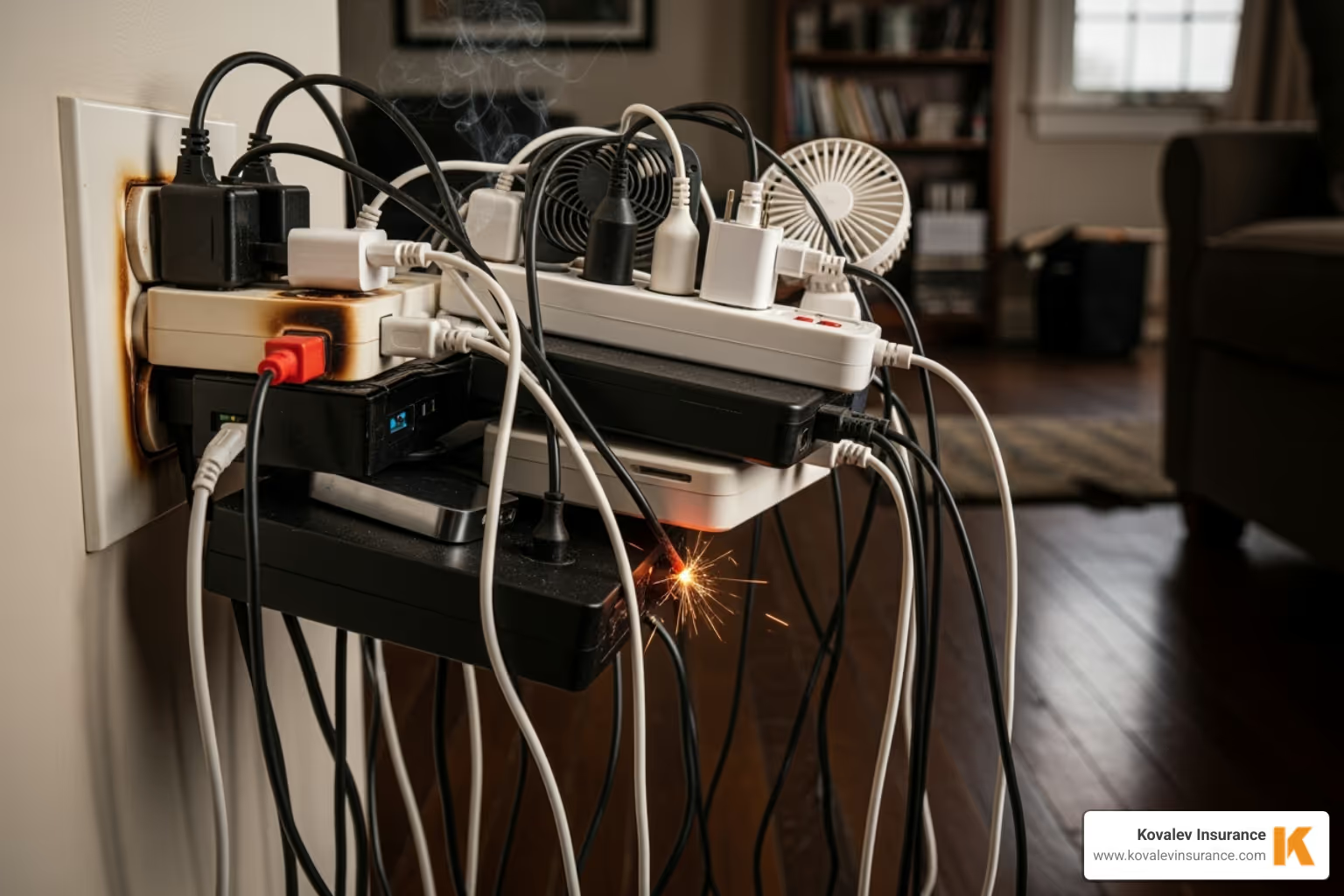
Electrical work carries serious risks where a single mistake can lead to devastating fires, severe injuries, and costly property damage. According to the National Fire Protection Association (NFPA), U.S. fire departments respond to roughly 32,000 home electrical fires each year, causing more than $1 billion in direct property damage.
Imagine a power surge from your work frying expensive equipment in a Natick medical office, or faulty wiring leading to a fire in a historic Brookline home. Without comprehensive electrical contractor general liability insurance, you're betting your entire career and personal assets on never making a mistake. It's a gamble no Massachusetts electrician can afford to take.
Electricians across Massachusetts often ask, "What's this going to cost me?" You need to protect your business while managing overhead. The good news is that electrical contractor general liability insurance is often more affordable than you might think.
For a self-employed electrician with no employees, coverage can start as low as $300-$500 per year. For larger companies, the cost may range from a few hundred to several thousand dollars annually, depending on factors like payroll and project scope.
The value proposition is clear. Compare that modest annual premium to the potential cost of an uninsured claim. A client in Newton tripping over your equipment or your completed work in a Brookline restaurant causing electrical damage could lead to tens of thousands in damages, plus legal fees that could bankrupt your business. For specific cost insights for Massachusetts, check our guide on More info about General Liability Insurance MA Cost.

Understanding what drives your premium helps you make smart decisions.
An experienced agent can help you steer these factors to optimize your coverage and cost. For more tips, see our guide on Ways to Reduce Cost of Artisans Insurance.

Getting your electrical contractor general liability insurance should be straightforward. At Kovalev Insurance, we've streamlined the process for Massachusetts electricians.
Working with an independent agent like us is a key advantage. We partner with multiple top-rated carriers to shop for the best policy and price for your specific needs, unlike online quote tools that offer a one-size-fits-all approach.
To get a quote, we'll ask for basic information: the services you provide (e.g., residential work in Wellesley vs. commercial in Boston), your location, number of employees, annual revenue, and claims history. We'll walk you through it.
Once your policy is active, you'll get a Certificate of Insurance (COI). This one-page document is your proof of coverage, required by clients and permit offices in towns like Newton and Needham. We can issue COIs quickly whenever you need them.
While general liability is your foundation, it's rarely the only coverage an electrician needs. Bundling policies can create a comprehensive safety net and often save you money.
As construction insurance experts, we can bundle these coverages to ensure you have robust protection without paying for extras. See our Construction Insurance resources for more insights.
We get lots of great questions from electricians across Massachusetts - from Newton to Natick and everywhere in between. Here are the ones that come up most often:
This question comes up constantly, and I totally understand why it's confusing! The two serve completely different purposes, even though both are often required for electrical work.
General liability insurance is all about protecting your business when things go wrong. If you accidentally cause property damage or someone gets hurt because of your work, your electrical contractor general liability insurance steps in to cover legal costs, settlements, and damages. It's your financial shield against third-party claims.
A surety bond, on the other hand, is essentially a promise to your client or the government that you'll complete your work properly and follow all regulations. If you don't fulfill your contract obligations - say you abandon a job halfway through or don't meet code requirements - the bond compensates your client for their losses. But here's the catch: you're still on the hook to pay back the bonding company.
Think of it this way: insurance protects you from what you might accidentally do wrong, while a bond protects your client from what you might intentionally do wrong (or fail to do at all). Many Massachusetts municipalities require electricians to carry license bonds because of the serious safety risks involved in electrical work.
Nope, and this is probably the biggest misconception we encounter! Your electrical contractor general liability insurance only covers damage you cause to other people's property - not your own stuff.
If someone swipes your tools from a job site in Natick (or anywhere else), general liability won't help you replace them. You'd need separate Tools & Equipment insurance, which is typically part of an inland marine policy. This specialized coverage protects your valuable tools and equipment whether they're stolen from your truck, damaged in transit, or lost on a job site.
Given that copper wire and electrical tools are prime targets for thieves, this coverage is definitely worth considering as a separate investment in protecting your livelihood.
Absolutely! In fact, if you work as a subcontractor, you'll probably be required to do this before you can even start work.
Adding a general contractor as an "additional insured" to your electrical contractor general liability insurance policy extends your coverage to protect them for work you perform. If something goes wrong with your electrical installation and both you and the general contractor get sued, your policy would help defend and cover the general contractor too.
This arrangement makes perfect sense from the general contractor's perspective - they want protection from potential problems with subcontractor work. From your perspective, it's usually just a simple endorsement that costs very little but keeps your clients happy and gets you more work opportunities.
We handle these additional insured requests all the time, and we can usually get the paperwork sorted out quickly so you don't have to delay starting your project.
In short, electrical contractor general liability insurance is not just another expense; it's the foundational protection for your business. It shields you from the high-stakes risks of electrical work—from client injuries in Newton to property damage in Brookline—ensuring one accident doesn't jeopardize your livelihood.
The potential cost of a single uninsured claim far outweighs the affordable premium for this essential coverage. At Kovalev Insurance, we specialize in tailoring policies for Massachusetts electricians. We understand the local risks and can build a plan that protects your hard-earned business and gives you peace of mind.
Don't leave your future to chance. Take control of your business's future today by securing the protection you need.
Get a quote for your Artisan Contractors Insurance in Mass and let us show you how comprehensive protection can give you the confidence to focus on what you do best.



X