Blog Content

28
Jan
2026

Workers comp for contractors is a critical safety net protecting your business and livelihood from the financial fallout of workplace injuries. Whether you're a sole proprietor in Newton or a general contractor in Brookline, understanding your coverage requirements is essential.
Key Requirements for Massachusetts Contractors:
The construction industry has some of the highest injury rates in Massachusetts. A single accident can lead to medical bills over $40,000, lost wages, and lawsuits. Operating without proper coverage puts your entire business at risk.
The stakes are high in Massachusetts due to strict worker classification laws. Misclassifying an employee as an independent contractor can trigger hefty fines, stop-work orders, and liability for back taxes and premiums.
Imagine a crew member falls from scaffolding on your Newton job site. The medical bills pile up, and a potential lawsuit threatens your business. This is why workers comp for contractors exists – it's your financial lifeline when accidents happen.
Workers' compensation is a no-fault insurance system providing medical expense coverage, lost wage replacement, and lawsuit protection for on-the-job injuries. It covers accidents regardless of who is at fault—whether it's employee error, equipment failure, or bad luck.
This protection is crucial for Massachusetts contractors. The construction industry is a high-risk industry with high injury rates. Every job site, from Wellesley to Brookline, has potential hazards.
Workers comp for contractors covers injuries from minor cuts to permanent disability. The average claim costs around $40,000. Without coverage, these expenses come directly from your profits and personal assets.
The death benefits component is also vital. If a fatal accident occurs, workers' comp provides financial support to the worker's family, highlighting the importance of construction safety.

For more detailed information about how these requirements apply specifically in our state, check out More info about Worker Compensation Insurance Massachusetts.
When an employee is injured on your job site in Needham or Natick, workers' comp handles the financial burden. Coverage includes:
While comprehensive, workers' comp has exclusions. Understanding them helps you avoid coverage gaps. Generally, it does not cover:
These exclusions highlight the need for clear safety and workplace policies.
This is where things get expensive if you get it wrong. In Massachusetts, the distinction between an employee (W-2) and an independent contractor (1099) is a critical workers comp for contractors requirement. I've seen contractors in Newton and Brookline get blindsided by this, facing massive fines, back taxes, and insurance premiums after an audit revealed they had misclassified workers.
Massachusetts is strict on worker classification. Misclassifying a worker can lead to significant state fines (tens of thousands per worker), stop-work orders, liability for back taxes (Social Security, Medicare), and responsibility for unpaid insurance premiums with interest. It's not always obvious which category a worker falls into, so understanding the rules is crucial.
Most subcontractors operate as independent businesses, but the key question is whether they meet Massachusetts' strict legal definition. And trust me, it's stricter than you think.
Massachusetts uses the strict "ABC Test" and operates on a presumption of employment. Every worker is considered an employee unless you can prove they meet all three of the following criteria:
Failing even one part means the worker is your employee for workers' comp purposes, regardless of any contract.
You can find more details about the strict MA definition of an independent contractor on the state's website. For contractors specifically, understanding these rules is part of managing the broader risks facing artisan contractors in Massachusetts.
The consequences of misclassification in Massachusetts are severe. The state is aggressive with enforcement, and an IRS audit or state review can be financially devastating.
It's far cheaper to classify workers correctly from the start. When in doubt, treat them as employees—it's the safer path. The IRS view on employee vs. contractor designation is equally strict.
Massachusetts state law (General Laws c. 152) regarding workers comp for contractors is simple: if you have employees, you need coverage. There is no minimum employee threshold; even one employee triggers the requirement. Massachusetts uses an open market system, meaning you buy your policy from a private insurer, not a state fund. This allows for more options but requires careful shopping. Rules vary slightly for different business structures (sole proprietorships, LLCs, corporations), and corporate officers may sometimes opt out of coverage, depending on ownership.

If you're pulling permits in Newton or Wellesley, you'll need to complete the workers' compensation affidavit. For comprehensive protection beyond just workers' comp, check out our Construction Insurance Coverage Massachusetts options.
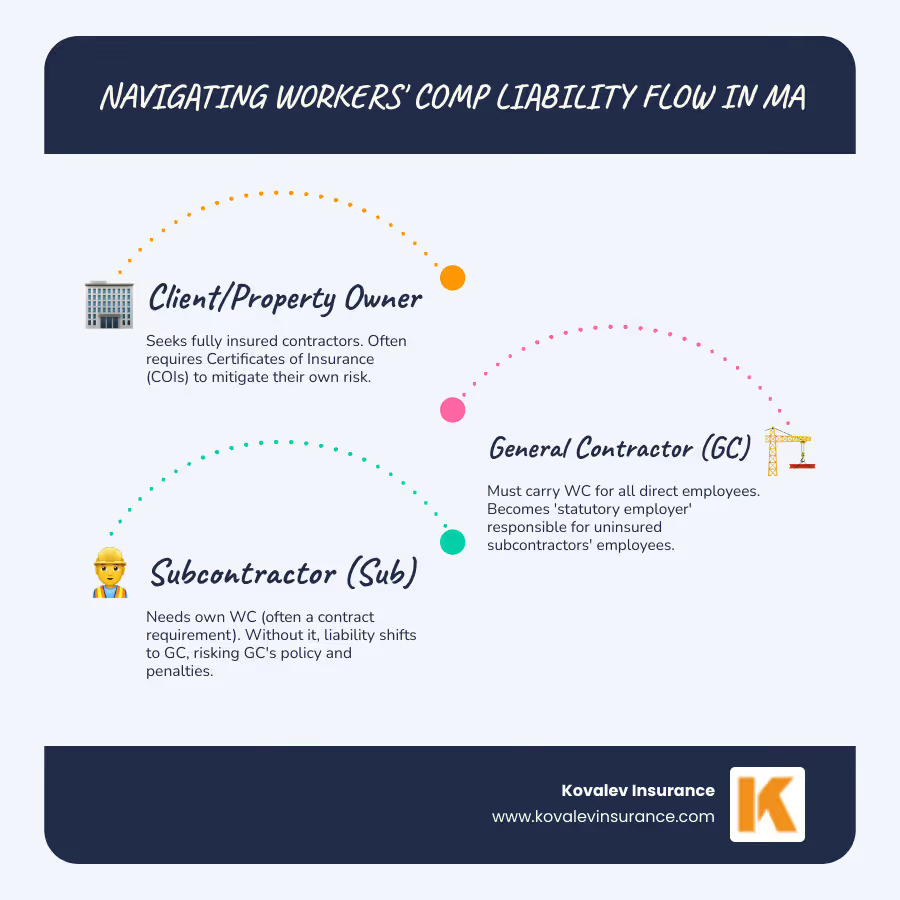
As a general contractor in Massachusetts, you must cover your own W-2 employees. However, your responsibility extends further due to "statutory employer liability." If you hire a subcontractor without their own workers' comp insurance, you become responsible for their injured workers. Their injury claim will hit your policy.
Protecting yourself requires diligence. Always verify subcontractor insurance with a Certificate of Insurance (COI) before they start work. Check policy dates and coverage limits. During your annual audit, any payroll for uninsured subs will be added to your premium calculation, often at a very high rate. Your general liability policy works with workers' comp but covers different risks. Learn more about General Liability Coverage Massachusetts and how it complements your policy.
This is a common question from contractors in Brookline, Needham, and Belmont.
Even for a one-person operation, having coverage opens doors to better jobs with GCs who manage risk properly. You'll also need to complete a Workers' Compensation Insurance Affidavit for most permitted work in Massachusetts, confirming your compliance. You can find A practical guide to the MA Workers' Compensation Insurance Affidavit to help you understand what's required.
The bottom line? While the law might not require workers comp for contractors in every situation, the practical realities of doing business in Massachusetts usually make it necessary.
For general contractors in Massachusetts, the liability from hiring uninsured subcontractors is a business-crushing reality. It can lead to unexpected costs, premium hikes, and legal headaches. This is where the Certificate of Insurance (COI) is your most valuable tool. A COI is a document from an insurer proving a subcontractor has valid coverage, detailing what's covered, the limits, and the expiration date. Without a COI, any injury to an uninsured sub's worker on your job site could become a claim on your workers comp for contractors policy.

When reviewing a COI, be thorough:
Being diligent about COIs protects you across all your insurance needs, which ties into the broader conversation about Artisans Contractors Insurance.
Hiring subcontractors in Brookline, Needham, and Belmont requires a systematic approach to risk management.
If a subcontractor lacks their own workers comp for contractors policy, you have two choices.
The cost of covering an uninsured sub can be significant, as you'll pay premiums at their trade's risk rate. Also, beware of "ghost policies"—policies purchased just to get a COI and then canceled. Always verify a suspicious COI directly with the insurer. Proactively managing subcontractor insurance is the only way to protect your business from unexpected audit bills.
Here are answers to the most common questions I hear from contractors across Newton, Wellesley, and the greater Boston area about workers comp for contractors.
Legally, no. Massachusetts law does not require a sole proprietor with no employees to have workers' comp. However, practically speaking, yes. Nearly every general contractor in Wellesley will require you to provide a certificate of insurance. They do this to protect themselves from liability if you are injured on their job site. Additionally, your personal health insurance likely excludes work-related injuries, meaning a fall on a Brookline project could leave you with huge medical bills and no income. Workers comp for contractors is your best protection.
Your premium is calculated based on several factors:
An experienced agent can help ensure you're classified correctly and guide you on keeping your EMR low.
Yes, absolutely. In Massachusetts, if you hire an uninsured subcontractor, you become the "statutory employer" for their workers. You are then responsible for providing workers' comp benefits if their employee gets hurt on your job. Worse, the injured worker could bypass the workers' comp system and sue you directly for negligence. This can lead to massive claims, as seen with contractors in Belmont and Natick facing six-figure bills. The risk is too high; never allow an uninsured subcontractor on your site. Always get a valid Certificate of Insurance first.
Think of workers comp for contractors as the foundation of your business—without it, a single workplace injury could cause everything to crumble. Protecting your business means mastering a few key areas:
Navigating these requirements in Newton, Needham, and the greater Boston area can be complex. At Kovalev Insurance, we've spent over a decade helping contractors in Massachusetts build solid foundations of protection. We understand the unique risks you face, from a solo artisan in Belmont to a GC in Natick, and we create custom insurance solutions to fit your specific needs.
Ready to build a stronger, more secure future for your business? Get a quote for your Artisan Contractors Insurance in Massachusetts today. Because when your foundation is solid, everything else becomes possible.




X