Blog Content

10
May
2026

HO3 home insurance is the most common type of homeowners policy in the United States, accounting for over 78% of all active policies. This "special form" policy offers a unique hybrid approach - protecting your home's structure against all perils except those specifically excluded, while covering your personal belongings only against named perils like fire, theft, and windstorm.
Quick Answer: HO3 Home Insurance Coverage
For Massachusetts homeowners in Newton, Wellesley, and surrounding communities, understanding your HO3 policy is crucial. Most mortgage lenders require this coverage, and with home values regularly reaching six or seven figures in our area, proper protection isn't optional.
The policy's hybrid structure means that if a tree falls on your Brookline home during a winter storm, the dwelling damage is covered. But if your laptop is stolen, you'll need to prove it was taken by one of the 16 named perils - which theft fortunately is.
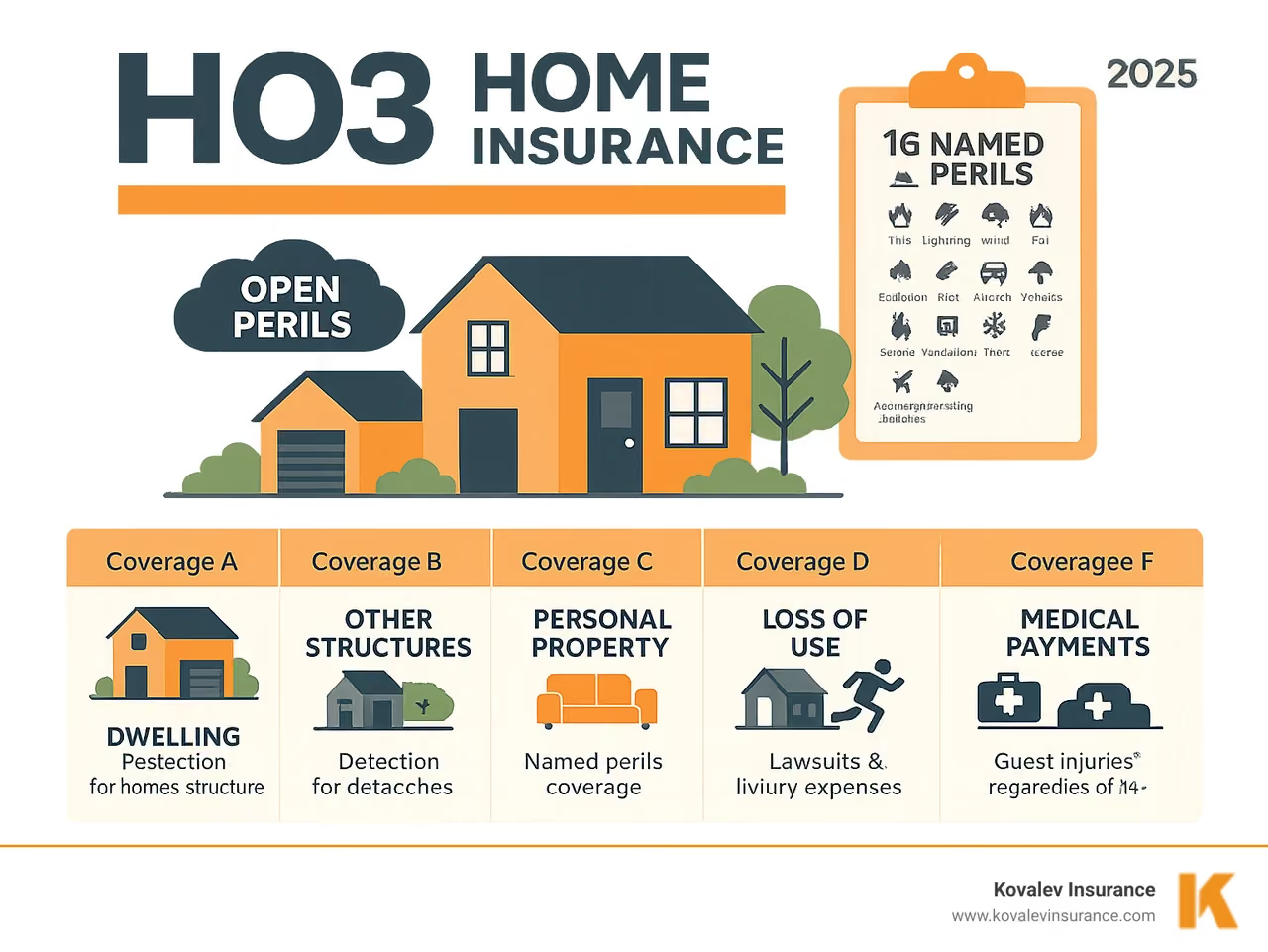
Your HO3 home insurance policy is a safety net with different layers of protection. Understanding how they fit together helps you make smarter coverage decisions. Let's walk through each component so you know exactly what you're getting.
The heart of your HO3 home insurance policy lies in how it protects the physical structures on your property. This protection comes in two main flavors that work hand in hand.
Coverage A protects your dwelling itself - the main structure where you live. We're talking about your foundation, walls, roof, built-in appliances, and anything permanently attached to your home. If it's part of the house's bones, Coverage A has it covered.
Coverage B extends that protection to other structures on your property that aren't attached to your main home. Your detached garage where you park the car, that storage shed in the backyard, the fence marking your property line in Newton, or even a gazebo where you enjoy summer evenings - they're all protected under Coverage B.
Here's where HO3 home insurance really shines: both your dwelling and other structures get open perils protection. This is insurance speak for "we'll cover pretty much anything that happens, unless we specifically say we won't." It's like having an umbrella that covers you from all directions.
This broad protection means you're covered for the obvious disasters like fire from a kitchen accident or lightning strike, windstorm and hail damage from those fierce Massachusetts storms, and the weight of ice and snow that can pile up dangerously on your roof during our New England winters.
But it also covers the unexpected stuff. If a meteorite crashes through your Wellesley roof (hey, it could happen!), you're likely covered because meteorite damage isn't specifically excluded. That's the beauty of open perils coverage - it protects against risks you might never think to ask about.
While your home's structure enjoys that broad open perils protection, your personal belongings get a different type of coverage under Coverage C. Your furniture, electronics, clothing, and all the stuff that makes your house a home are protected, but only against specific events listed in your policy.
This named perils coverage means your personal property is only protected if it's damaged by one of the perils specifically mentioned in your policy. Think of it as a guest list for a party - if you're not on the list, you're not getting in.
Most HO3 home insurance policies protect your belongings against 16 named perils including the big ones like theft, vandalism, and fire, plus others like windstorm, explosion, and even damage from aircraft (because apparently that's more common than you'd think). The list also covers things like sudden water damage from burst pipes and electrical surges that fry your electronics.
Here's something important to understand about how your belongings are valued. Most policies start with actual cash value (ACV), which means if your five-year-old couch gets ruined, you get what it's worth today, not what a new one costs. That's often disappointing when you're trying to replace your stuff.
That's why we usually recommend adding replacement cost value (RCV) coverage through a policy endorsement. Yes, it adds about 10% to your premium, but it means you get enough money to actually replace your belongings with new items of similar quality. For most families in Brookline or Needham, that peace of mind is worth the extra cost.
Even the best HO3 home insurance policy has exclusions, which are situations your policy won't cover. Understanding these gaps helps you make informed decisions about additional coverage.
The big one is flood damage. Whether it's from heavy rain, overflowing rivers, or storm surge along Massachusetts' beautiful coastline, flood damage isn't covered by standard homeowners insurance. If you're anywhere near water - and let's face it, that's most of us in the Boston area - separate flood insurance is essential.
Earthquakes and sinkholes are also excluded, along with other earth movement. While we don't think of Massachusetts as earthquake country, they do happen, and the damage can be significant.
Your policy also won't cover wear and tear, neglect, or intentional damage. Insurance is for unexpected accidents, not for maintenance issues you've been putting off or damage you cause on purpose.
Home-based business activities are another important exclusion. If you run a business from your Belmont home and a client gets injured during a meeting, your personal liability coverage might not apply. For significant business operations, you'll want to explore our business insurance options to make sure you're properly protected.
Beyond protecting your physical property, your HO3 home insurance policy includes crucial coverages that protect your financial well-being in ways you might not expect.

Coverage E provides personal liability protection when someone gets hurt on your property or you accidentally cause bodily injury or property damage to others. This includes legal defense costs, settlements, and judgments. Whether it's a dog bite incident or someone slipping on your icy Natick driveway, this coverage has your back financially.
Coverage F handles medical payments to others regardless of who's at fault. If a guest gets injured on your property - say they trip over your coffee table and need stitches - this coverage can quickly pay their medical bills without anyone having to prove negligence. It's designed to handle minor injuries before they become major liability issues.
Coverage D covers loss of use, also called additional living expenses. When your home becomes unlivable due to a covered loss, this pays for hotel costs, restaurant meals above your normal food budget, and other extra expenses while your home is being repaired. If a burst pipe forces you out of your home for weeks, you won't have to worry about paying for temporary housing out of pocket.
These coverages work together to protect not just your property, but your financial stability and quality of life when the unexpected happens. They're often the most valuable parts of your policy, even though they're not the ones people think about most.
While HO3 home insurance is the go-to choice for most homeowners nationwide, every Massachusetts home tells a different story. Your charming Victorian in Newton has different needs than a modern colonial in Wellesley, and what works perfectly for your neighbor might leave gaps in your protection.
The truth is, choosing the right homeowners insurance isn't about following the crowd – it's about understanding your unique situation and finding coverage that fits like a perfectly custom suit. Let's explore whether an HO-3 policy truly serves your needs or if you might benefit from exploring other options.
Think of the HO-5 policy as the HO3 home insurance policy's overachieving sibling. Both policies protect your dwelling with the same robust open perils coverage, but they part ways when it comes to your personal belongings – and that difference can be significant.
Here's where it gets interesting: with an HO-5 policy, if you accidentally knock over your grandmother's antique lamp or spill wine on your expensive Persian rug, you're likely covered. Under HO3 home insurance, these "oops" moments typically aren't covered because they don't fall under the 16 named perils.
For homeowners in Brookline or Needham with significant investments in art, jewelry, or high-end electronics, the HO-5's comprehensive personal property protection can be a game-changer. Yes, you'll pay more upfront, but the broader coverage often pays for itself when life's little accidents happen.
The catch? HO-5 policies are pickier about which homes they'll cover. Insurance companies typically reserve them for newer, well-maintained properties in areas with excellent fire protection. If your home qualifies and you have valuable personal property, the cost-benefit analysis often favors the HO-5.
Selecting the right HO3 home insurance policy is like finding the perfect recipe – you need the right ingredients in the right proportions. Too little coverage leaves you vulnerable; too much coverage strains your budget unnecessarily.

Start by assessing your coverage needs with surgical precision. Your home's replacement cost – not its market value – should drive your dwelling coverage amount. In Massachusetts, where construction costs can surprise even seasoned homeowners, this calculation requires local expertise. We're talking about the cost to rebuild your home from scratch, including everything from foundation to roof tiles.
Next, create a personal property inventory that would make Marie Kondo proud. Walk through your home with a camera or smartphone, documenting everything from your kitchen appliances to your winter coats. This exercise often reveals that homeowners have more valuable belongings than they realize, especially when you add up electronics, clothing, furniture, and those "little things" that somehow cost a fortune to replace.
Choosing deductibles requires honest self-reflection about your financial comfort zone. A $1,000 deductible might save you money on premiums, but can you comfortably write that check if disaster strikes? A $2,500 deductible saves even more but requires deeper pockets when claims arise.
Comparing quotes is where our expertise shines brightest. While the average cost of an HO-3 policy hovers around $2,304 nationally for $300K in dwelling coverage, Massachusetts rates vary dramatically based on your specific location and home characteristics. A waterfront property in Belmont faces different risks than a suburban home in Natick.
This is where local expertise becomes invaluable. We understand Massachusetts weather patterns, coastal risks, and the unique challenges facing homeowners in the greater Boston area. Our relationships with multiple carriers mean we can shop your coverage across different companies, finding the sweet spot between comprehensive protection and reasonable premiums.
For deeper insights into navigating the Massachusetts homeowners insurance landscape, our expert guidance on Massachusetts home insurance provides comprehensive strategies custom to our local market.
The "right" HO3 home insurance policy isn't necessarily the cheapest or the most expensive – it's the one that protects your specific situation without breaking your budget. That's exactly the balance we help you achieve.

X