Blog Content

8
Jan
2026
How much is condo insurance in massachusetts is one of the most common questions we hear from condo owners across the Bay State. The quick answer: Massachusetts condo insurance averages $669 per year or about $56 per month for a standard policy with $60,000 in personal property coverage, $300,000 in liability protection, and a $1,000 deductible.
Quick Cost Overview:
Whether you own a sleek downtown Boston condo with floor-to-ceiling windows or a charming unit in Newton or Brookline, protecting your investment is crucial. Imagine a neighbor's overflowing bathtub causing water damage to your newly installed hardwood floors - this is exactly when condo insurance becomes your financial lifeline.
Condo insurance isn't legally required in Massachusetts, but mortgage lenders typically mandate it. More importantly, your condo association's master policy only covers common areas and the building exterior - leaving your personal belongings, interior improvements, and liability exposure unprotected.
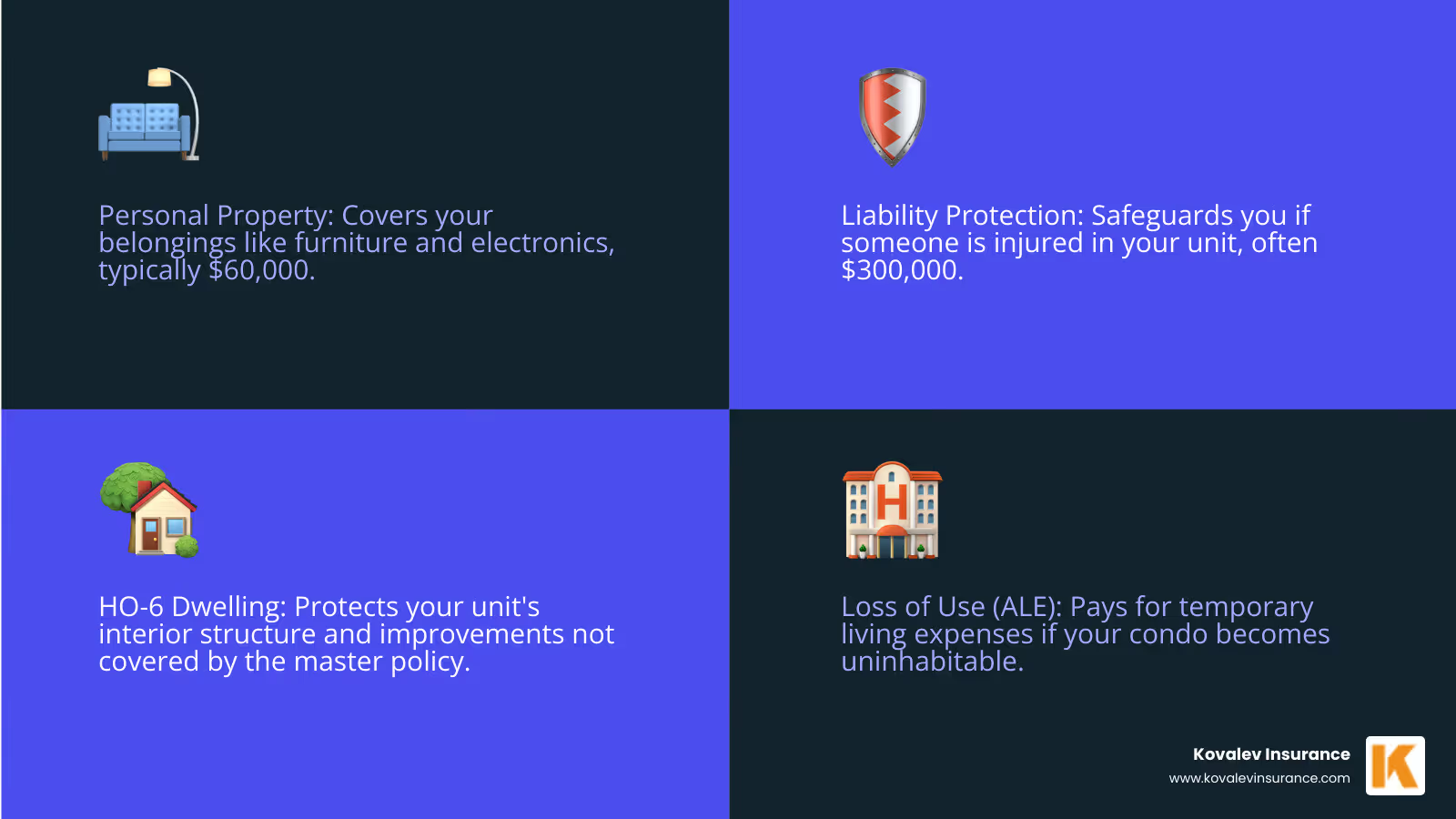
While averages provide a helpful starting point, how much is condo insurance in Massachusetts for your specific situation depends on several key factors. Your condo insurance policy (officially called an HO-6 policy) protects everything the condo association's master policy doesn't cover. The good news? Massachusetts rates are competitive, especially in our beautiful suburban communities.

Most Massachusetts condo owners pay around $669 annually for their insurance, which breaks down to about $56 per month. This is a small price for protecting your entire investment and peace of mind.
Here's what those average figures typically include:
$60,000 in personal property coverage protects everything inside your unit, from furniture and electronics to clothes and kitchen appliances. If you've furnished your Newton or Brookline condo with quality pieces, you might need higher coverage.
$300,000 in liability protection is your financial shield if someone gets hurt in your unit or you accidentally damage a neighbor's property. We often recommend bumping this up to $500,000 or even $1 million for stronger protection against lawsuits.
A $1,000 deductible means you'll pay the first thousand dollars of any covered claim before your insurance kicks in. It's a popular choice for balancing reasonable premiums with an affordable out-of-pocket expense.
Massachusetts condo insurance costs run slightly higher than the national average of $455 to $656 annually, reflecting our higher property values.
For personalized coverage that fits your specific needs, check out our personal insurance solutions.
Location makes a huge difference in how much is condo insurance in Massachusetts you'll pay. Insurance premiums vary significantly from Boston's Back Bay to quiet Natick.
Urban areas like Boston see the highest rates, often reaching $883 in certain ZIP codes due to higher population density, crime rates, and repair costs.
Suburban communities where we proudly serve—Newton, Wellesley, Brookline, Needham, Belmont, and Natick—enjoy some of the most competitive rates in the state. These towns benefit from lower crime rates and excellent emergency services, which insurers reward with better pricing.
Coastal proximity also impacts costs. Insurers factor in storm damage risks when setting rates for oceanfront and near-coastal properties, even though standard policies don't cover floods.
Even within the same county, rates vary. Middlesex County averages around $515 annually, while Bristol and Worcester counties see rates near $530. These local differences highlight why getting a personalized quote is so important.
Your coverage choices directly impact your premium. It's about finding the right balance between protecting your assets and your budget.
Personal property coverage scales with your belongings' value. Increasing coverage from $30,000 to $90,000 typically adds about $160 to your annual premium. An honest inventory of your possessions is key—that new kitchen renovation in your Wellesley condo might mean you need higher coverage.
Liability limits offer incredible value. Bumping coverage from $300,000 to $500,000 or $1 million costs surprisingly little but provides much stronger protection.
Your deductible choice significantly affects premiums. Raising your deductible from $1,000 to $2,500 can save you around 10% annually. Just ensure you can comfortably afford that higher out-of-pocket amount.
Dwelling coverage depends heavily on your condo association's master policy. If your building has "bare-walls" coverage, you'll need more dwelling protection than if it has comprehensive "all-in" coverage.
The National Association of Insurance Commissioners (NAIC) data shows how these coverage variations affect costs, helping you make informed decisions about your policy limits.
How much is condo insurance in massachusetts is determined by a personalized recipe of factors. Each element contributes to the final cost, and knowing them helps you understand why your neighbor might pay a different rate. Three main categories shape your condo insurance premium: your personal risk profile, your building's characteristics, and your coverage choices.

Your condo's address plays a starring role in determining your insurance costs. Massachusetts offers everything from busy city centers to peaceful coastal towns, and each location brings its own risk considerations.
Proximity to the coast significantly affects your premium. Living near the ocean means increased exposure to storm damage and wind-related claims. Even though standard condo insurance doesn't cover flooding, insurers still factor in the higher likelihood of weather-related incidents.
Crime rates in your neighborhood directly impact your personal property coverage costs. Areas with higher theft or vandalism rates typically see increased premiums. This is one reason why competitive rates are common in Newton, Wellesley, and Brookline—these areas balance urban convenience with suburban safety.
Local fire protection quality also matters. Insurance companies consider how quickly firefighters can respond and the quality of local fire departments. Better fire protection translates to lower risk, which can help reduce your premium.
Higher rates in Boston reflect the urban environment's increased risks, such as more traffic, higher population density, and greater exposure to various perils.
The specifics of your building and your personal insurance history create a unique risk profile that insurers carefully evaluate.
Building age is a crucial factor. Older buildings, especially those with outdated electrical, plumbing, or heating systems, present higher risks. A 1920s building in Brookline might have more character but could mean higher premiums than a modern Newton construction.
Construction materials matter too. Buildings with fire-resistant materials often qualify for discounts, while older wooden structures might face higher rates. Recent renovations can help offset the age factor.
Your claims history significantly influences your rates. Filing multiple claims signals higher risk to insurers. A claims-free history is one of the most effective ways to keep your costs down.
Credit-based insurance scores are used by insurers in Massachusetts to help determine rates. This score is derived from your credit report information. Condo owners with poor credit might pay up to 51% more than those with good credit.
Security features in your building or unit can earn you discounts. Security systems, smoke detectors, and fire alarms demonstrate to insurers that your property is less likely to experience theft or fire damage.
Your individual HO-6 policy works alongside your condo association's master policy. Understanding this relationship is critical to avoid coverage gaps. The master policy typically covers the building's exterior, common areas, and the association's liability. But what it covers inside your unit varies dramatically.
Bare-walls coverage is the most basic approach. The master policy covers only the building's structure. Everything from the paint inward is your responsibility, including fixtures, appliances, flooring, and cabinets. You'll need substantial dwelling coverage on your personal policy.
All-in coverage is the opposite. This comprehensive master policy covers the building, common areas, and all fixtures and improvements within individual units. With all-in coverage, your personal policy can focus on personal belongings and liability.
Most associations have single-entity coverage, which covers original fixtures but not your upgrades.
Understanding your responsibility requires reviewing your condo association's declaration and bylaws. These documents spell out what the master policy covers and what falls to you. We regularly help clients decipher these documents to ensure their individual policy perfectly complements the master policy.
For more details about comprehensive building coverage options, you can learn more about Building Property Coverage. To understand how condo insurance differs from standard homeowners policies, visit our page on More info about homeowners insurance.
Getting this relationship right is essential—it's the difference between being fully protected and facing unexpected out-of-pocket expenses.
Nobody wants to overpay for insurance, and the good news is you don't have to! While how much is condo insurance in massachusetts might seem set in stone, there are actually plenty of smart ways to bring down your premium without cutting corners on protection. Think of it like shopping for groceries - you can still fill your cart with everything you need while being strategic about finding the best deals.

At Kovalev Insurance, we've helped countless Massachusetts condo owners find savings they didn't even know existed. Whether you're in a high-rise in Boston or a charming converted Victorian in Newton, these strategies can make a real difference in your annual premium.
Insurance companies love rewarding good behavior and smart choices. Here are the most valuable discounts that can significantly impact your premium:
Bundling your auto and condo policies is hands down the easiest way to save money. When you get both policies from the same provider, you can often slash your combined premiums by up to 20%. We see this all the time with our clients in Wellesley and Brookline - they're amazed at how much they save just by consolidating their insurance under one roof.
Security system discounts are another fantastic way to reduce your rates. Installing approved burglar alarms, smoke detectors, or modern smart home security systems shows insurers you're serious about protecting your property. These systems don't just give you peace of mind - they can also give you meaningful savings on your premium.
Your claims-free history is like a gold star on your insurance report card. If you've gone several years without filing a claim, insurers see you as a lower risk and reward you accordingly. It's one of those situations where being boring actually pays off!
Paying your premium in full annually instead of monthly can earn you a discount too. Insurance companies prefer getting paid upfront because it saves them administrative costs, and they're happy to share some of those savings with you. Even small perks like paperless billing or setting up automatic payments can sometimes qualify you for additional discounts.
Finally, choosing a higher deductible can substantially lower your premium. Just make sure you're comfortable with the amount you'd need to pay out of pocket if something happens. It's about finding that sweet spot between savings and financial comfort.
Beyond discounts, being smart about your coverage choices can help you get exactly what you need without paying for what you don't.
Start by taking a real inventory of your personal belongings. Don't just guess at the value - actually walk through your condo and add up what you own. That beautiful kitchen renovation in your Needham condo, your electronics, furniture, and clothing all add up quickly. But there's no point in paying for $100,000 in personal property coverage if you only own $50,000 worth of stuff.
When it comes to your deductible, think about your comfort zone. Yes, a higher deductible means lower premiums, but it also means more money out of your pocket if you need to file a claim. If a $2,500 deductible would stress your budget, stick with $1,000 or even $500. The peace of mind is worth the slightly higher premium.
Don't skimp on liability coverage, though. This is where you want to be generous with yourself. If you have assets to protect or a profession that puts you at higher risk for lawsuits, consider bumping up to $500,000 or even $1,000,000 in liability coverage. The cost increase is usually minimal compared to the protection you get.
Understanding your condo association's master policy is crucial for avoiding duplicate coverage. If your building in Natick has comprehensive "all-in" coverage, you might not need as much dwelling coverage on your personal policy. We can help you review your association's policy to make sure you're not paying twice for the same protection.
Make it a habit to review your policy annually. Life changes, and your insurance should change with it. Did you renovate your bathroom? Buy expensive new furniture? Or maybe you've paid down debt and improved your credit score? Any of these changes could affect your premium, and an annual review ensures you're always getting the best deal possible.
The key to saving on condo insurance isn't about cutting coverage - it's about being smart and strategic with your choices. When you work with us, we'll help you find every discount you qualify for and make sure your coverage fits your life perfectly.
As we help condo owners throughout Newton, Wellesley, and Brookline, we hear the same questions repeatedly. Let's tackle the most common ones to clarify how much is condo insurance in massachusetts and what it covers.
Condo insurance is not legally required by Massachusetts state law. You won't face legal penalties for going without it. However, there are important realities to consider.
Your mortgage lender will almost certainly require it. Your mortgage agreement likely includes a requirement to maintain condo insurance for the life of the loan. Lenders do this to protect their investment in your property.
Your condo association probably mandates it too. Most associations in areas like Needham and Belmont include insurance requirements in their bylaws. These rules exist to protect the entire community and ensure every unit owner has adequate coverage.
Even if it weren't required, we'd still strongly recommend condo insurance for peace of mind. Your condo association's master policy covers the building, but what about your kitchen renovation or personal belongings? Without your own policy, you're self-insuring against significant risks.
This is the most important concept for any condo owner to understand. Let's break it down.
Your condo association's master policy is like a big umbrella covering the building structure and common areas. It protects the exterior walls, roof, foundation, lobbies, and shared amenities. The association pays for this policy using your monthly fees. The master policy's coverage of your individual unit varies dramatically depending on the policy type.
Your individual HO-6 policy fills in the gaps the master policy leaves behind. It's your personal safety net covering everything the association policy doesn't. This includes:
Additional Living Expenses, or Loss of Use coverage, is a benefit you hope you'll never need but will be grateful for if you do. We ensure our clients in Natick and across Massachusetts understand this financial lifesaver.
ALE kicks in when your condo becomes unlivable due to a covered loss like a fire or major water damage. If a kitchen fire makes your unit uninhabitable for three months during repairs, you still have your mortgage payment, but now you also need somewhere else to live.
This coverage helps pay for temporary housing costs like hotel stays or rental apartments. It also covers the increased cost of meals if you can't cook at home, temporary storage for your belongings, and other necessary living expenses that exceed your normal costs.
Why is this so important? Imagine a burst pipe floods your Brookline condo, requiring extensive repairs. Without ALE coverage, you'd be paying your mortgage plus rent for a temporary place and eating all your meals out. These costs can easily reach thousands of dollars per month.
ALE coverage ensures you can maintain your standard of living during a stressful time. Instead of worrying about affording temporary housing, you can focus on getting your life back to normal. It transforms a potential financial disaster into a manageable inconvenience.
Understanding how much is condo insurance in massachusetts goes far beyond memorizing that $669 average annual cost. It's about recognizing that your specific premium depends on where you live, what you own, and how well you understand the insurance puzzle pieces that protect your home.
Think of it this way: if you own a beautifully renovated condo in Newton with updated security systems and you've been claims-free for years, you'll likely pay much less than someone in downtown Boston with an older unit and past claims. The difference could be hundreds of dollars annually.
Your condo insurance isn't just another bill - it's your financial safety net when life throws curveballs. Whether it's a neighbor's burst pipe flooding your unit or a guest getting injured in your kitchen, your HO-6 policy steps in where your association's master policy stops.
Here's what matters most: your individual policy works hand-in-hand with your association's master policy. If your building has bare-walls coverage, you'll need more dwelling protection. If it's all-in coverage, you can focus more on personal property and liability. Getting this balance wrong could leave you with expensive gaps or unnecessary overlaps.
Don't forget about the money-saving opportunities we've discussed. Bundling your auto and condo policies often provides the biggest discount, while security systems and claims-free history can add up to meaningful savings. Even small changes like choosing paperless billing or adjusting your deductible can impact your bottom line.
Your coverage needs will change over time. That expensive art piece you bought last year? Your kitchen renovation? The home office you added during the pandemic? These all affect your insurance needs. We recommend reviewing your policy annually to make sure it still fits your life.
At Kovalev Insurance, we've helped thousands of condo owners across Newton, Wellesley, Brookline, Needham, Belmont, and Natick steer these decisions. We understand the unique characteristics of Massachusetts communities and how they impact your insurance costs. Our expertise means you get coverage that actually makes sense for your situation - not a one-size-fits-all approach.
Protecting your condo shouldn't keep you up at night wondering if you have the right coverage at the right price. Let us handle the complexity while you enjoy your beautiful Massachusetts home with confidence.
Get a personalized condo insurance quote today and find how proper coverage can give you true peace of mind.




X