Blog Content

11
Apr
2026
When you're involved in construction projects in busy areas like Newton or Wellesley, understanding insurance is key. Owners and contractors protective liability coverage (OCP) is a crucial policy designed to shield project owners and general contractors from liabilities tied to the work of independent contractors.
Here’s a quick overview of OCP coverage:
In Massachusetts, with its thriving commercial and residential development, managing project risks is more important than ever. OCP coverage offers a vital layer of protection for project owners and general contractors alike.
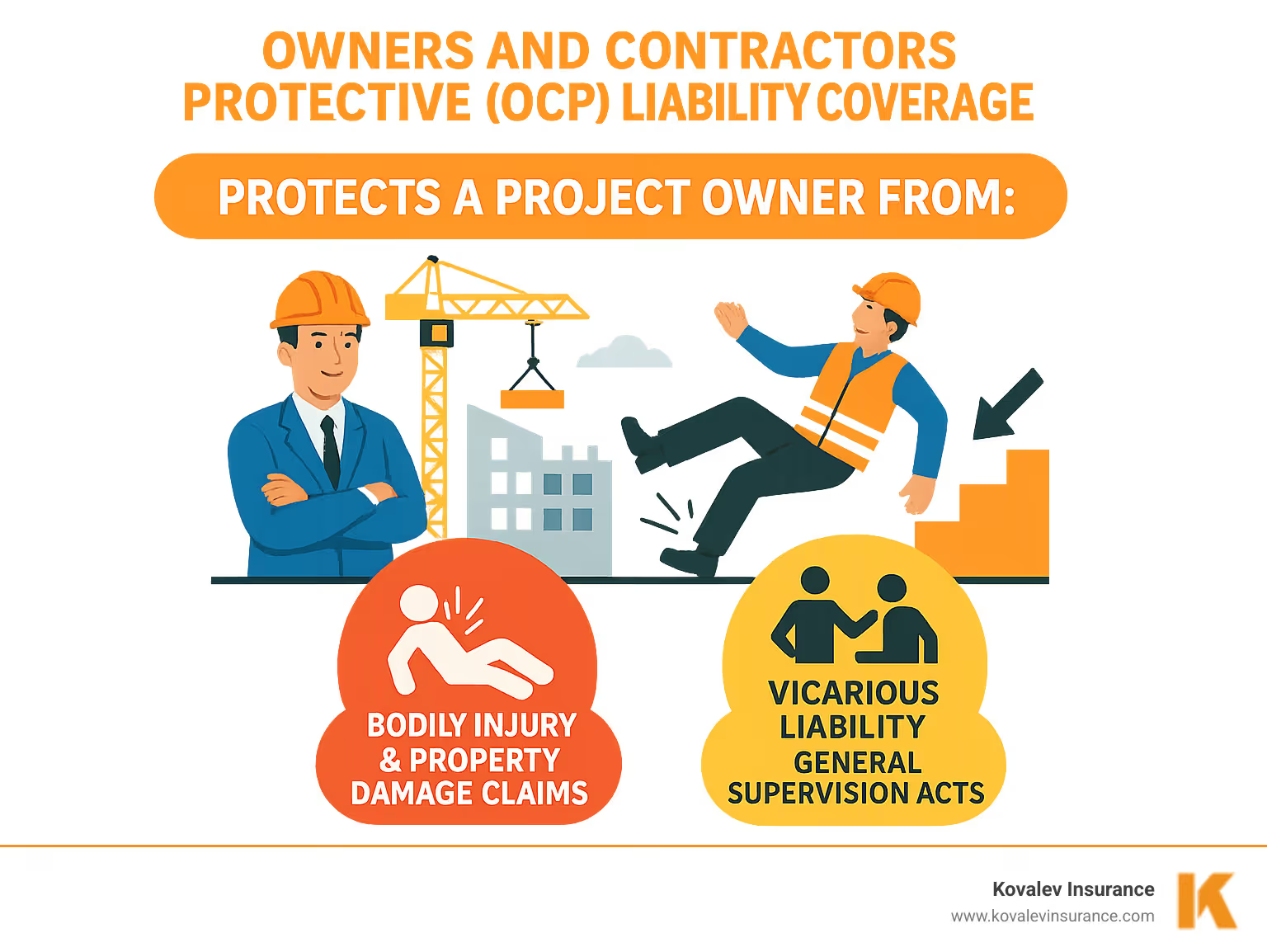
Simple guide to owners and contractors protective liability coverage:
Owners and contractors protective liability coverage (OCP) is a specialized safety net for construction projects. It's designed to shield a project owner or general contractor from legal and financial responsibility tied directly to the work of an independent contractor they've hired. It's all about protecting the party doing the hiring.
This unique policy focuses on covering claims for bodily injury (BI) and property damage (PD). Unlike a broad commercial general liability (CGL) policy, OCP is more targeted. It’s a standalone policy, not an add-on, and operates on an "occurrence basis," covering incidents that happen during the policy period, even if a claim is filed later. For more on construction insurance in our state, explore our guide to Construction Insurance Massachusetts.
An OCP policy is custom-built for one specific construction project. The policy names the project owner or general contractor as the named insured, giving them direct protection. While they are protected, the policy is typically purchased and paid for by the designated contractor—the independent contractor whose operations create the potential liability.
Crucially, owners and contractors protective liability coverage is tied to a single project and its specific job site. For example, an OCP policy for a new build in Belmont will only cover that site. The policy period aligns with the project's duration. Once the work is done, the OCP policy's protection for ongoing operations ends. It's important to remember: an OCP policy is not a replacement for the contractor's own CGL insurance. The contractor still needs their own CGL to cover their direct liabilities.
While it may seem counterintuitive, the contractor is usually the one who purchases the OCP policy and pays the premium. This is often a contractual requirement from the project owner. By providing OCP, the contractor offers an extra layer of reassurance to the party who hired them.
The project owner or general contractor is the one named as the "insured" on the policy, making them the direct beneficiary. The contractor who bought the policy doesn't get direct coverage from it; their own CGL policy handles their liabilities. This setup is designed to shield the project owner from "vicarious liability."
An OCP policy covers two main liabilities for the named insured:
Navigating construction insurance can be confusing, especially with terms like OCP, CGL, and Additional Insured status. Understanding these distinctions is crucial for robust protection on your project, whether it's in Brookline or Needham. It's all about having the right layers of defense.
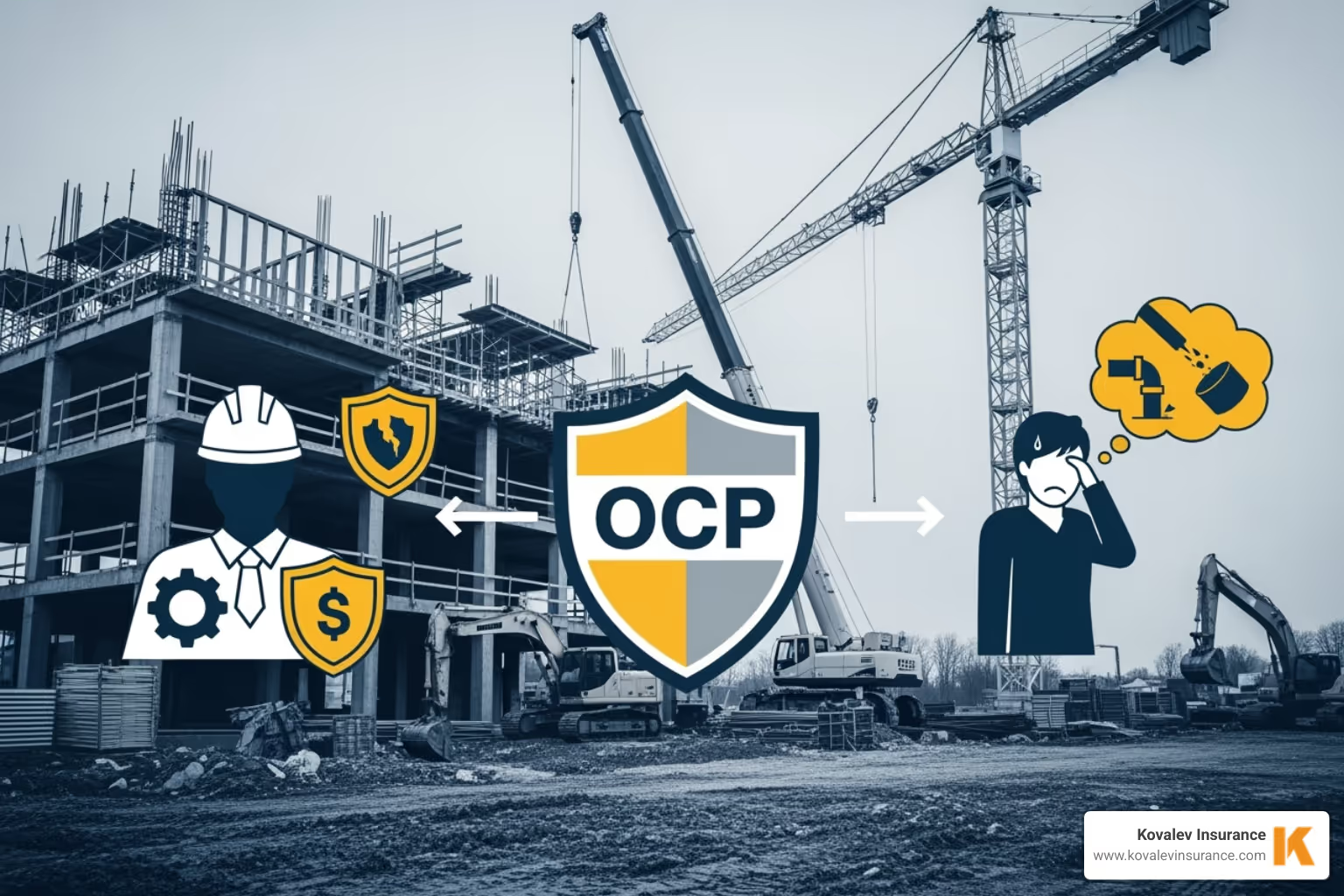
While both owners and contractors protective liability coverage (OCP) and Commercial General Liability (CGL) policies cover bodily injury and property damage, they serve different purposes. A contractor's CGL policy is their primary, broad coverage for their general operations. An OCP policy is much narrower, protecting the project owner from liabilities arising from the contractor's work on a specific project.
Here's a quick comparison:
The CGL is the contractor's everyday shield, while OCP is a targeted safeguard for the hiring party. For more on general liability, visit our page on Commercial General Liability Insurance.
Project owners are often named as an "Additional Insured" (AI) on their contractor's CGL policy. While this offers protection, it's not the same as having a dedicated OCP policy. Being an AI means sharing the contractor's policy; an OCP policy gives you your own.
Here’s why that matters:
In short, OCP provides a clearer, separate safety net for the project owner than AI status.
While valuable, it's important to know what owners and contractors protective liability coverage doesn't cover.
Knowing these limits is key. For more on trade-specific risks, see our resource on Risks Facing Artisan Contractors Mass.
While owners and contractors protective liability coverage primarily shields the project owner, it also offers significant advantages for the contractor who purchases it. It’s a win-win that fosters more secure construction projects for everyone.

For project owners in Massachusetts towns like Newton or Wellesley, OCP offers peace of mind and strong protection. The biggest perk is exclusive, primary coverage. The OCP policy provides dedicated liability limits just for you, the project owner, separate from the contractor's insurance. If a claim arises from the contractor's work, the OCP policy steps in first, without touching your own insurance. OCP policies can offer limits up to $10 million, providing a substantial safety net.
This leads to another benefit: dedicated policy limits. Unlike being an "additional insured" on a contractor's CGL policy, you aren't sharing limits that could be eroded by other claims. This significantly reduces your liability and protects you from the contractor's CGL policy erosion. Furthermore, as the named insured, you typically have control over cancellation, giving you more authority over your project's protection. For many owners, requiring OCP is a cost-effective way to secure dedicated, project-specific coverage.
What's in it for the contractor paying the premium? The benefits are significant, even if indirect.
First, OCP protects your CGL loss history. When a claim is paid by the OCP policy, it doesn't go on your CGL loss record. A clean loss history is crucial for keeping your future CGL premiums from increasing. In short, you'll see no premium increases from OCP claims on your standard CGL policy, a powerful financial incentive.
Second, it helps you fulfill contractual requirements. Many project contracts, especially for larger jobs in competitive markets like Brookline, now require OCP coverage. Being able to provide it allows you to bid on and win more projects.
Finally, offering OCP is a fantastic competitive advantage in bidding. It signals to project owners that you are serious about risk management and committed to protecting their project. This makes your bid more attractive and can be a key factor in winning lucrative contracts in Massachusetts.
For anyone in construction in Massachusetts, from Brookline to Natick, understanding the specifics of owners and contractors protective liability coverage is paramount. It’s about having the right policy and knowing its intricacies.

OCP coverage is an increasingly common requirement in construction contracts as a smart way to manage risk.
It's often demanded for large-scale and high-risk projects, such as major commercial buildings or work involving demolition. Public works projects also frequently mandate OCP to protect public funds and property. Furthermore, many sophisticated project owners and developers in the Greater Boston area now require OCP because they understand the limitations of being an additional insured. They want the dedicated limits and primary coverage OCP provides. This requirement is a key part of contractual risk transfer, creating clear lines of responsibility.
Despite its benefits, OCP has areas where misunderstandings can create coverage gaps.
First, the term "general supervision" is often not defined in the policy, leading to ambiguity. OCP covers the owner's liability from their "general supervision," but if an owner is sued for their sole negligence (e.g., a failure to provide a safe workplace that is entirely their fault), the policy might not respond. Courts may decide the owner's actions went beyond "general supervision," leaving a significant gap.
Second, as mentioned earlier, is the lack of "completed operations" coverage. OCP is for ongoing operations only and generally does not cover liabilities that appear after the project is finished. A construction defect causing injury months after your Belmont project is complete will likely not be covered by the OCP policy. This is a critical gap that must be addressed with other coverages.
Obtaining an OCP policy involves a specific underwriting process. At Kovalev Insurance, we guide you through it.
The process starts with a complete OCP application. Insurers will review the contractor's CGL limits (often requiring at least $1M/$2M) and ensure their total limits equal or exceed the requested OCP limits. OCP is for single, construction-related projects only. The project type, scope, and the contractor's experience are also key factors.
Be aware that some work may lead to automatic declinations from insurers, including:
Understanding these requirements streamlines the process. We're here to help you Fill Out the OCP Application.
We often get questions about owners and contractors protective liability coverage. Here are some of the most frequent inquiries we address for our clients in Massachusetts.
Generally, no. Owners and contractors protective liability coverage is designed for liabilities arising from ongoing operations during the policy period. Once the project is complete, the OCP policy's coverage typically ends.
For liabilities that appear after completion—like a hidden defect causing damage months later—project owners need different protection. This could be a specialized "Owner's Interest" policy that includes completed operations coverage, or ensuring you are an additional insured on the contractor's CGL policy for completed operations. It's wise to align this post-completion coverage with the Massachusetts statute of repose for construction, which limits how long you can be held liable.
Here's great news for the named insured (the project owner or GC). For claims covered by an OCP policy, legal defense costs are usually provided outside the policy limits. This is a significant benefit, as it means the money spent on lawyers and court fees won't deplete the coverage limits available to pay for damages. The full policy amount is preserved for payouts. However, always verify this detail in your specific policy.
Absolutely not. This is a critical point. An OCP policy is a supplementary layer of protection for the project owner; it is not a substitute for the contractor's own Commercial General Liability (CGL) insurance.
The contractor still needs their CGL policy to cover their own direct liabilities, such as claims of their own negligence, damage they cause, and their business operations beyond the specific project covered by the OCP. For our artisan contractors in towns like Belmont or Natick, we always stress the importance of their own robust Artisan Contractors Insurance Mass.
Navigating construction insurance, especially specialized policies like owners and contractors protective liability coverage, can be complex. We've covered the details of OCP, CGL, and additional insured status, and highlighted key limitations like the lack of completed operations coverage. These details show why expert guidance is essential to protect your work.
At Kovalev Insurance, we understand the unique challenges facing project owners and contractors across Massachusetts. Whether you're working on projects in Greater Boston or residential builds in towns like Newton, Wellesley, or Needham, we know what you need.
We offer custom insurance solutions with the best rates, backed by speed and a deep understanding of the construction world. Our goal is to simplify the insurance landscape, ensuring you have the right protection to safeguard your assets and projects.
Don't leave your project's financial security to chance. Let us help you lay a solid insurance foundation.
Get a quote for your contracting business today, and let's build something secure together.




X