Blog Content

2
May
2026

Public liability insurance for self employed subcontractor is essential protection against claims that your work accidentally injured someone or damaged their property. For projects in Newton's historic neighborhoods or Wellesley's upscale developments, this coverage shields your business from costly lawsuits and ensures you meet client requirements.
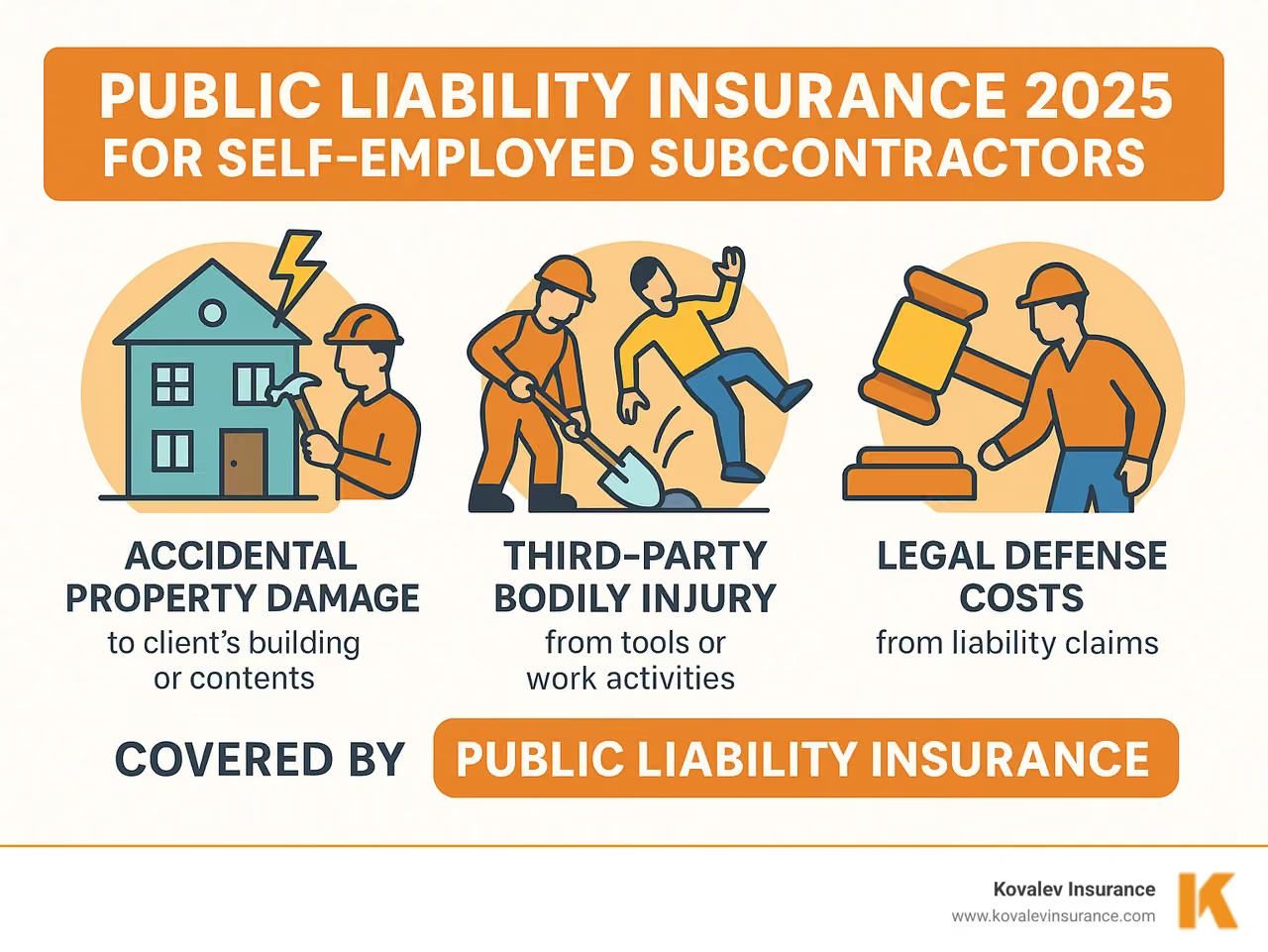
Key Benefits of Public Liability Insurance:
Many primary contractors hesitate to work with uninsured subcontractors, as it leaves them vulnerable to lawsuits. In Massachusetts markets like Brookline and Needham, proper coverage isn't just smart—it's often required to step on a job site.
Glossary for public liability insurance for self employed subcontractor:
Public liability insurance for self employed subcontractor is a vital safety net for your business. It protects you from claims made by third parties—clients, visitors, or passersby—who suffer an injury or property damage because of your work. In the U.S., this is commonly called General Liability insurance. For a concise nationwide overview, the non-profit Insurance Information Institute offers a helpful primer on how this coverage works.
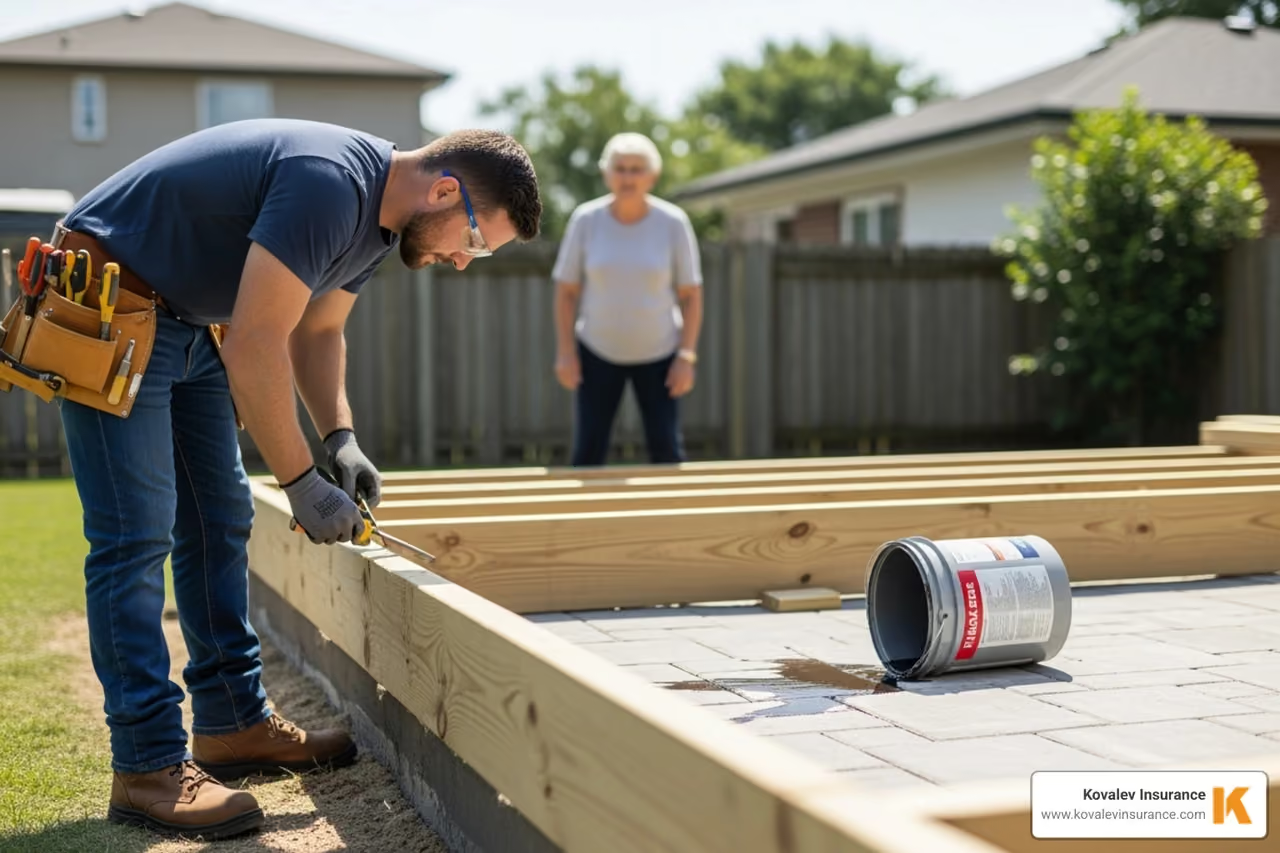
If a client trips over your toolbox or you spill paint on their hardwood floors, this insurance can cover legal defense costs, medical bills, and settlement payments. Without it, these costs could threaten your personal finances and your business. It provides crucial financial protection by safeguarding your personal assets from business-related lawsuits.
In Massachusetts, this coverage is also a business necessity. General contractors and property owners in cities from Newton to Wellesley often demand proof of insurance before hiring you. Having your own policy demonstrates professionalism and business credibility, helping you win bids and meet client compliance requirements. It's essential for keeping your business strong and growing.
Working uninsured is a high-stakes gamble. A single accident could lead to devastating financial ruin, as liability claims can reach millions of dollars. Without public liability insurance for self employed subcontractor, your savings, home, and other personal assets are at risk. In fact, many companies refuse to hire uninsured partners, as highlighted by Entrepreneur.
Other consequences of accidents include:
In short, working uninsured risks catastrophic consequences for your business and personal life.
Are subcontractors covered under the general contractor's insurance? The answer is almost always no. A general contractor's policy covers their liabilities, not yours. You need your own public liability insurance for self employed subcontractor.
This is why a Certificate of Insurance (COI) is so important. It's proof of your coverage, and general contractors in places like Brookline and Needham will require one before you can start work. Delays or lost bids are common for subcontractors who can't produce a COI quickly.
Clients may also ask to be named as an "additional insured" on your policy. This extends some of your policy's coverage to them for claims related to your work. However, it does not replace the need for your own comprehensive policy, which ensures your specific liabilities are covered.
Meeting these contractual requirements is non-negotiable. For more on how specialized coverage benefits your trade, see our guide on Artisan Contractors Insurance.
Understanding your public liability insurance for self employed subcontractor policy is crucial. Many contractors are surprised to find gaps in their coverage when they need it most. Let's break down what's included by comparing different types of business insurance.
Your public liability policy is your shield when your work accidentally harms someone else or their property. Key features include:
While your policy covers resulting damage from faulty work (e.g., water damage from a bad pipe install), it won't pay to redo the faulty work itself.
As a self-employed subcontractor in areas like Brookline or Needham, your public liability insurance for self employed subcontractor policy protects you from everyday job site risks.
For more details on risks facing contractors, read our article on Risks Facing Artisan Contractors in Mass.
While comprehensive, public liability insurance for self employed subcontractor has limits. Knowing these exclusions helps you secure the right protection.
Understanding these boundaries is key. For more on different contractor policies, see our guide on Personal Contractor Insurance.
Finding the right public liability insurance for self employed subcontractor means getting protection that fits your specific business, not just the cheapest policy. The best coverage is custom to your unique risks and circumstances.

Key policy components include policy limits (the max your insurer will pay per incident and in total), your deductible (what you pay first), and your premium (the cost of coverage). Our quoting process starts with a thorough risk assessment of your operations, from your trade to the Massachusetts neighborhoods you work in, like Newton or Needham. This ensures your quote reflects your actual risks.
For more on our approach to pricing, see our guide on Business Insurance Quotes Mass.
How much public liability insurance for self employed subcontractor do you need? It depends, but there are common standards. A $1 million per occurrence / $2 million aggregate policy is a typical baseline, but many general contractors in Massachusetts, especially in high-value areas like Wellesley and Brookline, now require higher limits of $5 million or more.
Your ideal coverage depends on:
Assess your worst-case scenario and ensure your limits are sufficient to handle it. For more on costs, our General Liability Insurance MA Cost guide offers valuable insights.
Your public liability insurance for self employed subcontractor premium is based on your specific risk profile. Key factors include:
We help you balance these factors to find comprehensive, affordable protection. For trade-specific info, see our guide for Artisan Contractors Insurance for Mass Roofers.
While the basics of public liability insurance for self employed subcontractor apply to all, your specific trade dictates your needs and costs.
Whether you work in Belmont, Natick, or anywhere in Greater Boston, we tailor coverage to your trade. For landscapers, our General Liability Insurance for Lawn Care Businesses guide has targeted insights.
In Massachusetts, your insurance needs as a self-employed subcontractor depend heavily on your classification. The distinction between a 'bona fide' and a 'labour-only' subcontractor determines who is responsible for your insurance coverage.
This distinction directly affects whether you must carry your own public liability insurance for self employed subcontractor.
If you operate as a 'bona fide' subcontractor, you are running an independent business and must have your own insurance. Here's why:
Protecting your independent business with your own policy is a fundamental requirement.
For 'labour-only' subcontractors, the situation is different. Because you work under the main contractor's direct control, you are often treated as an employee for insurance purposes, even if you receive a 1099 tax form.
This means a labour-only subcontractor is typically covered by the main contractor’s Employers' Liability and Workers' Compensation policies for on-the-job injuries. In Massachusetts, Workers' Compensation is state-mandated insurance that covers medical costs and lost wages for employees (and those treated as such) regardless of fault. Since Workers' compensation regulations differ by state, it's crucial to confirm your status and the main contractor's coverage before starting work to ensure you are properly protected.
Navigating insurance can be complex. Here are clear, direct answers to common questions we hear about public liability insurance for self employed subcontractor in Massachusetts.
Generally, no. In Massachusetts, a general contractor's policy is designed to cover their business and their negligence. As a bona fide subcontractor, you are an independent business responsible for your own actions and liabilities. Contracts will almost always require you to carry your own insurance because you are not covered for your own mistakes under the GC's policy. Relying on their insurance leaves you financially and legally exposed.
Being an 'additional insured' on a general contractor's policy provides a secondary layer of protection, extending some of their coverage to you for claims related to your work on their project. However, having your own policy is your primary shield. It gives you direct control over your coverage and protects you from claims arising solely from your own negligence. An additional insured status is a helpful supplement, but it is not a substitute for your own dedicated policy.
While some short-term policies exist, we generally don't recommend them. They can be more expensive on a pro-rata basis and, more importantly, leave you unprotected between jobs. A critical feature of an annual policy is "completed operations" coverage, which protects you if a claim arises from your work months or even years after a project is finished. A single-project policy would likely not cover this, leaving you personally liable. Continuous public liability insurance for self employed subcontractor offers far better long-term protection and peace of mind.
As a self-employed subcontractor in Massachusetts, you are a skilled entrepreneur. But with the opportunity of running your own business comes risk. Accidents on job sites in Newton, Wellesley, or Brookline can lead to costly liabilities that threaten your entire livelihood.
That's why the right public liability insurance for self employed subcontractor is a must. It's your shield, protecting your assets and demonstrating your professionalism to clients in Needham, Belmont, and Natick. It shows you're a serious business owner who is prepared for anything.
At Kovalev Insurance, we understand independent contractors in Greater Boston. We don't offer one-size-fits-all solutions. Our focus is on providing you with a custom policy that fits your specific trade. We combine our expert insurance industry knowledge with a commitment to speed and the best rates to make getting insured simple and stress-free.
Don't let the worry of potential claims hold you back. Gain the peace of mind that comes from knowing you're fully covered, so you can focus on what you do best: delivering quality work and growing your business.
Ready to secure your future? Contact us today for a custom quote. For more on specialized protection, visit our page on Artisan Contractors Insurance Mass.




X