Blog Content

20
Apr
2026

Insurance for self employed builders includes several essential coverages to protect your business from common construction risks. Whether you're working on a renovation in Newton or a new build in Wellesley, the right policies safeguard your livelihood and help you meet client requirements.
Essential Coverage for Self-Employed Builders:
As a self-employed builder in Massachusetts, you face unique risks every day. A client could slip on your job site in Brookline. Your tools might get stolen from a project in Needham. A subcontractor could get hurt while working for you in Belmont. Without proper coverage, a single incident could devastate your business financially.
The construction industry sees significant self-employment rates, with over 23% of construction workers being self-employed. This means thousands of builders across Massachusetts need to understand their insurance options to protect their businesses and comply with state requirements.
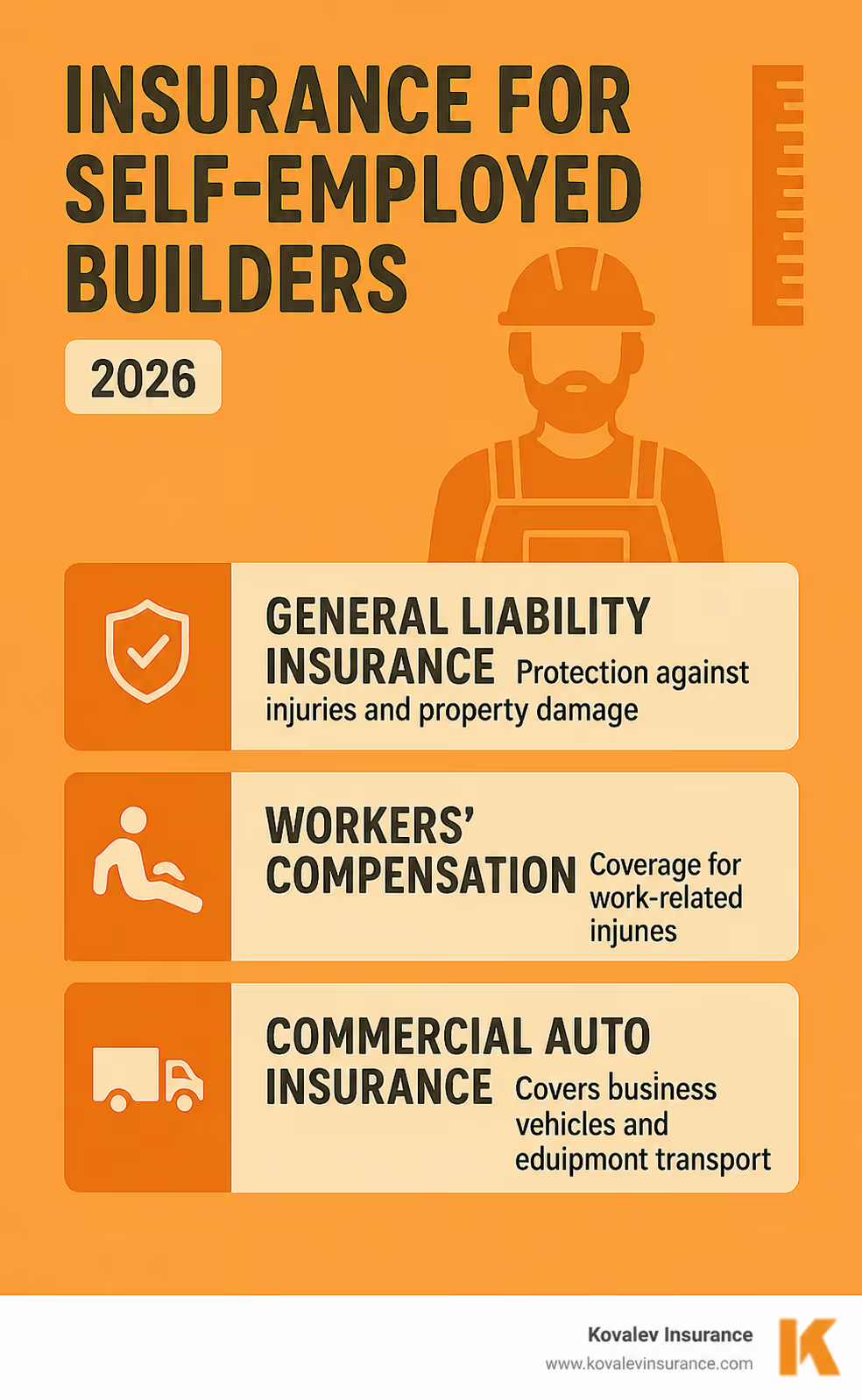
Insurance for self employed builders vocabulary:
Running a construction business in Massachusetts means juggling countless responsibilities – from managing projects to keeping clients happy. But there's one responsibility you can't afford to overlook: protecting your business with the right insurance coverage.
Insurance for self employed builders isn't just about checking boxes or meeting requirements. It's about safeguarding the livelihood you've worked so hard to build. Let's explore the foundational policies that every self-employed builder in Massachusetts needs to consider.
Think of General Liability insurance as your business's first line of defense against everyday mishaps. This coverage protects you when accidents happen – and in construction, they inevitably do.
Picture this: you're working on a beautiful kitchen renovation in Newton when a homeowner trips over your extension cord and breaks their wrist. Or maybe you're installing cabinets in Wellesley and accidentally damage the client's new hardwood floors with your drill. These situations can quickly turn into expensive lawsuits without proper protection.

General Liability insurance covers three main areas: third-party bodily injuries, property damage you cause to others, and personal and advertising injuries. When a claim arises, your insurance handles the legal defense costs, medical expenses, and any settlements or judgments you're responsible for.
But here's what makes this coverage truly crucial – most clients won't even let you step foot on their property without it. Whether you're bidding on a project in Brookline or working with a general contractor in Belmont, you'll need to provide a Certificate of Insurance (COI) as proof of coverage.
You'll often encounter requests to add clients as an Additional Insured on your policy. This common practice extends some of your coverage to protect them if your work leads to a claim. It's a win-win that demonstrates professionalism and helps secure more projects.
The Completed Operations Coverage portion of your General Liability policy is especially important for builders. This protects you from claims that arise after your work is finished – like if faulty wiring you installed causes a fire months later.
For more detailed information about how this coverage works in Massachusetts, check out our guide on Business Liability Insurance Mass.
Workers' Compensation insurance becomes mandatory in Massachusetts the moment you hire your first employee – even if it's just temporary help for a weekend project. This coverage takes care of medical bills, lost wages, and rehabilitation costs when employees get injured on the job.
But what if you're truly self-employed with no employees? According to the IRS, you're considered self-employed if you have a business that takes in income but doesn't have any employees. In this case, you can often exclude yourself from mandatory Workers' Compensation coverage in Massachusetts.
However, carrying a "ghost policy" (a Workers' Compensation policy with no payroll) can be a smart move even for sole proprietors. Here's why: if you get injured while working, your personal health insurance might deny the claim, arguing it's work-related and therefore a business expense. A Workers' Compensation policy steps in to cover your medical expenses and lost wages, protecting you from potentially devastating out-of-pocket costs.
Plus, many general contractors and clients require proof of Workers' Compensation coverage before they'll hire you, regardless of whether you have employees. It's often a non-negotiable requirement for getting on job sites in communities like Needham and Natick.
Learn more about how Workers' Compensation applies to your specific situation at Worker Compensation Insurance Mass.
As your business grows, you'll likely need extra hands for bigger projects. This is where understanding the insurance implications of hiring subcontractors becomes critical for protecting your business.
The key lies in distinguishing between two types of subcontractors. Bona fide subcontractors operate as independent businesses – they use their own tools, work without your direct supervision, and carry their own insurance. Labor-only subcontractors, on the other hand, work under your direction using your tools and equipment, making them more like temporary employees in the eyes of insurance companies and state law.
Here's the crucial part: if a subcontractor gets injured or causes damage, and they don't have proper insurance, the liability often falls back on you. This can lead to expensive claims on your policies and higher premiums down the road.
Smart contractors always require a current Certificate of Insurance (COI) from every subcontractor before work begins. This document proves they carry their own General Liability and Workers' Compensation coverage. You should also request to be added as an Additional Insured on their General Liability policy for extra protection.
This process, called risk transfer, ensures that subcontractors take primary responsibility for their own work and any resulting claims. It's an essential practice for protecting your business as you take on larger, more complex projects throughout the Boston area.
For comprehensive information about managing these contractor relationships safely, explore our resources on Construction Insurance Coverage Mass.
Think of your basic insurance as the foundation of a house – solid and essential. But just like a house needs walls, a roof, and windows to be complete, your insurance for self employed builders needs additional layers to truly protect your business. Beyond the basics, these policies address specific risks related to your tools, vehicles, projects, and professional advice, providing comprehensive protection.
Picture this: you're heading to a renovation project in Newton, your truck loaded with thousands of dollars worth of specialized tools. On the way, another driver runs a red light and totals your vehicle. Or maybe you arrive at your Belmont job site to find your expensive power tools have vanished overnight. Without the right coverage, these scenarios could put you out of business.
Commercial Auto Insurance is your first line of defense for vehicle-related risks. Here's the thing – your personal auto policy wasn't designed for hauling lumber or transporting crews to job sites. If you use your truck or van for business purposes (and let's be honest, most builders do), a personal policy might deny your claim entirely. Commercial Auto covers not just damage to your vehicle, but also liability if you cause an accident while working. It's the difference between a covered claim and a potentially devastating out-of-pocket expense.
Your tools are the heart of your business, but they're also prime targets for theft. Tools & Equipment Coverage, often part of what's called an Inland Marine policy, protects these valuable assets whether they're at a job site in Needham, in transit, or stored in your workshop. This coverage fills a crucial gap – your General Liability policy won't cover your own property, and your homeowner's insurance typically excludes business equipment.
If you operate from a dedicated workspace, whether it's a separate office, workshop, or even a converted garage, Commercial Property Insurance protects both the building and its contents. Fire, theft, vandalism – these perils don't discriminate between residential and commercial properties.
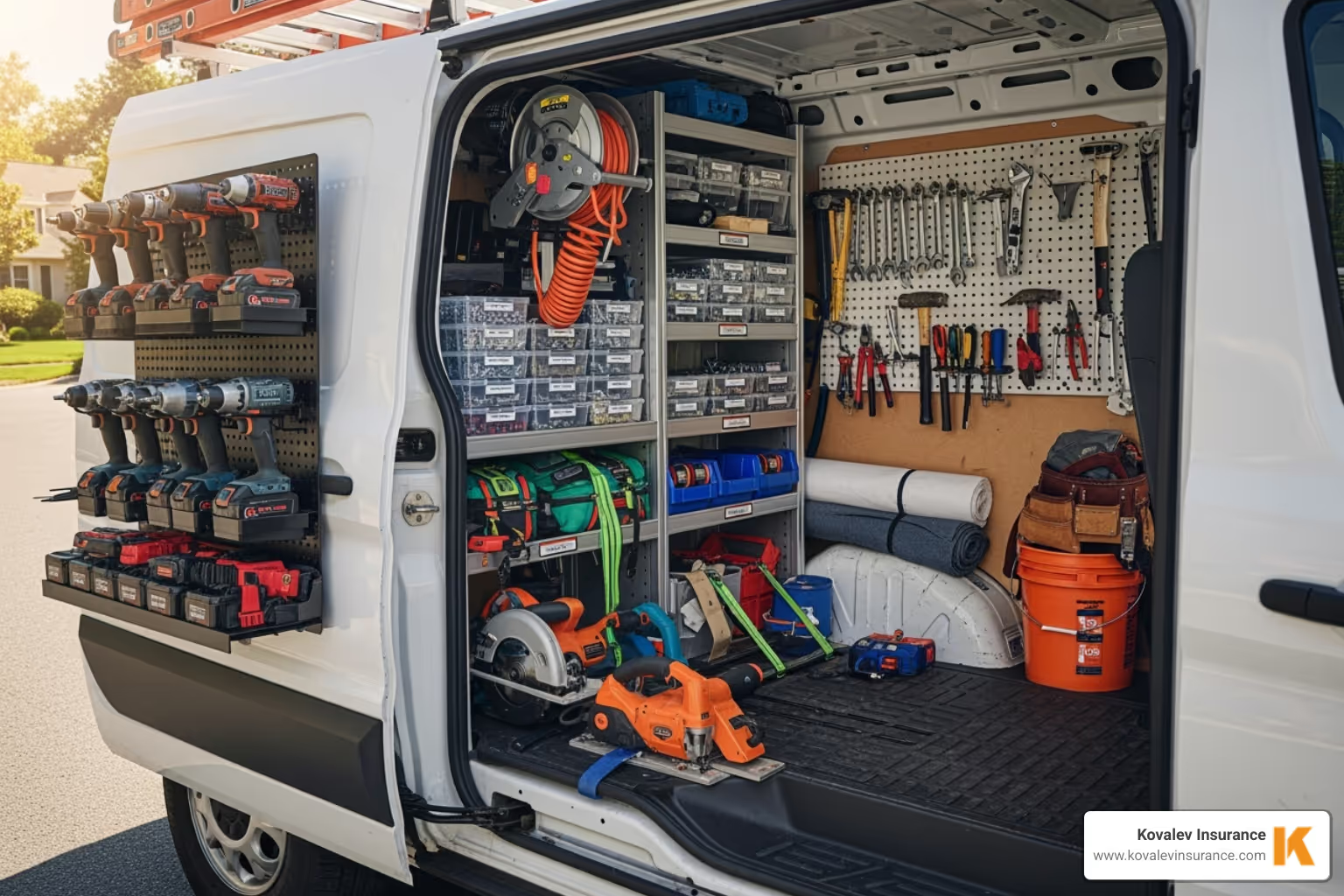
For many self-employed builders, a Business Owner's Policy (BOP) offers an neat solution. It bundles General Liability, Commercial Property, and often Business Interruption coverage into one streamlined policy. Think of it as the Swiss Army knife of business insurance – multiple tools in one convenient package, usually at a better price than buying each coverage separately.
These protections are especially crucial for specialized tradespeople. Whether you're a master carpenter or a skilled plumber, your livelihood depends on having the right tools and reliable transportation. For custom options that fit your specific trade, explore Artisan Contractors Insurance Mass.
Some construction projects and services create unique risks that standard policies don't address. These specialized coverages fill those gaps, ensuring you're protected no matter what type of work you're doing.
Builder's Risk Insurance (also called Course of Construction Insurance) is essential for new construction and major renovation projects. Here's why: standard property insurance policies typically exclude buildings under construction. If you're building a custom home in Wellesley or doing a major gut renovation in Brookline, this coverage protects the structure, materials, and equipment on-site from fire, theft, vandalism, and weather damage. Without it, a single storm or break-in could wipe out months of work and materials. Learn more about this crucial coverage at Builders Risk Insurance Mass.
Professional Indemnity Insurance (also known as Errors & Omissions or E&O) might sound like something only lawyers need, but it's increasingly important for builders who provide design services or professional advice. While General Liability covers physical damage, Professional Indemnity covers financial losses from alleged mistakes in your professional services.
Do you need it? Consider these situations where Professional Indemnity becomes essential: providing design specifications or architectural drawings, offering advice that clients use for major financial decisions, managing projects where your oversight could impact timelines or budgets, or any service where a mistake could cause financial harm to your client. For instance, if a client claims your design recommendation led to structural problems or cost overruns, this coverage handles your legal defense and any settlements.
Personal Accident Insurance addresses a reality many self-employed builders face – you don't have an employer providing sick leave or disability benefits. If you're injured and can't work (whether on the job or off), this coverage provides income replacement to keep your personal finances stable during recovery. It's like having your own HR department looking out for you.
Many builders get confused about the difference between General Liability and Professional Liability insurance. Think of it this way: one covers what you do, the other covers what you know.
General Liability protects against tangible harm – when someone gets physically hurt or property gets damaged. If a client trips over your extension cord and breaks their wrist, or you accidentally put a hole in their drywall, General Liability steps in.
Professional Liability covers intangible harm – financial losses from your professional advice or services. If a client claims your design caused expensive structural issues, or your project management led to costly delays, Professional Liability provides protection.
Understanding this distinction ensures you're not leaving gaps in your coverage. Both types of protection work together to create a comprehensive safety net for your business, whether you're working on a kitchen remodel in Natick or a commercial project in downtown Boston.
Getting the right insurance for self employed builders doesn't have to feel like solving a puzzle. Once you understand the basics of costs, paperwork, and what to look for, you'll be able to make smart decisions that protect your business without breaking the bank.
Let's be honest – as a self-employed builder, every dollar counts. The good news is that insurance for self employed builders costs vary widely, which means there's likely an option that fits your budget and needs.

Think of insurance pricing like a custom quote for your construction work – it depends on what you're doing and where you're doing it. Your type of work makes the biggest difference. A finish carpenter working on kitchen cabinets in Brookline faces different risks than a roofer replacing shingles in Natick, and insurance companies price accordingly.
Where your business operates also matters. Even within Massachusetts, rates can shift between communities. Working primarily in Newton versus more rural areas might affect your premium due to different claim patterns and local regulations.
Your coverage choices directly impact cost. Higher policy limits mean more protection but also higher premiums. Similarly, choosing a lower deductible (what you pay before insurance kicks in) will increase your monthly cost but reduce your out-of-pocket expense if you need to file a claim.
Your business size and experience round out the main factors. Larger operations with more revenue typically pay more, while experienced builders with clean safety records often qualify for better rates. If you've had previous claims, expect that to influence your premium – insurance companies view past claims as indicators of future risk.
Most General Liability policies for contractors start around $61 per month, but that's just a baseline. The real savings often come from bundling policies together. Combining your General Liability and Commercial Property into a Business Owner's Policy (BOP) frequently saves 10% or more compared to buying separate policies.
For detailed insights on managing costs, check out our guides on General Liability Insurance Mass Cost and Ways Reduce Cost Artisans Insurance.
A Certificate of Insurance (COI) is your golden ticket to getting work. It's a simple one-page document that proves you have insurance coverage, showing your policy types, coverage amounts, and effective dates.
Why clients demand COIs is straightforward – they want proof you're properly insured before letting you on their property. Whether you're bidding on a renovation in Wellesley or starting a small repair job in Belmont, most clients won't let you begin work without seeing your COI first.
Getting your COI should be effortless. Once you have a policy, your insurer provides certificates on demand. We make this especially convenient for our clients – you can download your COI instantly through our online portal, or we can text or email it to you within minutes. Need to add a client as an additional insured? No problem – you can typically handle that yourself through the same system.
Using your COI effectively means keeping it current and accessible. Store a digital copy on your phone so you can email it to potential clients immediately. When bidding on larger projects or municipal contracts, having your COI ready often separates you from competitors who scramble to provide documentation.
Being a versatile builder who can handle everything from deck repairs to bathroom renovations is a huge advantage in the Greater Boston market. But this flexibility creates unique insurance considerations that single-trade specialists don't face.
If you're doing mostly smaller, unlicensed work – think furniture assembly, minor repairs, or basic maintenance – Handyman Insurance might be your sweet spot. This coverage is designed specifically for multi-skilled professionals handling various small jobs that don't require specialized licenses. It typically centers around General Liability protection, which covers the diverse property damage and injury risks that come with varied tasks. Our Handyman Insurance Mass Resource page dives deeper into this option.
If your work includes licensed trades – electrical, plumbing, structural modifications – you'll need a General Contractor Policy instead. This broader coverage accommodates the additional risks and regulatory requirements that come with licensed work. Here's the crucial point: if Massachusetts or your local municipality requires a license for certain work, your insurance absolutely requires you to be properly licensed too. Claims get denied when you're operating outside legal requirements, regardless of how skilled you are.
The construction industry accepts self-employment, with over 23% of construction workers being self-employed. This means you're part of a large community of independent professionals who've chosen the flexibility and control that comes with building your own business.
Working across Newton, Needham, and the surrounding communities gives you access to diverse projects, but it also means navigating different local requirements and client expectations. The key is ensuring your insurance coverage matches the full scope of what you actually do, not just what you think you might need. We help builders throughout the Greater Boston area find that perfect balance between comprehensive protection and practical affordability.
Let me address the most common questions I hear from self-employed builders across Massachusetts. These are the real-world situations that keep contractors up at night, and understanding the answers can save you from costly mistakes.
This is where things can get expensive fast. If you hire an uninsured subcontractor in Massachusetts, they may be considered your employee for workers' compensation purposes. This means if they get injured on your job site, the claim could fall on your policy, potentially leading to higher premiums and legal complications.
But it gets worse. If they cause property damage or injury to a third party, and they lack their own General Liability coverage, you could be held liable for their mistakes. Imagine hiring someone to help with a kitchen renovation in Brookline, and they accidentally damage the client's expensive hardwood floors. Without their own insurance, that claim comes back to you.
Always require and verify a Certificate of Insurance from every subcontractor before they step foot on your job site. Ideally, have them list you as an additional insured on their policy. This is especially critical for projects in busy areas like Needham or Newton, where more people might be on or near your work site.
Trust me, taking five minutes to check their insurance can save you thousands of dollars and countless headaches down the road.
No, absolutely not. This is one of the biggest misconceptions I encounter with insurance for self employed builders. Your personal auto policy typically excludes coverage for vehicles used primarily for business purposes.
If you use your truck to transport tools, materials, or employees to job sites in Wellesley or Belmont, you need a Commercial Auto Insurance policy to be properly protected. A personal policy simply won't cover damages or liability arising from business use, leaving you completely exposed to significant financial risk.
I've seen contractors learn this the hard way after accidents. Don't let a denied claim be your wake-up call. The cost difference between personal and commercial auto coverage is usually much smaller than you'd expect, especially when you consider the protection it provides.
Here's where Massachusetts law gives you some flexibility, but the smart money says yes, you should still carry workers' compensation coverage. While you can often exclude yourself from mandatory coverage as a sole proprietor, there are compelling reasons to include it.
Workers' compensation can cover your own medical bills and lost wages from a work-related injury – something your personal health insurance might deny, arguing it's work-related. Picture this: you're working on a deck project in Natick, take a bad fall, and can't work for three months. Without workers' comp, you're paying medical bills and losing income.
Plus, it's often required to be eligible to bid on certain contracts, particularly for larger projects in areas like Belmont. Many general contractors and property managers want to ensure everyone on site is covered, regardless of employment status.
Think of it as protecting your most valuable business asset – yourself. When you're self-employed, you are the business, and keeping yourself financially protected from work-related injuries is just smart business planning.
As a self-employed builder, you pour your heart and soul into every project. In vibrant Massachusetts communities like Brookline, Needham, and Belmont, your skill and reputation are truly your greatest assets. Think of the right insurance as the sturdy shield that protects everything you've worked so hard to build. From essential General Liability that guards against everyday mishaps, to specialized Builder's Risk that covers your projects as they grow, each policy plays a vital role in securing your financial future against the unexpected. You wouldn't leave a foundation exposed to the elements, so don't leave your hard-earned business exposed either!
At Kovalev Insurance, we understand the unique world of self-employed builders because we're part of your community here in the greater Boston area, serving cities like Newton, Wellesley, and Natick. We're not just about selling policies; we're about providing personalized, clear, and comprehensive insurance for self employed builders. We pride ourselves on our local expertise and our ability to craft custom policies that fit your exact needs, not someone else's. Our goal is to get you the best rates quickly, backed by our deep industry knowledge.
Let's work together to build a solid foundation of protection for your business. It's about peace of mind, so you can focus on what you do best – building!




X