Blog Content

26
Jan
2026
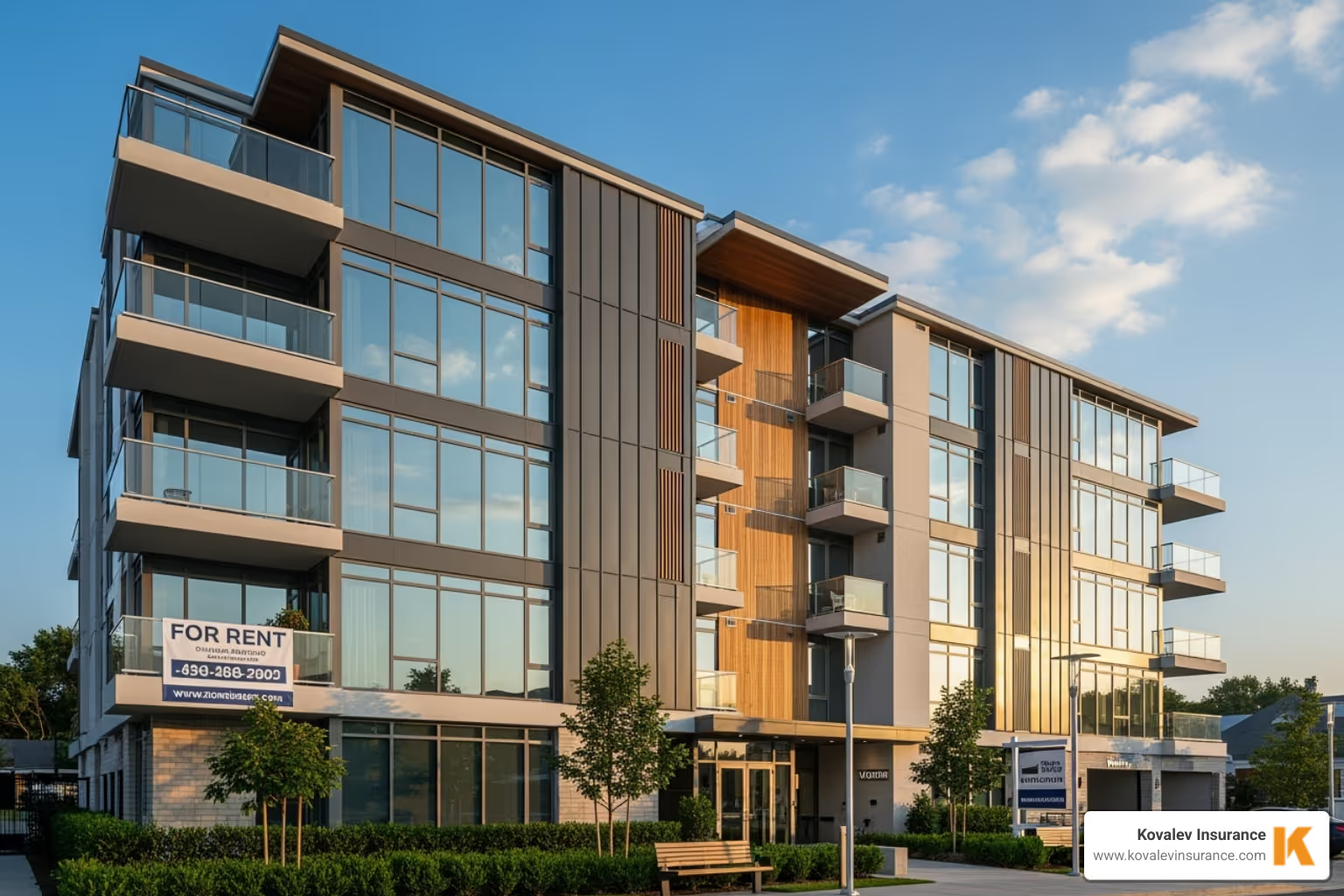
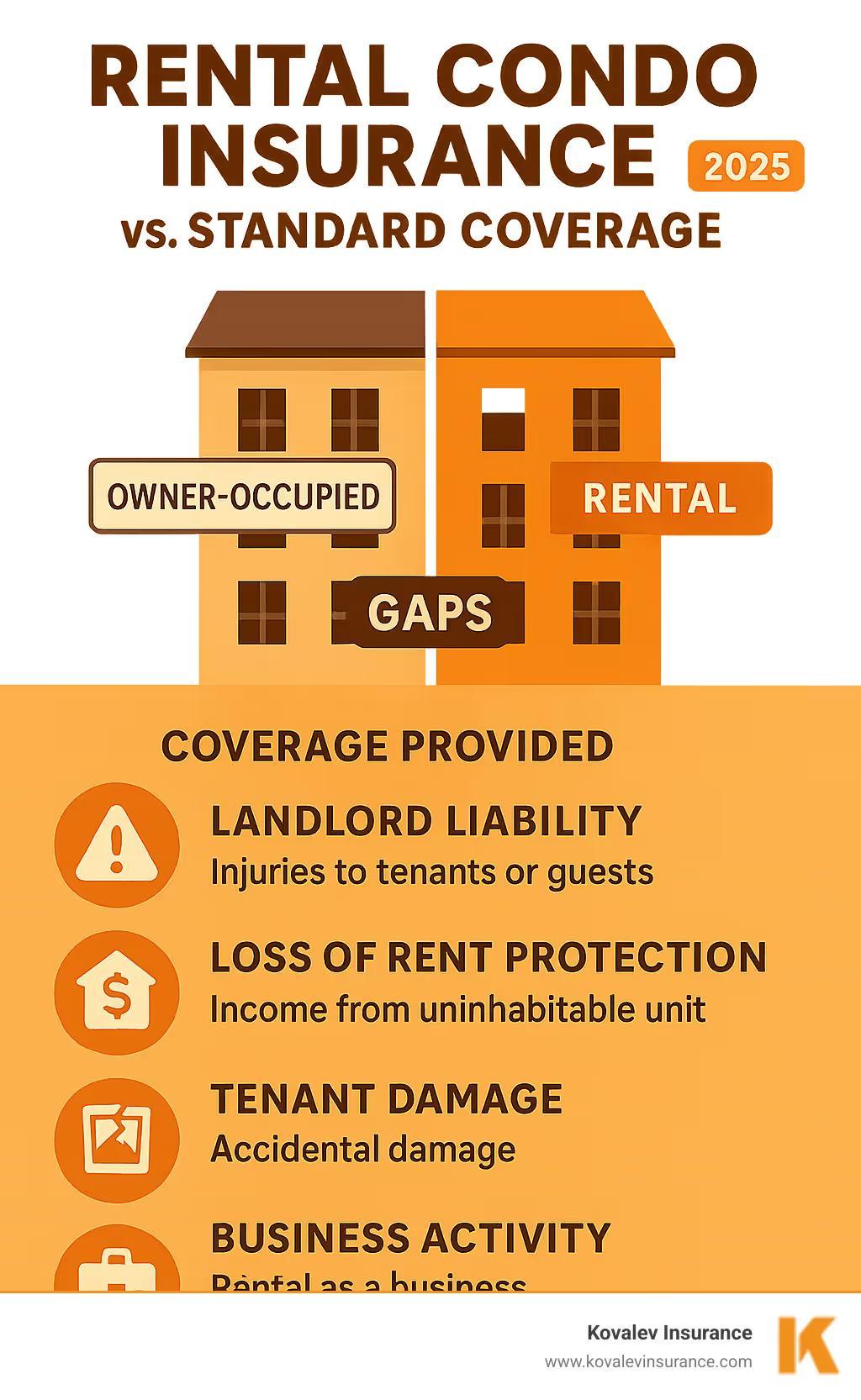
Rental condo insurance protects your investment property from the unique risks of being a landlord. Unlike standard condo insurance, it covers landlord liability, loss of rental income, and tenant-related damages that a regular HO-6 policy won't touch.
Key differences from standard condo insurance:
If you own and rent out a condo in Newton, Wellesley, or anywhere in Massachusetts, your standard condo insurance is insufficient. The moment you collect rent, you are running a business, which changes your insurance needs entirely.
Landlords face significant liability risks from tenants and their guests. Without proper coverage, a single slip-and-fall incident could cost you tens of thousands in legal fees and damages.
Your condo association's master policy covers the building's structure and common areas, but it won't protect your rental income or defend you in a lawsuit. This coverage gap can be financially devastating for Massachusetts landlords who assume they're covered.
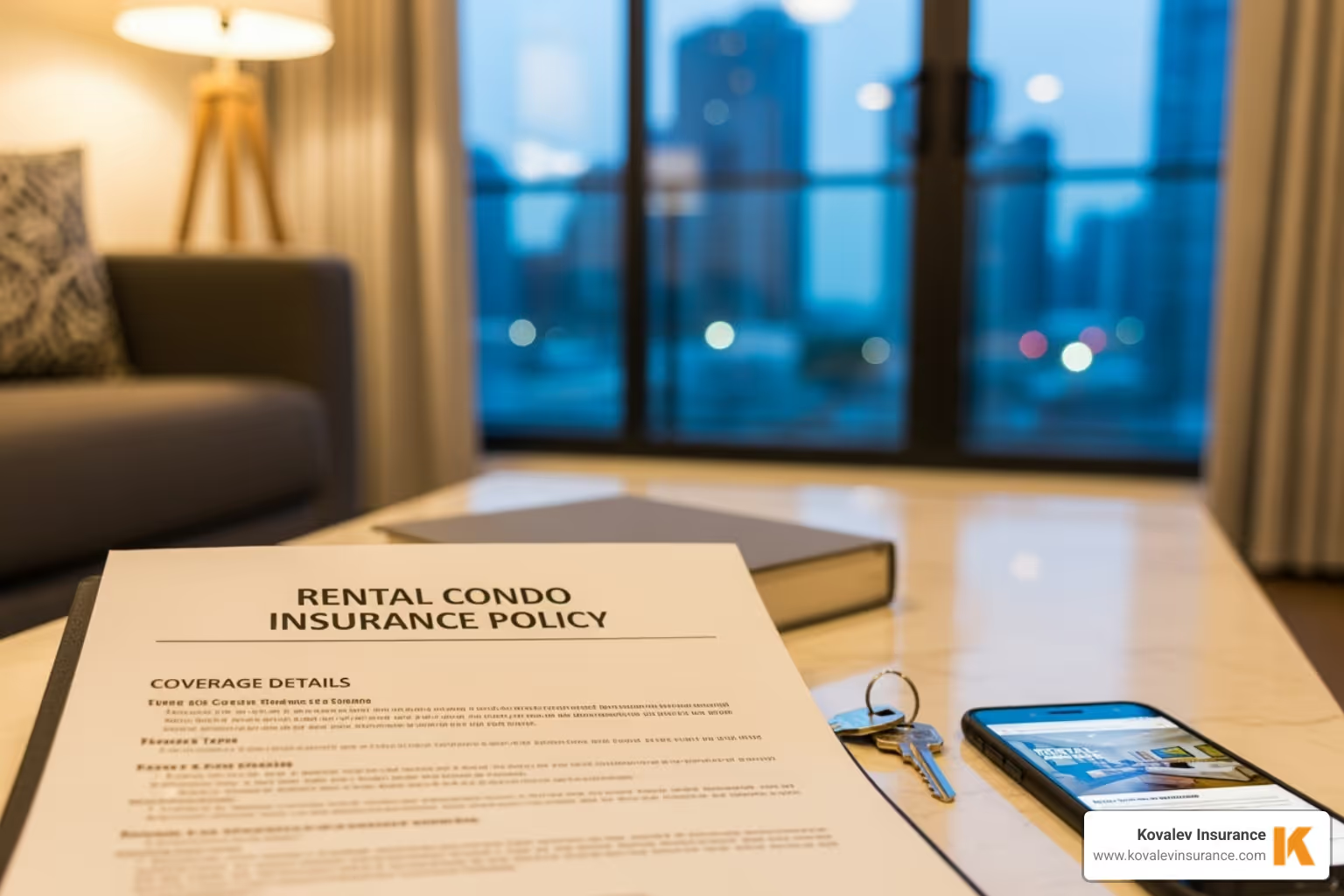
Decided to rent out your Newton condo? Your regular condo insurance isn't enough. Once you become a landlord, you're running a business with entirely new insurance needs.
Rental condo insurance is a specialized policy for Massachusetts landlords. Unlike a standard HO-6, it's designed for the unique risks of renting, protecting your property, income, and financial future.
Renting your Brookline or Needham condo means you're liable for tenant injuries, lost rental income, and property damage. Rental condo insurance is essential to cover these risks.
Many Massachusetts landlords mistakenly rely on their standard HO-6 policy. This coverage is for owner-occupied units; once you have a tenant, it's inadequate.
An HO-6 policy covers your personal belongings and liability. A rental policy covers landlord liability. If a tenant's guest is injured, your personal liability coverage won't apply.
Property coverage also shifts. You need to insure landlord property like appliances, furnishings, and unit improvements, not your personal belongings.
Crucially, an HO-6 policy excludes business activity, which includes collecting rent. This exclusion leaves you exposed to devastating financial losses.
For more comprehensive information about how condo insurance works in Massachusetts, check out our detailed guide: More info about condo insurance in MA.
Every Massachusetts condo building has a master policy. Understanding its coverage is key to protecting your unit.
Your condo association's master policy covers common areas (hallways, lobbies) and the building exterior (roof, outer walls). Your responsibility for the unit's interior depends on the master policy type.
Regardless of the type, the master policy never covers your rental income, landlord liability, or business property. It protects the building, not your investment.
To understand your needs, review your association bylaws and the master policy. This determines the dwelling coverage you need for your rental condo insurance.
Rental condo insurance is a specialized type of landlord policy (often called a dwelling fire policy) designed for condos.
Standard landlord policies (DP-1, DP-2, DP-3) are for single-family homes where you own the entire structure. A condo is more complex because it involves shared building risks and coordination with the master policy.
Specialized rental condo insurance is designed for this. It covers your unit's interior, rental income, and landlord liabilities without duplicating the master policy's coverage for the exterior. This specialized policy efficiently fills coverage gaps, protecting your investment without making you overpay for what your association fees already cover.
Renting out your Massachusetts condo requires protection beyond a standard policy. Rental condo insurance acts as a financial shield for your investment, income, and peace of mind. A proper policy protects your financial future from the unexpected. Here are the core coverages you need.

Dwelling coverage is the backbone of your policy. It protects the interior of your unit, which is your responsibility. It covers the interior structure like drywall, flooring, fixtures, and cabinets. The amount you need depends on your master policy; a "bare walls-in" policy requires more dwelling coverage from you.
Landlord's personal property coverage protects items you own within the unit, such as appliances or furniture you provide for tenants in your Brookline rental. Your policy protects your property; tenants need their own renters insurance for their belongings.
Liability protection is arguably the most critical part of your policy, shielding you from financially devastating lawsuits. If a tenant or guest is injured on your property, the resulting lawsuit can be financially crushing. This coverage pays for legal defense and damages if you're found liable for tenant or guest injuries. Legal costs alone can be substantial.
Medical payments coverage handles minor medical bills regardless of fault, which can prevent larger lawsuits. Most Massachusetts landlords carry liability limits between $500,000 and $1 million, but an umbrella policy is wise for those with significant assets to protect. For more details on comprehensive liability protection, check out our guide on personal liability insurance.
If a burst pipe floods your Wellesley condo, your biggest worry might not be repairs, but lost income. Loss of rent coverage is your financial lifeline. If a covered event like a fire or burst pipe makes your unit uninhabitable, it reimburses you for lost rental income during repairs.
This maintains your cash flow, helping you meet financial obligations while the property is being repaired, up to your policy limit. Note: This covers unlivability due to physical damage, not a tenant's failure to pay rent.
Your policy typically covers accidental damage by tenants, like an accidental kitchen fire or an overflowing bathtub. However, intentional damage, like a tenant punching holes in walls, is usually excluded. Your security deposit and tenant screening are your first defense here.
Normal wear and tear (faded paint, worn carpets) is a maintenance cost, not an insurable event. Policies cover sudden and accidental damage. Use the security deposit for minor issues and cleaning. Reserve your insurance for significant, sudden losses.
Understanding your rental condo insurance policy and costs is vital for any Massachusetts landlord. For a property in Boston or Natick, many factors influence your premium. While the average cost is around $1,700 annually, it can range from $150 to $3,000 per year.

It's crucial to know what your policy excludes. The following common exclusions typically require separate coverage:
Review your policy with us to understand these limitations and secure additional coverage if needed.
The right amount of coverage is a personalized assessment based on these factors:
For guidance on how much to insure your home in Massachusetts, you can refer to our blog: How Much to Insure Home in Mass.
Your premium is influenced by several factors:
You may qualify for several discounts to lower your premium without sacrificing coverage:
At Kovalev Insurance, we explore every available discount. Check out our insights on Smart Auto Home Insurance Bundles for more ways to save.
Landlording a Massachusetts condo presents unique challenges. Your rental condo insurance must be flexible enough to handle local regulations, tenant issues, and new rental trends.

Your rental condo insurance does not cover your tenant's personal belongings. That is their responsibility. This is why you should require renters insurance in your lease. It protects their belongings and, crucially for you, provides them with liability coverage.
For example, if your tenant accidentally starts a fire, their renters insurance can cover the damage. This prevents a claim on your policy, protecting your claims history and saving you the deductible.
Make renters insurance a mandatory requirement in your lease and verify coverage annually. It's a simple step that creates a vital safety net. For more detailed information, check out our Guide to Renters Insurance in Mass.
The income from short-term rentals (Airbnb, VRBO) in Newton or Brookline is tempting, but it creates significant insurance complications. Standard landlord policies are for long-term tenancies and often have a business activity exclusion. Hosting short-term rentals is a commercial activity that could leave you completely unprotected by your current policy.
Short-term rentals involve higher risks: a stream of guests, more wear and tear, and greater liability. A standard policy will likely deny any related claims. You will likely need specialized commercial insurance. Home-sharing endorsements exist but are often limited and may not be sufficient.
Before listing your Belmont or Natick condo, check your association rules, as many ban short-term rentals. Never assume your policy covers short-term rentals. The financial risk is too great.
A systematic approach can ensure your Massachusetts investment is properly protected.
Here are straight answers to the most common questions Massachusetts landlords ask about rental condo insurance.
No, Massachusetts law doesn't require it, but your mortgage lender almost certainly does. Your loan agreement requires you to maintain adequate insurance.
Even if you own your Newton condo outright, going without this insurance is a huge risk. A single lawsuit could jeopardize your investment and personal assets.
Renting your condo is a business, and it needs business insurance. The premium is a small price for protecting yourself from financial devastation.
While some companies offer a "rental to others" rider for an HO-6 policy, it's often an inadequate solution. These riders provide very limited coverage and typically lack crucial protections like comprehensive landlord liability, loss of rent coverage, and proper tenant damage protection.
A separate landlord policy (Dwelling Fire policy) is engineered for rental risks. The small cost difference is insignificant compared to the massive gap in protection.
Failing to inform your insurer that you're renting out your condo is a devastating financial risk. If you file a claim and the insurer finds the undisclosed rental activity in your Brookline or Needham condo, they have the right to deny the claim entirely for misrepresentation.
Worse, they can cancel your policy retroactively, leaving you with no coverage at all. This would leave you personally responsible for all damages and legal fees, threatening your entire financial future.
The potential savings are not worth this catastrophic risk. Always be transparent with your insurer.
Owning a rental condo in Massachusetts, from Wellesley to Brookline, means you're running a business with unique daily risks. The reality is that your standard condo insurance won't protect you as a landlord. Renting out your unit is a business activity that requires a different type of policy.
Rental condo insurance is your financial shield. A single lawsuit or fire could be financially devastating, wiping out rental income and costing thousands in legal fees. These are real risks for Massachusetts landlords.
The good news is you don't have to steer this alone. At Kovalev Insurance, we help property owners in Newton, Needham, and across the area secure the right protection. We provide a personalized approach for every landlord's unique needs.
Your investment deserves protection that works. We'll help you analyze your master policy, determine the right coverage limits, and find the best available rates in Massachusetts.
Don't let one incident destroy your investment. The peace of mind that comes with proper rental condo insurance is invaluable.
Ready to protect your Massachusetts real estate investment the right way? Get the right condo insurance coverage for your Massachusetts rental property and sleep better knowing your investment is truly secure.


X