The Shield Your Business Deserves: Understanding Commercial Liability

2

Apr

2026

condo with shield illustration over it - commercial liability coverage concept

Author:

Michael Kovalev

Why Commercial Liability Coverage is Essential for Massachusetts Businesses

Commercial liability coverage is a critical shield, protecting your business from costly lawsuits when your operations lead to third-party injury or property damage. For any Massachusetts business, from a retail shop in Newton to a consulting firm in Wellesley, a single liability claim can be devastating. Passion and commitment can't prevent every accident, making this coverage essential.

Here's a quick look at what it typically includes:

  • Bodily Injury: Covers medical costs if a customer is hurt on your premises.
  • Property Damage: Pays for repairs if you damage someone else's property.
  • Personal & Advertising Injury: Defends against claims of libel, slander, or copyright infringement.
  • Legal Defense Costs: Covers attorney fees and court costs, even for baseless lawsuits.
  • Medical Payments: Handles immediate medical expenses for minor injuries, regardless of fault.

Incidents like a customer slip-and-fall, accidental property damage, or an advertising misstep can trigger legal battles that threaten your business's survival. Without proper protection, you risk losing everything you've built.
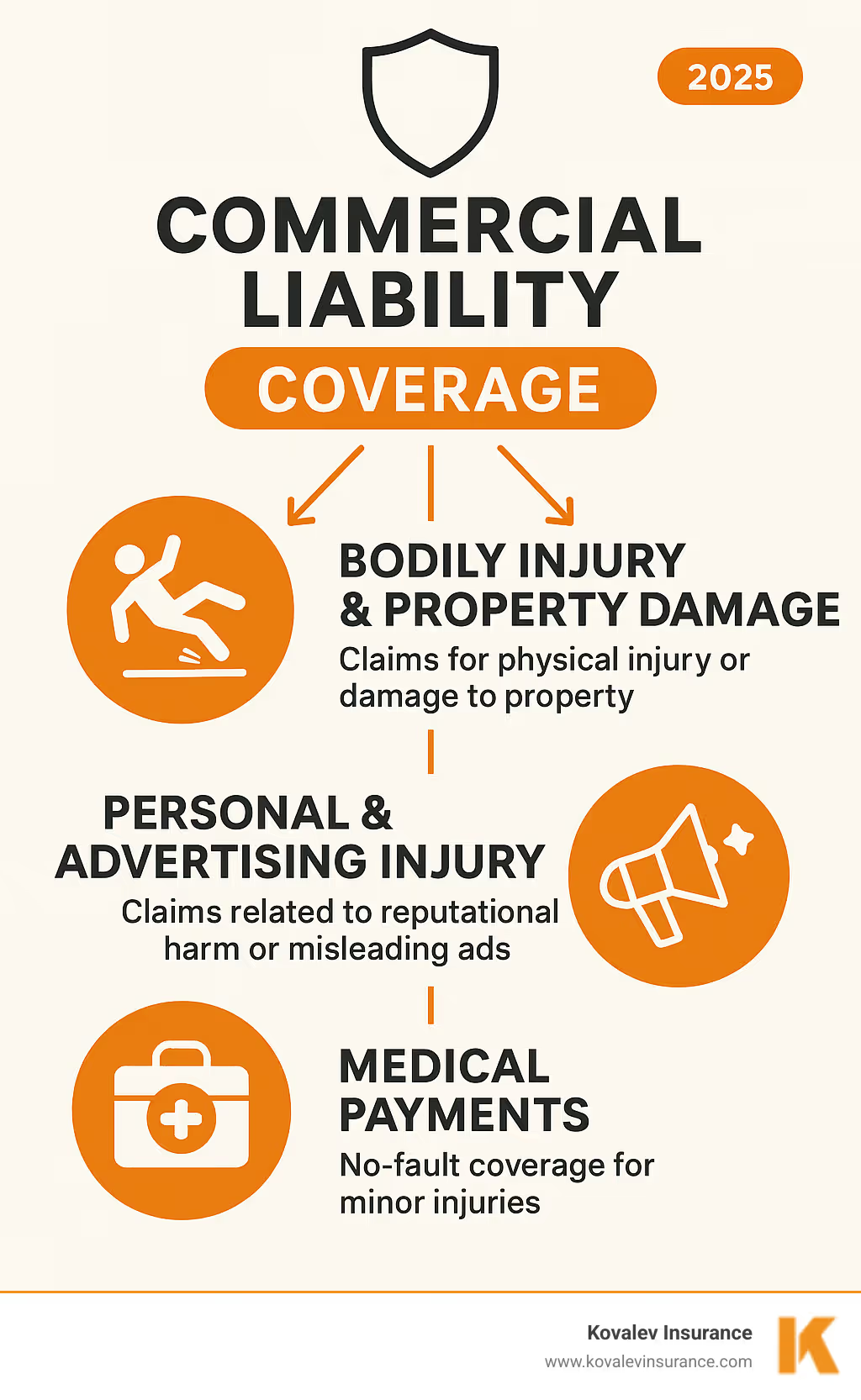
Comprehensive breakdown of commercial liability coverage showing three main protection areas: Bodily Injury & Property Damage, Personal & Advertising Injury, and Medical Payments - commercial liability coverage infographic

Introduction to Commercial General Liability (CGL)

Commercial General Liability (CGL) insurance is the formal name for the broad commercial liability coverage most businesses need. It's a fundamental safeguard for any Massachusetts enterprise, from Boston to Belmont, protecting you from claims of bodily injury or property damage to third parties like customers, vendors, or visitors.

Think of CGL as a financial shield. It covers legal defense costs—even for baseless lawsuits—and settlement or judgment costs if you're found liable. This protection is crucial for business continuity, safeguarding your hard-earned assets from the financial devastation of a single accident.

For more on how CGL protects businesses in our state, explore our guide on General Liability Coverage Massachusetts.

What Does General Liability Insurance Actually Cover?

So, what specific types of incidents does CGL insurance typically cover? Commercial General Liability insurance is broadly categorized into a few key areas, ensuring comprehensive protection against common business risks:
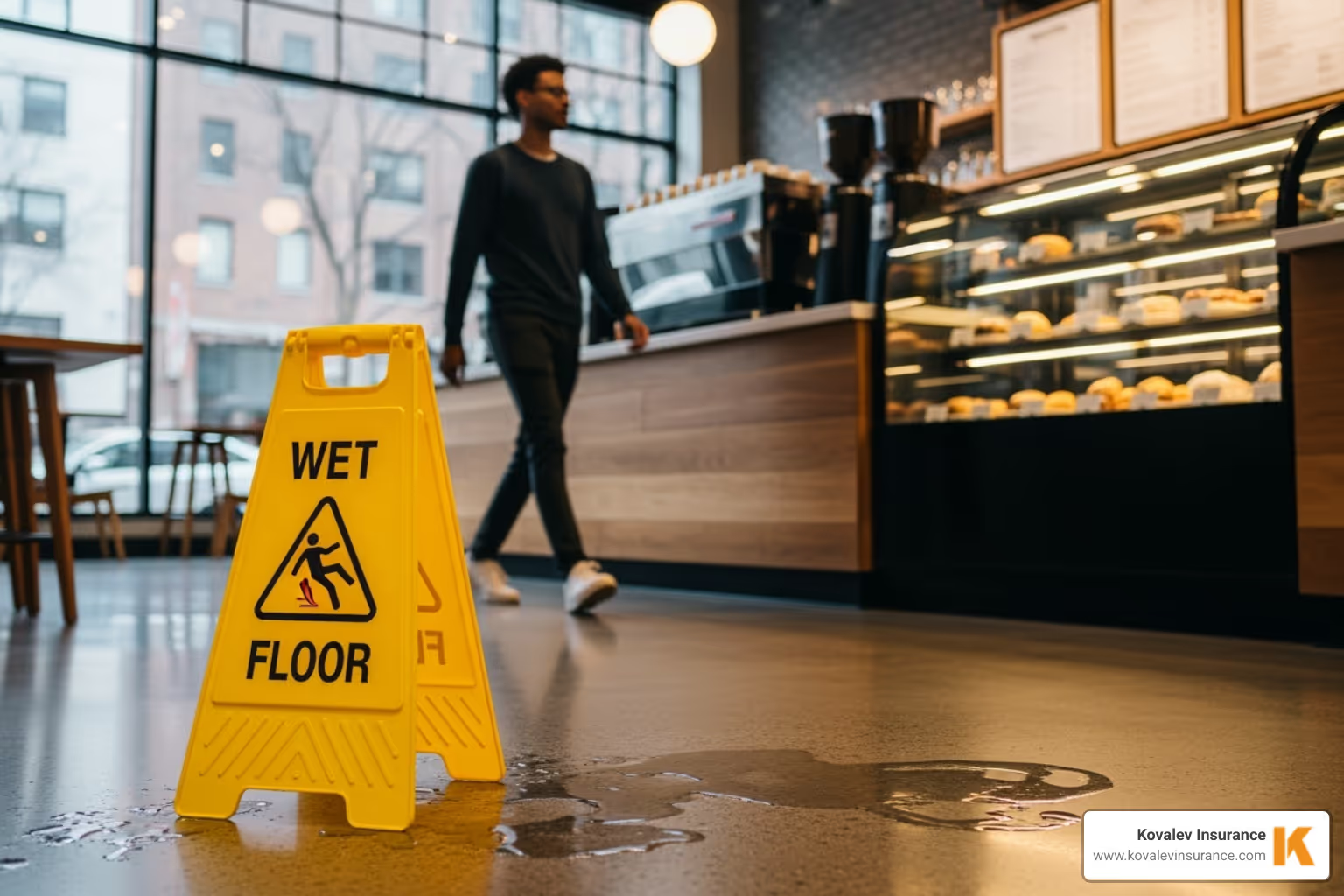
wet floor sign in a Brookline coffee shop with a customer nearby - commercial liability coverage
  1. Premises and Operations Liability: This covers bodily injury or property damage that occurs on your business premises (like a customer slipping in your Brookline shop) or as a result of your operations off-site (like an employee damaging a client's property).
  2. Products-Completed Operations Liability: This protects you from claims arising from your products or completed work after they have left your control. For example, if a contractor's faulty installation in Wellesley causes damage months later, this coverage would respond.
  3. Personal and Advertising Injury: This vital component covers non-physical injuries, such as libel, slander, copyright infringement in your advertising, false arrest, or invasion of privacy.
  4. Medical Payments: This provides limited, no-fault coverage for minor medical expenses if a non-employee is injured on your premises. It's a way to resolve small incidents quickly and prevent larger lawsuits.
  5. Legal Defense Costs: Crucially, CGL covers the attorney fees and court expenses to defend your business against covered claims, regardless of whether you are ultimately found liable. This protection alone can save a business from financial ruin.

Understanding these coverages is key for any business owner in Massachusetts looking to protect their investment. For more details on business liability in our state, visit our blog on Business Liability Insurance Mass. You can also find comprehensive information from the Insurance Information Institute on Commercial general liability insurance | III.

Understanding Your Policy: Claims-Made vs. Occurrence

When buying CGL, you'll choose between two main policy types: 'claims-made' and 'occurrence.' The difference is critical, as it determines when your policy responds to a claim.

  • Occurrence Policies: These cover incidents that happen during the policy period, no matter when the claim is filed. If an incident occurs while the policy is active, you're covered even if the claim is made years later. This offers long-term protection, ideal for risks like product defects.
  • Claims-Made Policies: These cover claims reported during the policy period, as long as the incident happened after a specified 'retroactive date.' If the policy ends, you may need an extension to cover claims reported later.

Here's a table summarizing the key differences:

```html
Feature Occurrence Policy Claims-Made Policy
Coverage Trigger Incident occurs during policy period Claim reported during policy period AND incident occurred after retroactive date
Reporting Time Unlimited (can be reported years after incident) Must be reported during policy period or extended reporting period
Tail Coverage Not needed Often necessary to cover claims reported after policy expiration
Retroactive Date Not applicable Crucial; sets earliest date of covered incident
Best Suited For Businesses with long-tail risks (e.g., manufacturers, contractors) Businesses with short-tail risks (e.g., consultants, professionals)
```

For claims-made policies, you may need an Extended Reporting Period (ERP) or "Tail" Coverage to report claims after your policy expires. If switching between claims-made policies, Prior Acts or "Nose" Coverage can be added to your new policy to cover incidents from your previous policy's term, ensuring continuous protection.

What Isn't Covered? Common CGL Exclusions

While CGL is broad, it's not a catch-all policy. Knowing the common exclusions is crucial for building complete commercial liability coverage, as these risks require separate, specialized policies.

Common exclusions from a standard CGL policy include:

  • Employee Injuries: Covered by Workers' Compensation insurance, which is mandatory for most Massachusetts employers.
  • Professional Errors: Claims of negligence or mistakes in professional services require Professional Liability (E&O) insurance.
  • Auto Accidents: Incidents involving business vehicles (owned, leased, or non-owned) need a Commercial Auto insurance policy.
  • Intentional Acts: CGL is for accidents; it does not cover intentional harm or damage.
  • Contractual Liability: Liability you assume under a contract is generally excluded, with some exceptions.
  • Pollution: Most pollution-related claims are excluded and require specialized Pollution Liability insurance.
  • Data Breaches & Cyber Risks: Digital risks like data theft and cyberattacks are covered by Cyber Liability insurance.
  • Damage to Your Own Work/Product: CGL covers damage to others' property, not the cost to fix your own faulty work.
  • Product Recalls: The costs to recall a faulty product are not covered.
  • Liquor Liability: Businesses that sell or serve alcohol need a separate Liquor Liability insurance policy for alcohol-related incidents.
  • Directors and Officers (D&O) Liability: Protects against claims of mismanagement by company leaders and requires D&O Liability insurance.

Understanding these gaps is the first step in developing a robust insurance strategy that truly shields your business.

Advanced Strategies for Your Commercial Liability Coverage

Beyond the basics of CGL, smart business owners in Wellesley, Needham, and Natick focus on advanced strategies. This means proactive risk management, securing adequate coverage limits, conducting regular policy reviews, and bundling policies for savings and simplicity.
contractor from Wellesley reviewing an insurance policy with a client - commercial liability coverage

The financial consequences of being underinsured are devastating—one major claim can lead to bankruptcy. For Massachusetts businesses, a proactive insurance strategy isn't optional; it's essential for survival and deserves the same thoughtful protection you give your home or car.

The Cost of Your Commercial Liability Coverage in Massachusetts

The price of commercial liability coverage in Massachusetts varies based on several key factors. When we work with clients across Newton, Natick, and Greater Boston, we assess these elements to find the right protection at a competitive price.

Your premium is primarily determined by:

  • Industry Risk: High-risk fields like construction face higher premiums than low-risk office-based businesses.
  • Business Size and Revenue: More revenue and larger operations generally mean more exposure and higher costs.
  • Location: Operating in a dense area like downtown Boston carries different risks than a suburban Needham location.
  • Claims History: A clean record helps keep premiums down.
  • Coverage Limits & Deductible: Higher limits increase the premium, while a higher deductible can lower it.
  • Number of Employees: More employees can increase the potential for incidents.

Most small to medium-sized Massachusetts businesses can expect to pay between $300 and $1,000 annually for a basic CGL policy, but your final cost depends on your unique profile. Many CGL policies are auditable, meaning your premium could be adjusted after the policy period based on your actual sales or payroll.

For detailed insights into cost factors, check out our guide on General Liability Insurance Ma Cost and general principles from the Division of Financial Regulation : Liability insurance : Insurance for businesses : State of Oregon.

Enhancing Your Policy: Additional Insureds & Umbrella Coverage

Standard CGL is just the starting point. To create a truly robust defense, many businesses use additional insureds and umbrella coverage for layered protection against catastrophic claims.
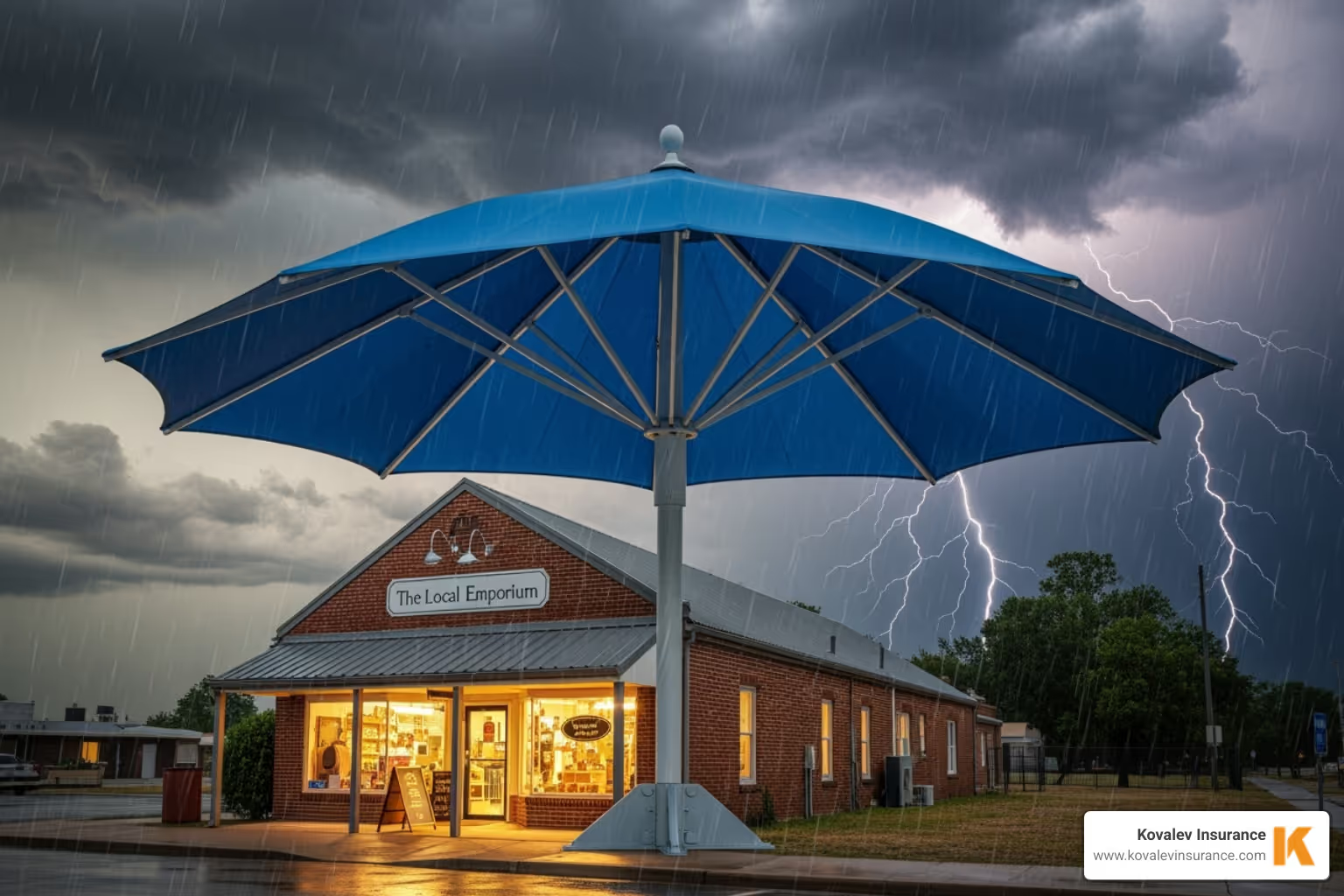
large umbrella shielding a small business from a storm - commercial liability coverage

An additional insured is another party added to your CGL policy, granting them coverage for claims related to your work. This is often a contractual requirement in fields like construction. By naming a property owner or general contractor as an additional insured, your policy can protect them if a claim arises from your operations. Proof is provided via a Certificate of Insurance (COI).

Umbrella or Excess Liability coverage provides an extra layer of protection on top of your primary policies (like CGL and Commercial Auto). While a primary policy might have a $1 million limit, an umbrella policy adds another $1 million, $5 million, or more. This layered protection is crucial for asset protection, as a single catastrophic claim can easily exhaust standard limits. For Massachusetts businesses with substantial assets, umbrella coverage provides invaluable peace of mind, safeguarding you from judgments that could threaten everything you've built.

Ensuring Your Business is Adequately Protected

Operating without commercial liability coverage is a gamble no business can afford to take. A single lawsuit could drain your finances, force liquidation, or lead to bankruptcy. This is a real risk for businesses across Newton, Wellesley, and Needham—even home-based operations, which are rarely covered by a homeowner's policy.

To ensure your business is truly protected:

  • Assess Your Risks: Examine your daily operations, customer interactions, and contractual obligations to understand your unique liability exposures.
  • Determine Adequate Limits: Choose coverage limits that match your risk profile and protect your assets. It's often wise to purchase as much coverage as you can reasonably afford.
  • Bundle Your Policies: A Business Owner's Policy (BOP) combines CGL and commercial property insurance, often at a discount. Bundling auto coverage can add more savings. Learn more in our article on Commercial Business Owner Insurance Mass.
  • Conduct Regular Reviews: As your business grows, your insurance needs change. An annual review ensures your coverage keeps pace.

Don't gamble with your future. At Kovalev Insurance, we specialize in the Massachusetts business landscape. We identify coverage gaps and build customized, competitive insurance strategies. The right commercial liability coverage is an investment in your stability and success.

Ready to build comprehensive protection for your Massachusetts business? Get a quote from a business insurance expert in Newton, MA and let us create a robust insurance strategy custom specifically for your needs.


Blog Content

Contact Massachusetts business and Personal insurance Agency