Blog Content

14
Apr
2026

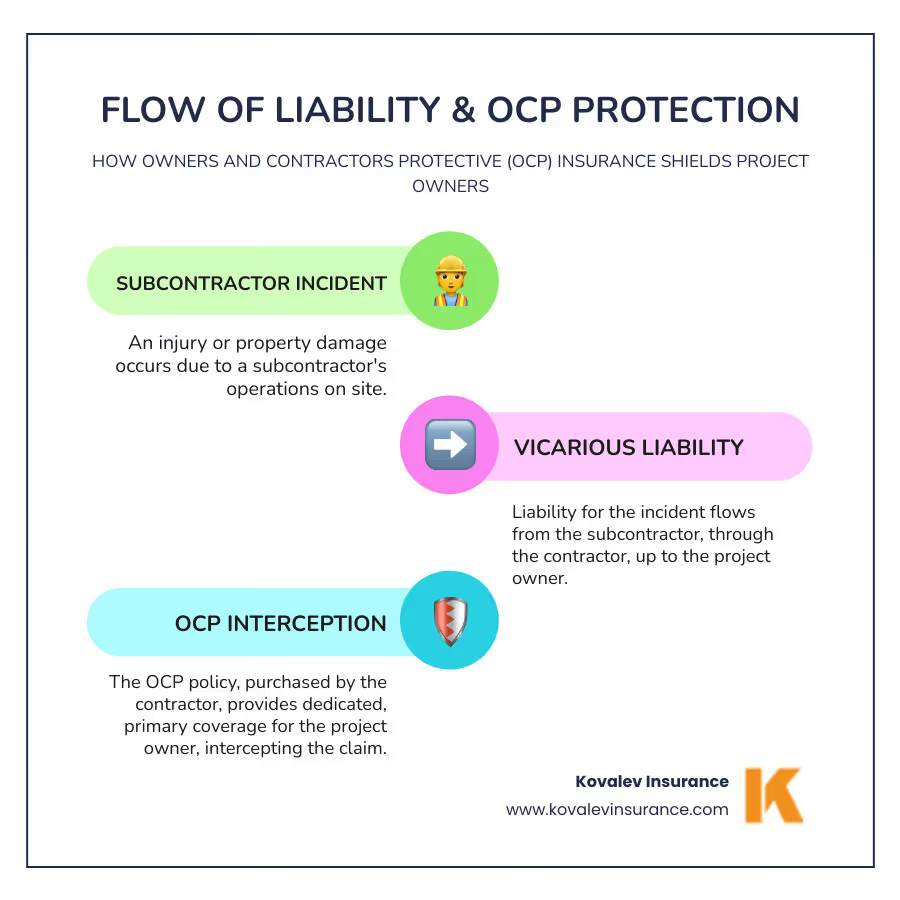
Contractors protective liability insurance is a specialized, standalone policy that protects project owners from liability arising from a contractor's work on their property. Unlike traditional Commercial General Liability (CGL) coverage, this project-specific insurance is purchased by the contractor but exclusively protects the project owner from claims related to the contractor's operations and the owner's general supervision of the work.
Key Facts About Contractors Protective Liability Insurance:
This insurance addresses a critical gap. When a contractor works on your Newton office or Wellesley home, their actions can create liability for you as the property owner. OCP coverage acts as a protective shield, ensuring you have dedicated protection without relying on the contractor's shared general liability limits.
This distinction is vital for Massachusetts project owners who want to protect their assets and avoid premium hikes on their own policies. Whether overseeing a commercial renovation in Brookline or a municipal project in Needham, understanding this coverage can prevent significant financial exposure.
Contractors protective liability insurance further reading:
Understanding the differences between Owners and Contractors Protective (OCP) Liability, Commercial General Liability (CGL), and Additional Insured endorsements can be confusing. Each serves a specific purpose in protecting your Massachusetts construction project.
Commercial General Liability (CGL) is the foundation of any contractor's insurance program. This broad coverage protects contractors from claims involving bodily injury or property damage during their daily operations. Whether it's a client slipping on tools at a Newton job site or accidental damage to neighboring property in Brookline, CGL coverage responds to these everyday risks. Most Massachusetts contractors need robust General Liability Coverage Massachusetts as a basic requirement for doing business.
An Additional Insured endorsement adds the project owner to the contractor's CGL policy. This offers some protection but has limitations, primarily shared limits. If a major claim drains the policy, the owner could be left exposed.
Contractors protective liability insurance takes a different approach. This standalone, project-specific policy is purchased by the contractor but exclusively protects the project owner. Unlike shared coverage, OCP provides dedicated limits—giving the owner their own separate insurance fund for that project. This coverage responds as primary protection, kicking in before the owner's own insurance policies.
Policy control also differs. With CGL and Additional Insured status, the contractor controls the policy. OCP, while purchased by the contractor, is designed to benefit the project owner, creating a unique arrangement.
The coverage scope reveals where these policies truly diverge. Contractors protective liability insurance focuses specifically on on-site operations at a designated project location. It primarily covers situations where the project owner faces liability due to the contractor's actions or the owner's general supervision of the work.
CGL coverage is much broader, including completed operations coverage for incidents after project completion, plus personal and advertising injury protection. This serves the contractor's general business needs but isn't custom to protect project owners.
Additional Insured limitations become apparent when examining coverage breadth. The owner's protection only extends as far as the contractor's underlying CGL policy allows, and only for claims arising from the contractor's work. This creates potential gaps that OCP coverage is designed to fill.
One important distinction: OCP typically excludes completed operations coverage, focusing instead on active construction phases. It also generally doesn't cover claims from the project owner's sole negligence unrelated to contractor supervision. For a comprehensive understanding of construction insurance requirements, review our construction insurance cover guide.
In sophisticated markets like Wellesley and Needham, contractual requirements for OCP coverage are increasingly common. Project owners in these communities understand that proper risk management protects their financial interests and insurance records.
If a serious incident occurs on a Belmont or Natick project, dedicated OCP coverage handles the claim without affecting the owner's own insurance. This prevents premium increases and maintains their clean claims history.
For contractors, offering OCP coverage provides a significant competitive advantage when bidding on projects. It demonstrates sophisticated risk management and professionalism that property owners value. Additionally, claims paid under OCP policies don't impact the contractor's CGL claims history, protecting their insurance record and future premium rates.
Understanding these distinctions helps both contractors and project owners make informed decisions. For insights into specific contractor risks, explore our analysis of risks facing artisan contractors in Massachusetts.

Imagine a major renovation in Newton where everyone involved sleeps better knowing exactly who's covered. That's the benefit of contractors protective liability insurance – it creates a partnership where both the project owner and contractor gain from clear, dedicated protection.
Unlike many insurance arrangements where one party carries all the risk, OCP coverage creates genuine mutual protection. The contractor demonstrates their commitment to safeguarding the project owner's interests while simultaneously protecting their own business. It's a trust-building tool that shows everyone takes risk management seriously.
This approach to risk transfer works particularly well for Massachusetts construction projects because it eliminates guesswork. Both parties know exactly where they stand from day one.
For project owners in Wellesley or Brookline, OCP coverage offers invaluable dedicated policy limits. Instead of sharing coverage with the contractor, owners get their own separate pool of protection for their project.
The coverage operates as primary protection, meaning it responds first before the owner's existing insurance policies get involved. This is huge for protecting your insurance record. When claims get paid through the OCP policy, you avoid the premium increases that can follow claims on your personal or business insurance.
Project owners also gain protection from the contractor's claims history. If the contractor has had previous incidents that affect their insurance rates, the OCP policy operates independently. You get fresh, clean coverage for your specific project.
Perhaps most importantly, OCP coverage brings genuine peace of mind, allowing owners to focus on project goals rather than worrying about potential liability gaps.
Smart Massachusetts contractors know OCP coverage provides a significant competitive bidding advantage. It demonstrates professionalism and sophisticated risk management, which can be the deciding factor in winning bids for large projects in communities like Needham or Belmont.
The real genius of OCP coverage for contractors is how it protects your own CGL policy. When a covered claim occurs under the OCP policy, it doesn't touch your Commercial General Liability insurance. This keeps your claims history clean, helping you avoid premium increases that could hurt your ability to bid competitively on future projects.
By having OCP coverage absorb project-specific claims, you're keeping your insurance record spotless while still providing excellent protection for your clients.
OCP coverage also helps contractors fulfill contract requirements without compromising their own coverage. Many project owners now require this protection, and having it available shows you understand modern construction risk management. For additional strategies on managing insurance costs, explore our guide on Ways to Reduce Cost of Artisans Insurance.
What does a contractors protective liability insurance policy cover? It’s a specialized safety net protecting the project owner from claims of bodily injury or property damage arising from the contractor's ongoing work at a specific job site. It ensures that if something goes wrong during construction, the owner isn't held liable for problems they didn't directly cause.

OCP policies are built to tackle specific situations. They mainly focus on protecting the owner from "vicarious liability"—when you're held responsible for someone else's actions—and claims related to the owner's general oversight of the project.
First, OCP covers vicarious liability for the contractor's actions. If a contractor's negligence causes bodily injury or property damage and the project owner is sued, the OCP policy responds. For example, if a visitor to your Newton site trips over a subcontractor's materials, the OCP policy would cover the owner's liability. With the average trip-and-fall accident costing around $20,000, OCP provides a crucial financial cushion.
The policy also covers claims against the project owner for their own acts of general supervision. This is crucial: it means claims arising from the owner's broad oversight of the contractor's work, not from the owner's direct, active negligence.
Beyond these core coverages, OCP typically addresses third-party injuries at the job site and damage to adjacent property caused by contractor's operations. Picture a contractor's excavator in Brookline accidentally damaging a neighbor's fence. If the property owner is held responsible, the OCP policy would provide coverage.
While contractors protective liability insurance is helpful, it's not a magic shield. Like any policy, it has specific limits and exclusions. Knowing what's not covered is as important as knowing what is.
First, this policy is for the project owner's protection, not the contractor's. It won't cover the contractor's own injuries or property damage. Injuries to the contractor's employees (covered by Workers' Compensation) or damage to the contractor's tools are not included.
Next, if the project owner is solely and directly negligent, unrelated to their general oversight of the contractor's work, the OCP generally won't cover it. This is called owner's sole negligence (unrelated to supervision).
Also, OCP covers ongoing operations. Once the project is completed, the OCP policy typically stops providing coverage. Claims that arise after completion usually fall under the contractor's "completed operations" coverage, which is part of their own Commercial General Liability (CGL) policy. This is known as the completed operations liability exclusion for OCP.
OCP is not a professional liability policy. It won't cover claims from design errors or professional mistakes. For that, you'd need a separate policy like Professional Liability Insurance Mass.
Finally, coverage is usually limited to the exact job site listed in the policy, so off-site incidents are generally excluded.
Deciding when you need contractors protective liability insurance in Massachusetts isn't always straightforward, but the decision is often guided by your contract, project complexity, and the project owner.
Contractual mandates are the most common driver. If you're bidding on a municipal project in Belmont or working with a sophisticated developer in Natick, OCP coverage will likely be required in the contract.
High-risk projects are another clear indicator that OCP makes sense, even when not contractually required. Think excavation near busy Needham streets, demolition in dense Brookline neighborhoods, or any job with heavy machinery. The potential for significant third-party claims makes the modest cost of OCP a smart investment.
Public works projects throughout Massachusetts almost universally require OCP coverage to protect taxpayers from liability exposure.
The underwriting process is typically straightforward but requires planning. Insurance carriers must see that the contractor and project meet certain criteria before issuing coverage.
Unlike an annual CGL policy, contractors protective liability insurance is designed around your project timeline. The policy period matches your construction schedule from start to finish.
Typical coverage limits mirror standard CGL policies, with $1 million per occurrence and $2 million aggregate being common starting points. Higher limits up to $10 million or more are often available for larger projects.
When we help contractors at Kovalev Insurance secure OCP coverage, the underwriting process focuses on several key factors. The insurance company needs a completed application with detailed project information—you can start with a standard form like this an OCP Application.
Your contractor's existing CGL limits must meet minimum thresholds, typically at least $1 million per occurrence and $2 million aggregate. The total available limits from your CGL plus any Excess or Umbrella policies should meet or exceed the requested OCP limits.
It's important to know that certain types of work face automatic declinations from most insurers. Projects involving explosives, asbestos abatement, subway work, and operations in active refineries are typically declined due to extreme risk.
This question is common, and the answer might surprise you: it's rarely about your specific trade. Whether you're an electrician in Wellesley or a mason in Newton, the OCP requirement usually stems from the project contract and the owner's risk management approach, not your specialty.
That said, certain trades encounter OCP requirements more frequently. Excavators, steel erectors, and demolition contractors often face these requirements because their work carries higher inherent risks.
General contractors frequently require their subcontractors to provide OCP coverage or purchase it themselves to cover all trades working under them. This creates a comprehensive protection umbrella for the project owner.
The key is understanding that requirements vary by project, not by trade. A comprehensive Construction Insurance Coverage Guide can help any contractor understand when OCP might be required.
For example, an electrician needs solid Electrical Contractor Insurance Mass for daily operations. But when that electrician works on a major commercial project, the general contractor might require OCP to protect the building owner from liability stemming from the electrical work.
The bottom line? Read your contracts carefully and ask questions when OCP requirements aren't clear.
We understand contractors protective liability insurance can be puzzling. At Kovalev Insurance, we help make sense of it. Here are common questions from Massachusetts contractors and project owners:
This is a common question. The cost of an OCP policy isn't fixed and depends on several key factors:
Unlike a contractor's annual general liability policy, OCP is a one-time, project-specific cost. The premium is minimal compared to the protection it provides against a potentially devastating lawsuit. It's a small price for significant peace of mind.
For the project owner, the answer is often yes. While being an Additional Insured on a contractor's Commercial General Liability (CGL) policy offers some protection, an OCP policy provides a far more robust shield.
Here's why OCP often comes out on top for project owners:
For the contractor, purchasing an OCP policy is also smart because it helps protect their own CGL policy. If a claim is handled by the OCP, it doesn't impact the contractor's CGL claims history, which can help keep their CGL premiums stable.
"Better" depends on your risk tolerance. However, for comprehensive, dedicated protection for the project owner, OCP is almost always the preferred choice. We recommend discussing your project with an expert at Kovalev Insurance to determine the best approach.
No, contractors protective liability insurance is inherently project-specific. It is not a "one-size-fits-all" annual policy.
Each OCP policy is designed to cover the unique risks associated with:
This means a contractor with several projects in towns like Wellesley, Needham, or Brookline will need a separate OCP policy for each new job site. This ensures dedicated limits are in place for each project's unique exposures.

In Massachusetts construction, from Newton to Natick, effective risk management is paramount. Contractors protective liability insurance is a strategic tool for project owners and contractors, providing dedicated protection for owners and safeguarding contractors' CGL records.
For project owners, OCP means peace of mind, knowing that claims arising from the contractor's work won't directly impact their own insurance. For contractors, it offers a competitive edge and crucial protection for their business's financial health, allowing them to bid confidently on projects that demand a higher standard of care.
At Kovalev Insurance, we pride ourselves on our local expertise and commitment to providing custom coverage solutions. Whether you're a seasoned general contractor, a specialized artisan, or a property owner in the greater Boston area, we're here to help you steer these complexities. Let us help you secure your next project with the right protection. Find the best artisan contractors insurance in Mass with us today.



X