Blog Content

10
Jan
2026

Massachusetts condo insurance requirements aren't technically mandated by state law, but that doesn't mean you can skip coverage. The reality is more complex than a simple yes or no answer.
Quick Answer: Massachusetts Condo Insurance Requirements
Massachusetts doesn't legally require condo owners to carry insurance, but here's the catch - you'll almost certainly need it anyway. Your mortgage lender will demand proof of an HO-6 policy before closing, and your condo association's bylaws likely require coverage too. Even if you own your Newton or Wellesley condo outright, going without insurance leaves you exposed to potentially devastating financial losses.
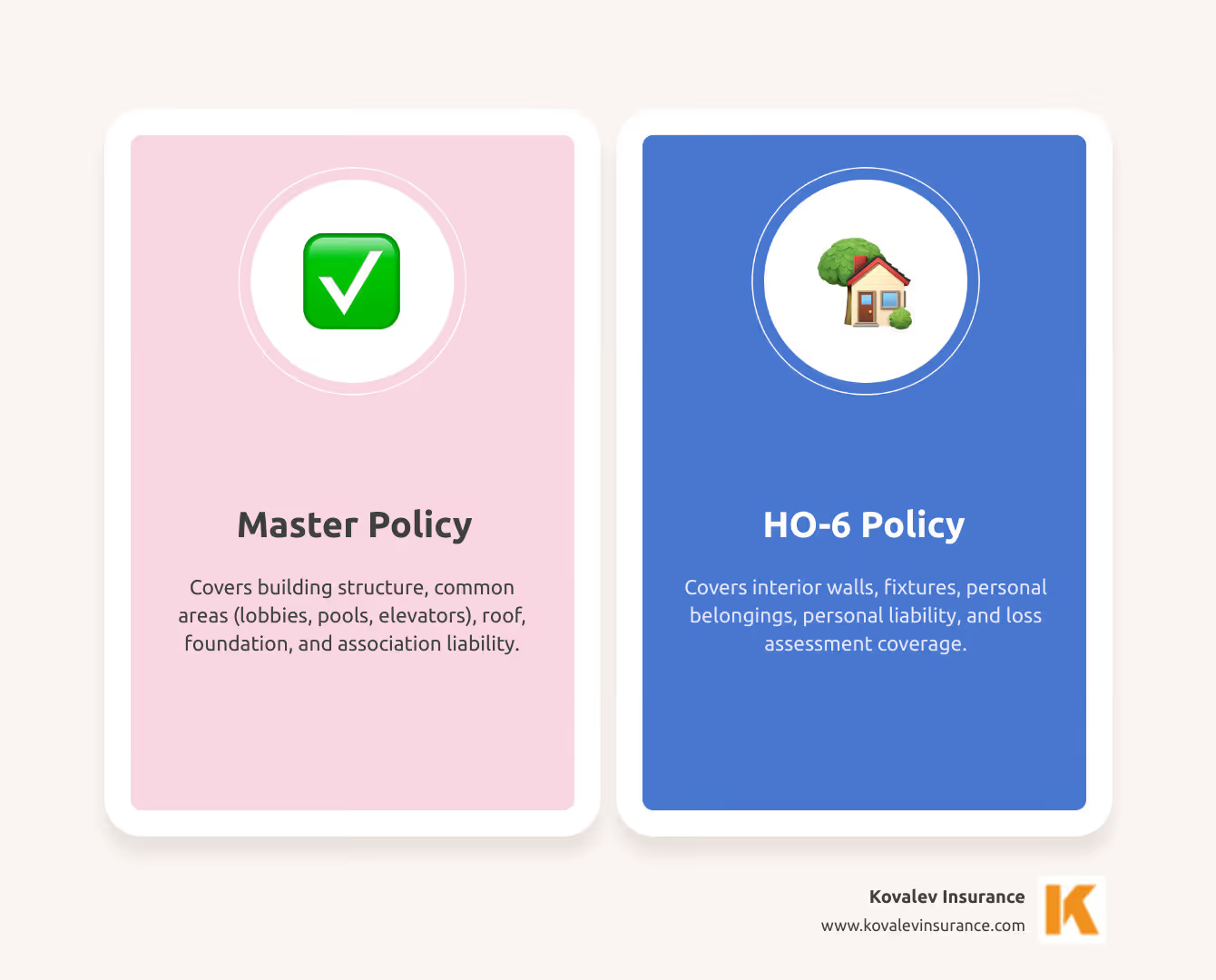
The complexity doesn't end with whether you need coverage. Massachusetts condo insurance operates on a unique two-policy system that confuses many owners in communities from Brookline to Natick. Your association carries a master policy covering the building and common areas, while you need a personal HO-6 policy for everything "walls-in" - but where one policy ends and the other begins isn't always clear.
Here's the straight answer: Massachusetts condo insurance requirements don't exist at the state level. You won't find a Massachusetts law that says "every condo owner must have insurance." The state won't fine you or send you to court for going without coverage.
But before you celebrate this apparent freedom, let's talk about reality. While Massachusetts doesn't legally require condo insurance, two very powerful groups almost certainly will: your mortgage lender and your condo association.
Massachusetts General Laws Chapter 175, Section 99B covers condo insurance regulations. This law focuses on making sure insurance companies offer good coverage to Massachusetts residents - coverage that's "no less favorable" than standard fire insurance. But it doesn't actually require you to buy that coverage.
The reality is quite different. If you have a mortgage on your Newton or Wellesley condo, your lender will demand proof of an HO-6 policy before you can close. No exceptions. They have too much money invested in your property to let it go unprotected.
Your condo association's bylaws likely require coverage too. These aren't suggestions - they're legally binding rules you agreed to when you bought your unit. Whether you're in Brookline or Needham, virtually every condo association in Massachusetts has this requirement written into their governing documents.
Even if you own your condo outright, going without insurance means risking your entire investment. One kitchen fire or burst pipe could wipe out years of equity and leave you facing massive bills you can't afford.
These requirements are rooted in the concept of shared risk. Your Belmont condo is connected to other units, so a problem in your unit can affect everyone. Lenders and associations mandate coverage to:
The Understanding Home Insurance | Mass.gov resource provides additional details about insurance requirements and options in Massachusetts.
So while the state might not legally require condo insurance, the practical reality makes it absolutely essential for peace of mind and financial protection. In over a decade helping Massachusetts condo owners, I've never met someone who regretted having coverage - but I've seen plenty who wished they had it when disaster struck.
Understanding massachusetts condo insurance requirements means getting to know the two-policy system. Unlike traditional home insurance, condo coverage involves your personal HO-6 policy working in tandem with your condo association's master policy.
Think of them as two puzzle pieces that must fit perfectly. The master policy covers the building's structure and common areas, while your HO-6 policy protects your personal unit and belongings. The key is knowing exactly where one policy's coverage ends and the other's begins.
This shared responsibility system means reviewing your condo documents isn't just helpful - it's absolutely essential for proper coverage.
The master policy is the umbrella policy for the entire building in your Newton or Wellesley community. It covers the shared elements, including:
Crucially, the master policy's protection stops at your unit's doorstep. It does not cover your personal belongings or most interior finishes. For more details, see this resource on what condo associations handle.
Your HO-6 policy provides what's often called "walls-in" coverage, protecting your personal space where the master policy stops. Key components include:
This policy is essential for protecting your life inside your Brookline or Needham condo. For more details, you can read about HO-6 Policy specifics or see our guide on Condo Insurance Massachusetts Cover.
Not all master policies are the same, and the type your association has dictates how much HO-6 coverage you need. There are three main types:
Reviewing your Belmont or Natick condo documents is the only way to know which policy type your association has. This information is critical to avoid being underinsured or overpaying for redundant coverage. We help our clients analyze these documents to ensure their policy is a perfect fit.
With the master policy and HO-6 partnership established, let's focus on your personal HO-6 policy. It's your financial shield for your unit's interior, your belongings, and your personal liability.

Think of your HO-6 policy as protection for everything that matters to you inside your Newton or Wellesley condo. While the association's master policy covers the building, your policy protects your investment and life within your four walls.
Your HO-6 policy is designed to protect you from various perils, typically including fire, theft, vandalism, and certain types of water damage. Here's what it covers:
Building Property Coverage is the foundation of your policy, covering your unit's interior structure from the studs inward. This includes walls, flooring, built-in appliances, fixtures, cabinetry, and any improvements you've made, like a remodeled kitchen or bathroom.
Personal Property Coverage protects your belongings—anything not permanently attached to the unit. This includes your furniture, electronics, and clothing in your Brookline condo. A great feature is that this coverage is typically worldwide. If your laptop is stolen from your car or your luggage is lost on vacation, your policy can help. Be aware that high-value items like fine art or jewelry often have lower limits and may need a separate endorsement for full protection.
Personal Liability and Medical Payments is critical in a condo setting. Liability protection covers you if you're found legally responsible for injuries in your unit or for damage you cause to another unit. For example, if your bathtub overflows and damages the unit below in your Needham condo, this coverage handles the legal and settlement costs. We recommend at least $500,000 in liability coverage; $1,000,000 often costs only slightly more and offers greater peace of mind. Medical payments coverage handles minor medical bills for guests injured in your unit, regardless of fault, helping to prevent larger lawsuits.
Additional Living Expenses is your lifeline if a covered event makes your unit uninhabitable. If a fire forces you from your Belmont condo, this coverage pays for temporary expenses like hotel stays and meals that exceed your normal costs. In the Boston area, this protection is invaluable.
Loss Assessment Coverage is unique and vital for condo owners. If a large claim exceeds the master policy's limits or falls within its deductible, the association can assess all unit owners for the shortfall. For example, if a storm causes damage and the master policy has a $100,000 deductible, your association could bill you for your share. This coverage pays for that assessment, protecting you from unexpected, costly bills.
No policy covers everything. Understanding common exclusions helps you secure the right protection.
Reviewing these exclusions with an insurance professional is key to filling any gaps with endorsements, ensuring you have complete financial peace of mind.
Let's talk numbers - because understanding what you'll pay for your massachusetts condo insurance requirements helps you budget and find the best value. The good news? Condo insurance typically costs less than regular homeowners insurance since your association's master policy handles the big-ticket structural stuff.

In Massachusetts, condo owners typically pay around $669 per year for their HO-6 policy - that's roughly $56 per month. But here's the thing: your actual rate could swing quite a bit higher or lower depending on where you live and what coverage you choose.
I've seen Newton condo owners pay as little as $400 annually for basic coverage, while others in downtown Boston with extensive personal property and high liability limits might pay $1,200 or more. The key is understanding what drives these differences.
Location matters - a lot. Your zip code plays a huge role in your premium. Boston condo owners often face higher rates due to increased theft risk and higher property values, while those in quieter suburbs like Belmont or Natick might enjoy lower premiums. Coastal areas see higher rates too, thanks to storm exposure.
Your building's age and construction directly impact your costs. That sleek new condo in Wellesley with modern plumbing and electrical systems? You'll likely pay less than someone in a charming 1920s building in Brookline that might be more prone to water damage or electrical issues.
Your coverage choices are entirely in your control. Choose higher limits for personal property or liability, and your premium goes up. Opt for a higher deductible (say $2,500 instead of $1,000), and you'll save on monthly costs - just be sure you can handle that out-of-pocket expense if disaster strikes.
Your personal claims history follows you from policy to policy. A clean record often earns you discounts, while multiple claims can push rates higher. It's one reason we always advise thinking carefully before filing smaller claims.
Safety features in your building can earn you breaks on your premium. Buildings with sprinkler systems, security systems, or newer fire alarms often qualify for discounts. Some insurers even offer breaks for individual unit improvements like security systems or smoke detectors.
To get an accurate quote quickly, have the following information ready:
For more on costs, see our guide at Condo Insurance MA Average Cost. Having this information ready will help us find the right coverage for your budget.
Over the years, we've helped countless condo owners across Newton, Wellesley, and the greater Boston area steer their massachusetts condo insurance requirements. The same questions come up time and again, so let's tackle the most common ones together.
The answer depends entirely on your ownership structure as defined by your homeowners association (HOA).
In some Brookline or Needham townhome communities, you own only the interior of your unit, while the HOA owns and insures the exterior and common areas via a master policy. In this scenario, you need an HO-6 policy, just like a condo owner.
In other communities, you own the entire structure, including the land, walls, and roof. Here, you are insured like a single-family homeowner and would need a standard HO-3 homeowners policy.
The only way to know for sure is to review your HOA documents. They specify your ownership and insurance responsibilities, preventing dangerous coverage gaps.
Yes. A great feature of most HO-6 policies is that your personal property coverage is typically worldwide. It doesn't stop at your front door.
This means if your laptop is stolen from your car or your luggage is lost while traveling, your condo insurance can cover the loss, subject to your deductible. Items in a storage unit are also usually covered, though some limits may apply. While high-value items like fine jewelry may require separate coverage, your everyday belongings are protected whether you're at home in Belmont or traveling abroad.
A claim denial is frustrating, but you have recourse. Follow these steps:
Persistence is key. Following the proper process can often lead to a denied claim being overturned.
You've made it through the insurance maze - congratulations! Understanding massachusetts condo insurance requirements might not be the most exciting part of condo ownership, but it's one of the most important. Think of it as the financial foundation that lets you enjoy your Newton or Wellesley home without constantly worrying about "what if."
Let's bring it all together. While Massachusetts doesn't wave a legal flag requiring you to buy condo insurance, the reality is crystal clear: you're going to need it. Your mortgage lender will demand it, your condo association's bylaws likely require it, and frankly, going without it is like driving without a seatbelt - technically possible, but not very smart.
The two-policy system is your safety net. Your association's master policy handles the big stuff - the building structure, common areas, and shared spaces where you gather with neighbors. Your personal HO-6 policy picks up where that ends, protecting everything "walls-in" plus your belongings and liability.
Here's what really matters: understanding your master policy type isn't just insurance jargon - it's the difference between having the right coverage and facing a nasty surprise when you file a claim. Whether your Brookline association has bare walls, single entity, or all-in coverage directly shapes how much dwelling protection you need on your HO-6.
Don't skimp on personal liability coverage - we recommend at least $500,000, though $1 million often costs just a few dollars more per month. In our connected condo world, a small accident in your unit can quickly become someone else's big problem. Loss assessment coverage is equally crucial. When your association faces a major claim and passes costs to unit owners, this coverage keeps you from writing a check for thousands of dollars.
At Kovalev Insurance, we've spent over a decade helping Massachusetts condo owners steer these waters. We've grown from a small team of 3 to 20 professionals by focusing on what matters most: personalized solutions that fit your specific situation and budget. Whether you're in Needham, Belmont, Natick, or anywhere in the Greater Boston area, we understand the local market and can find you the best rates without cutting corners on essential protection.
Your condo is likely one of your biggest investments. Don't leave it to chance or try to figure out these massachusetts condo insurance requirements alone. Let us handle the complexity while you focus on enjoying your home.


X