Blog Content

2
Mar
2026
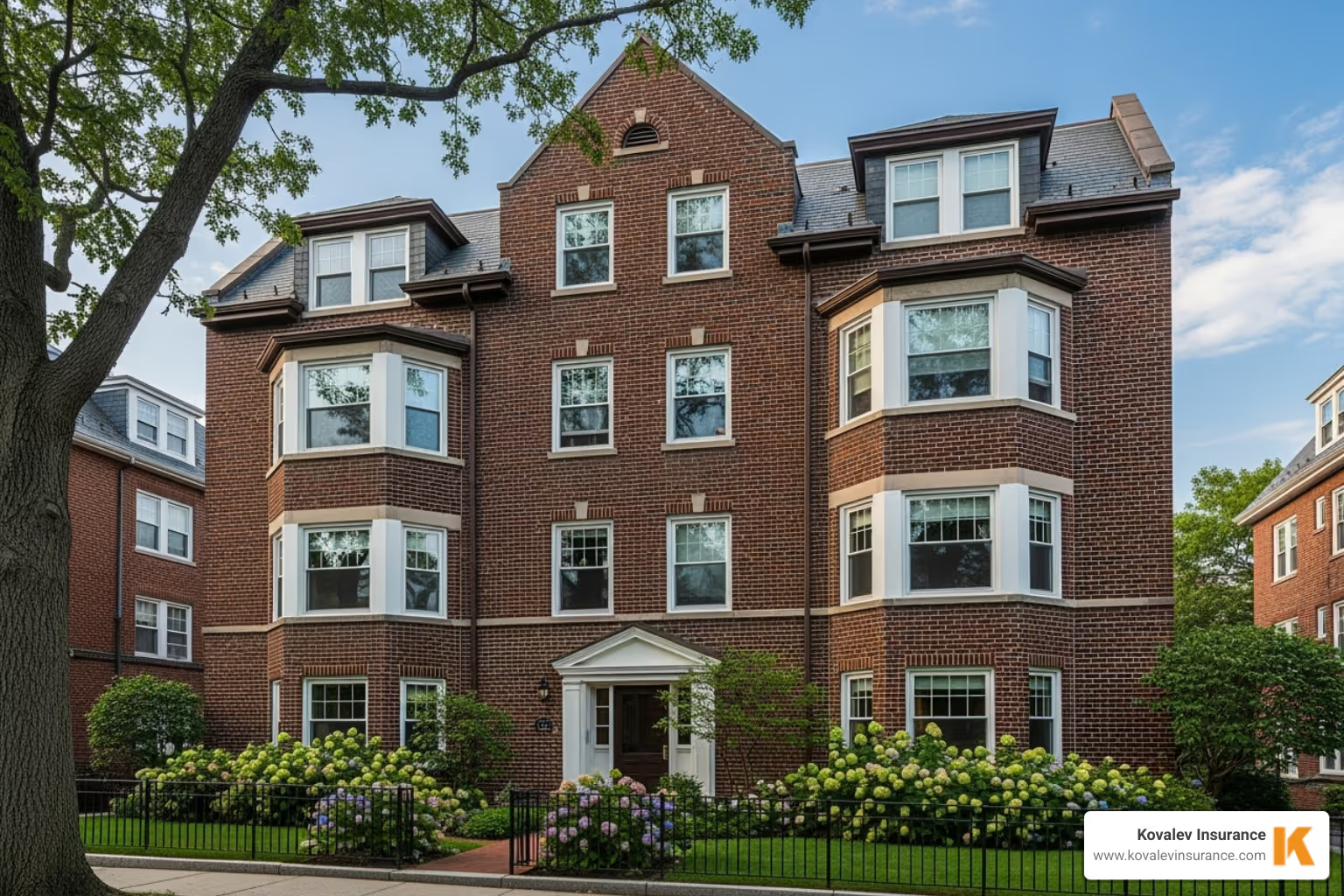
Master condo insurance massachusetts policies protect the shared ownership structure that makes condominium living possible. When you own a condo unit in Newton, Wellesley, or anywhere across the Bay State, you're part of a community where certain responsibilities - and risks - are shared among all owners.
Quick Answer: Master Condo Insurance Massachusetts Coverage
The challenge many condo owners face is understanding exactly what their association's master policy covers - and what gaps remain that could leave them financially exposed. "Clients who find coverage gaps only after a claim are often disappointed, frustrated, and at a loss," notes one Massachusetts insurance expert.
Whether your building follows a "bare walls" approach or provides comprehensive "all-in" coverage makes a huge difference in what you need to insure personally. The stakes are high: a major loss could result in special assessments of thousands of dollars per unit if coverage falls short.
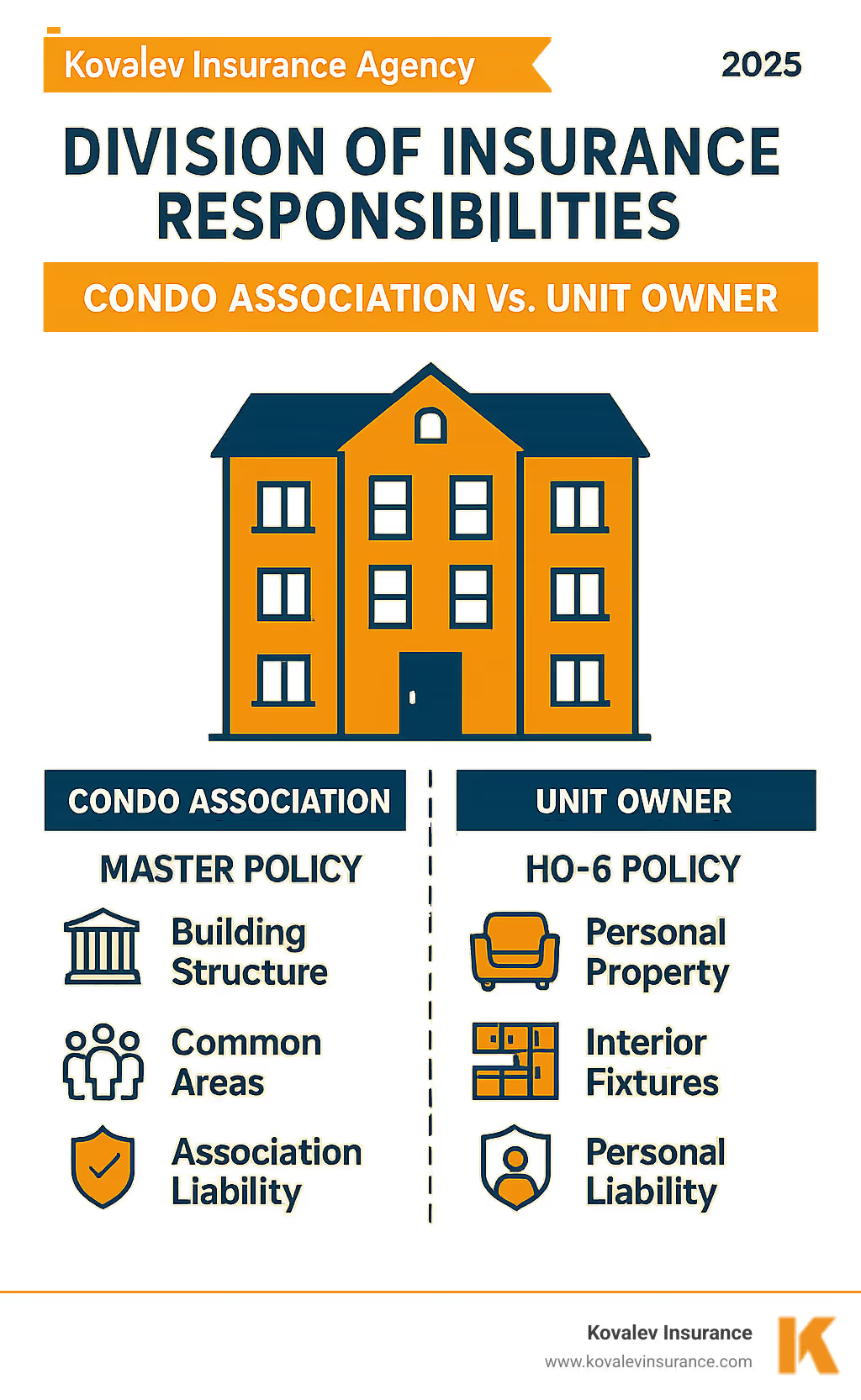
Picture your condominium building in Newton or Brookline as one big shared home. Just like your individual unit needs protection, so does everything you share with your neighbors. That's exactly what master condo insurance massachusetts provides - it's the safety net that covers all the common spaces and shared responsibilities that make condo living possible.
This isn't optional coverage that associations can skip. The Massachusetts Condominium Act (M.G.L. c. 183A) requires it, your mortgage lender demands it, and your association's bylaws mandate it. Think of it as the foundation of financial protection for your entire condo community.
A master condo insurance massachusetts policy is actually a specialized commercial policy designed specifically for the unique needs of condominium associations. While regular commercial insurance covers typical businesses, master condo policies understand the shared ownership structure that makes your Wellesley or Belmont community work. The condo association handles all the details - from shopping for coverage to paying premiums - so individual owners don't have to coordinate dozens of separate policies.

Your master policy works like a protective shield around everything you share with your neighbors. It covers two main areas: the physical building itself and the legal liability that comes with managing a community.
The building structure gets the most attention, and for good reason. Your master policy protects the roofs over your heads, the exterior walls that keep the weather out, and the foundations that keep everything standing. When a winter storm damages the building in Needham, or when the roof needs replacement after years of New England weather, the master policy steps in.
Common areas are where the policy really shines. Those hallways you walk through every day, the elevators that save you from climbing stairs, the lobbies where you greet guests, and the walkways leading to your building - they're all covered. If your building has that nice fitness center or pool area, those shared amenities fall under the master policy too.
The liability protection is just as important, though less visible day-to-day. General liability for common areas means if someone slips on an icy walkway or trips over a loose carpet in the lobby, the association has protection. These slip and fall incidents happen more often than you'd think, especially during Massachusetts winters.
The liability coverage typically provides $1 million per incident and $2 million total per year - substantial protection that helps cover medical bills, legal fees, and potential settlements. For more details about how this type of coverage works, you can learn about General Liability Coverage Massachusetts.
Here's where the "shared responsibility" part really comes into play. While the condo association handles buying and managing the policy, every unit owner chips in to pay for it. The premiums get rolled into your monthly HOA fees or association dues - that line item you see every month is partly going toward this crucial protection.
It's actually a pretty smart system. Instead of 50 individual owners trying to coordinate separate policies for shared spaces, the association handles everything through budgeting and shared costs. Your monthly dues help ensure the master policy stays current and provides adequate coverage for your entire community, whether you're in a historic building in Belmont or a modern complex in Natick.
Many Massachusetts condo owners find the insurance setup confusing. Unlike a single-family home in Newton, a condo requires two separate insurance policies that must work together: the association's master condo insurance massachusetts policy and your personal HO-6 policy. Misalignment between them can lead to unexpected costs.
The key is knowing where the master policy's coverage ends and yours begins. This boundary isn't the same for every condo community; it depends on the type of master policy your association carries.
Your HO-6 policy is your personal safety net, protecting everything inside your unit that makes your Brookline or Belmont condo feel like home. Understanding the details of a standard HO-6 policy is key to ensuring you're not left with coverage gaps.
For more details on what your personal condo insurance should include, check out our guide on Condo Insurance Massachusetts Cover. Understanding how your policy works alongside standard Homeowners Insurance Massachusetts can help you make informed decisions.
A common surprise for condo owners is the high master policy deductible, which can be $5,000, $10,000, or even $25,000. When a major loss occurs, the association may issue a special assessment to all owners to cover this deductible. For example, you could face a bill for your share of a $50,000 deductible after a storm.
This is where Loss Assessment Coverage on your HO-6 policy becomes crucial. This optional add-on helps pay for these special assessments. While standard policies may only include $2,000, you can often increase it to $50,000 or more.
For a deeper dive into this important coverage, read our article on What is Loss Assessment Coverage Ins. It's a coverage you hope to never need, but will be grateful to have if you do.
Many Massachusetts condo owners make expensive assumptions about their insurance. The key document defining your responsibilities is not your policy, but your association's Declaration of Trust (or master deed). This document dictates who pays for what after a loss in your Brookline or Newton community.
While you may hear terms like "walls-in," the official insurance terms that define coverage are "bare walls," "single entity," and "all-in." Understanding which type your association has is critical to avoiding a financial catastrophe after a claim.
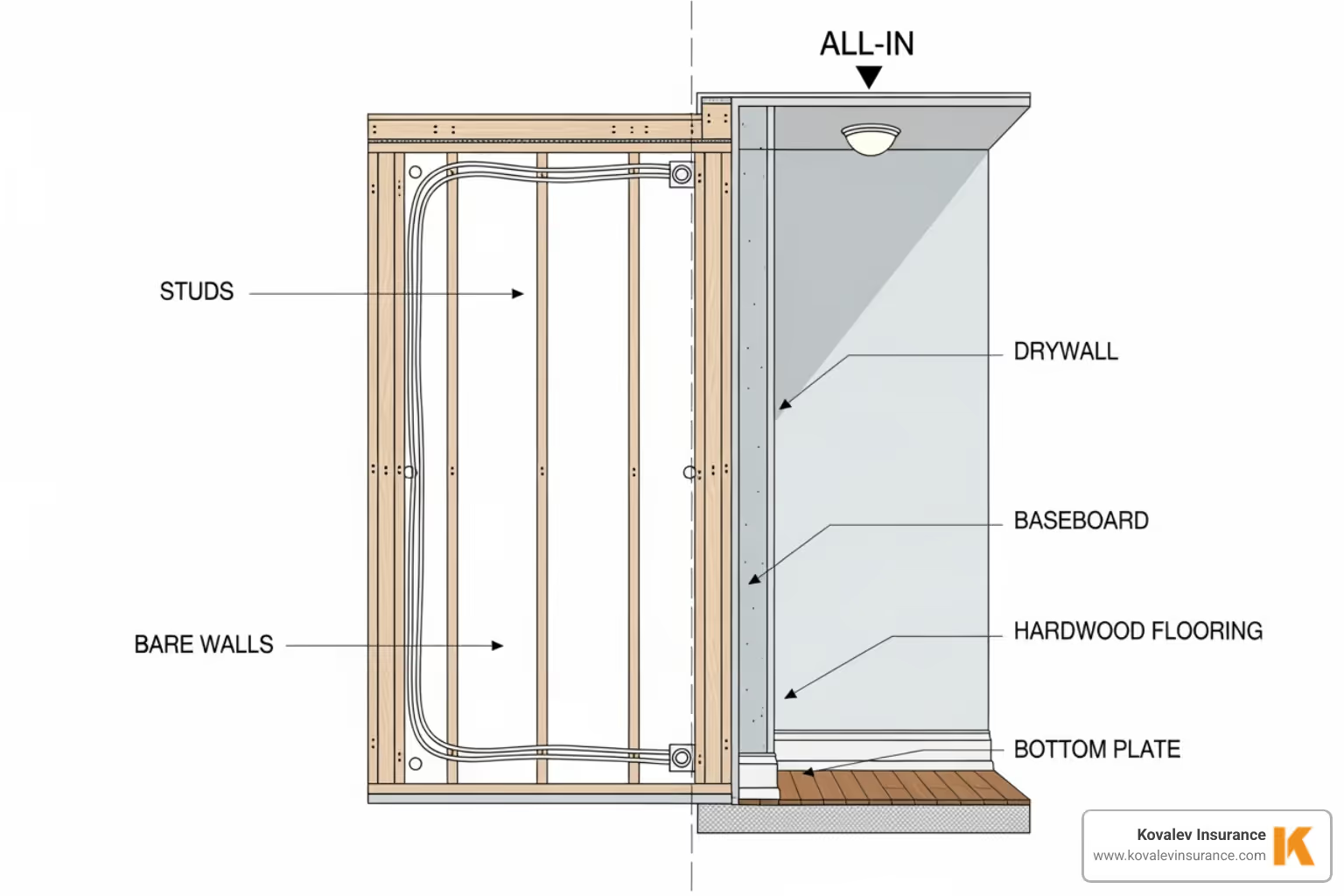
These coverage types define where the association's responsibility ends and yours begins.
At Kovalev Insurance, we see a trend toward the all-in model, as it simplifies claims and provides better protection. However, your association's Declaration of Trust is the final authority on coverage, not word-of-mouth.
Smart condo associations add specialized protection for unique Massachusetts challenges:
Finding the right master condo insurance massachusetts coverage isn't something you want to leave to chance. Think of it like choosing a contractor for a major renovation – you want someone who understands the unique quirks of Massachusetts buildings and the specific challenges condo associations face.
Your association's insurance needs are as unique as your community itself. A Victorian-era building in Brookline has different considerations than a sleek new development in Newton. That's why cookie-cutter insurance approaches rarely work for condo associations.

The process starts with understanding exactly what you're protecting. Property valuation is your foundation – you need to know the true replacement cost of your buildings if disaster strikes. This isn't about market value; it's about what it would cost to rebuild everything from the ground up using today's materials and labor costs.
Your association's bylaws and Declaration of Trust are your roadmap. These documents spell out precisely what the master policy must cover and what falls to individual unit owners. We've seen associations get into expensive disputes because their insurance didn't align with their governing documents.
Risk assessment goes beyond the obvious. You need to protect against fire and theft, but what about your specific amenities? That beautiful pool in your Needham complex increases liability exposure. The fitness center that makes your Wellesley community so desirable also creates additional risks that need coverage.
Working with an independent insurance agent makes all the difference. Unlike agents tied to a single company, we can shop multiple carriers to find the best fit for your association's specific needs. We'll attend board meetings, explain coverage options in plain English, and help you steer the complexities of Massachusetts insurance requirements.
Understanding your claims history helps too. Insurance companies look back five years when setting rates. A clean record can mean better premiums, while previous claims might impact your costs. We help associations understand how their history affects their options.
For more insights on working with local expertise, explore Unpacking Power Local Insurance Agent.
Several key factors determine what your association will pay for master condo insurance massachusetts coverage. Location plays a huge role – coastal communities face different risks than inland areas. A condo association near the water in Brookline might pay more due to storm exposure, while an inland community in Belmont might benefit from lower rates.
Building age and construction type significantly impact costs. Those charming historic buildings that give Massachusetts communities their character often come with higher insurance costs. Older electrical systems, original plumbing, and unique construction materials can increase premiums. Newer buildings typically enjoy lower rates thanks to modern safety features and building codes.
The size of your association matters too. More units mean more property to insure and more potential liability exposure. A 50-unit complex naturally costs more to insure than a 10-unit building, but the per-unit cost often becomes more economical with size.
Your coverage choices directly affect premiums. Higher liability limits provide better protection but cost more. Deductible selection offers a trade-off – higher deductibles lower your premium but mean the association pays more out-of-pocket when claims occur. Many associations choose deductibles between $1,000 and $10,000, balancing premium savings with financial risk.
Claims history can't be changed, but it heavily influences rates. Associations with frequent claims face higher premiums, while those with clean records often qualify for discounts. Risk management practices can help too – regular maintenance, security systems, and requiring contractors to provide insurance certificates show insurers you're serious about preventing losses.
The good news? Working with experienced agents who understand Massachusetts condo associations means you'll get coverage that fits your community's needs and budget. We help associations in Natick, Newton, and throughout the region find that sweet spot between comprehensive protection and reasonable costs.
Over the years, we've helped countless condo associations across Massachusetts steer the ins and outs of master condo insurance massachusetts. Here are the questions that come up most often in our conversations with boards and unit owners.
This is a great question that highlights why condo associations need specialized coverage. While master condo insurance massachusetts is technically a type of commercial policy, it's like comparing a Swiss Army knife to a regular knife - both cut, but one is designed for much more complex tasks.
Master condo insurance massachusetts is a highly specialized type of commercial property and liability policy designed for the unique shared ownership structure of a condominium association, addressing both common property and association-specific liabilities, which a standard commercial policy does not.
A standard commercial property policy works well for a business owner or landlord who owns an entire building. But condo associations face unique challenges: shared ownership structures, complex liability exposures from common areas, and the need to coordinate coverage with individual unit owners' HO-6 policies.
Your master policy needs to understand that Mrs. Johnson in unit 3B owns her kitchen cabinets (or maybe the association does, depending on your bylaws), while the hallway outside her door belongs to everyone collectively. A regular commercial policy simply isn't designed to handle these intricate ownership boundaries.
The specialized nature also extends to association-specific coverages like Directors & Officers liability, which protects volunteer board members from personal lawsuits related to their management duties. You won't find that in a standard commercial policy.
Determining the right coverage amount isn't guesswork - it's a methodical process that protects your entire community's financial future. The required coverage is determined by your association's bylaws, the full replacement cost of the buildings, and an assessment of liability risks. An independent local insurance agent can perform a valuation and review your documents to recommend appropriate limits for your specific community in Needham or Natick.
The starting point is always your association's bylaws and Declaration of Trust. These documents often specify minimum coverage requirements and spell out exactly what the master policy should cover. Whether you're managing a historic building in Brookline or a modern complex in Newton, these documents are your roadmap.
Next comes the full replacement cost valuation - essentially answering the question: "If our entire building disappeared tomorrow, what would it cost to rebuild everything exactly as it is today?" This isn't your property's market value or what you originally paid. It's the actual construction cost in today's dollars, including materials, labor, and all the permits and fees required in Massachusetts.
Liability risk assessment is equally important. A quiet residential building in Belmont has different exposure than a complex with extensive amenities. Do you have a pool where guests might slip? A gym with equipment that could malfunction? Walking paths that need winter maintenance? Each amenity adds to your liability exposure.
The good news is you don't have to figure this out alone. An experienced agent will review your documents, assess your property, and recommend appropriate coverage limits custom to your specific community's needs and Massachusetts requirements.
Here's where many board members breathe a sigh of relief. A master policy can include Directors & Officers (D&O) liability coverage. This protects board members from personal financial loss if they are sued for alleged wrongful acts or mismanagement while performing their duties for the association.
Think about it - board members are volunteers who give their time to manage what's often a multi-million-dollar property. They make decisions about budgets, maintenance, rules, and vendor contracts. Sometimes, despite their best intentions, someone disagrees with those decisions strongly enough to file a lawsuit.
D&O coverage steps in to protect board members' personal assets when they face claims alleging financial mismanagement, discrimination, failure to maintain common elements, or other "wrongful acts" related to their board duties. The coverage typically handles legal defense costs, settlements, and judgments, preventing board members from having to pay these expenses out of their own pockets.
Without this protection, capable people might hesitate to serve on the board, leaving your association without experienced leadership. It's one of those coverages that seems optional until you need it - then it becomes invaluable for both attracting quality board members and protecting the volunteers who keep your community running smoothly.
This coverage recognizes that serving on a condo board in Massachusetts involves real legal and financial risks, and good people shouldn't have to risk their personal financial security to help their community thrive.
Your condominium community is more than just a collection of units - it's a shared investment that deserves the strongest possible protection. Getting the right master condo insurance massachusetts coverage isn't just about checking boxes or meeting minimum requirements. It's about safeguarding the financial stability of your entire community and ensuring every unit owner can sleep soundly at night.
The reality is that insurance for condo associations involves layers of complexity that most board members and unit owners have never encountered. From understanding whether your association follows a "bare walls" or "all-in" approach to ensuring your policy limits match your actual replacement costs, there are countless details that can make or break your coverage when you need it most.
Why Local Expertise Matters
Massachusetts has its own unique regulations, weather patterns, and building challenges. A condo association in coastal Newton faces different risks than one nestled in the historic neighborhoods of Belmont. Your insurance agent should understand these nuances intimately, not treat your community like just another policy number.
At Kovalev Insurance, we've spent over a decade protecting Massachusetts condominium communities. We've walked through the lobbies of Brookline brownstones, assessed the modern amenities in Needham developments, and helped associations in Wellesley and Natick steer everything from water damage claims to board liability issues.
Our Approach to Your Association's Success
When we work with your condo association, we don't just sell you a policy and disappear. We become your insurance partners, attending board meetings when needed, explaining coverage options in plain English, and helping you understand exactly what you're getting for your premium dollars.
We start by thoroughly reviewing your association's Declaration of Trust and bylaws - because that's where the real coverage requirements live. Then we assess your property's replacement cost, evaluate your liability exposures, and shop multiple insurance carriers to find the best combination of coverage and value for your specific community.
The Kovalev Insurance Difference
Our team has protected over $1 billion in Massachusetts real property, including numerous condominium communities across Greater Boston. We understand that every association is different, and we tailor our recommendations accordingly. Whether you need basic property and liability coverage or comprehensive protection including Directors & Officers liability, flood insurance, and ordinance or law coverage, we'll design a program that fits your community's needs and budget.
Don't leave your community's financial future to chance or generic insurance solutions. Your association deserves an agent who understands the unique challenges of Massachusetts condo insurance and can provide the personalized service your board members and unit owners expect.
Ready to give your condo association the protection it deserves? Contact Best Insurance Agency Newton MA today for a comprehensive consultation. Let's work together to build the insurance foundation your community needs to thrive.



X