
Your customers see finished lawns, gardens, walkways, and outdoor spaces. Behind that work are crews, vehicles, equipment, contracts, and decisions that need protection. Kovalev Insurance Agency helps Massachusetts lawn care and landscaping businesses review the policies that fit their actual operations, whether they maintain residential properties, install landscapes, or serve commercial accounts.
The details matter. A company that mows and trims has a different risk profile from one that builds retaining walls, operates a skid steer, applies herbicides, and plows parking lots in winter. Tell us what you do today and what services you plan to add. We can help you compare available insurance options and identify questions to resolve before work begins.
Request a Landscaping Insurance Quoteor call our Newton office at 617-562-6060.
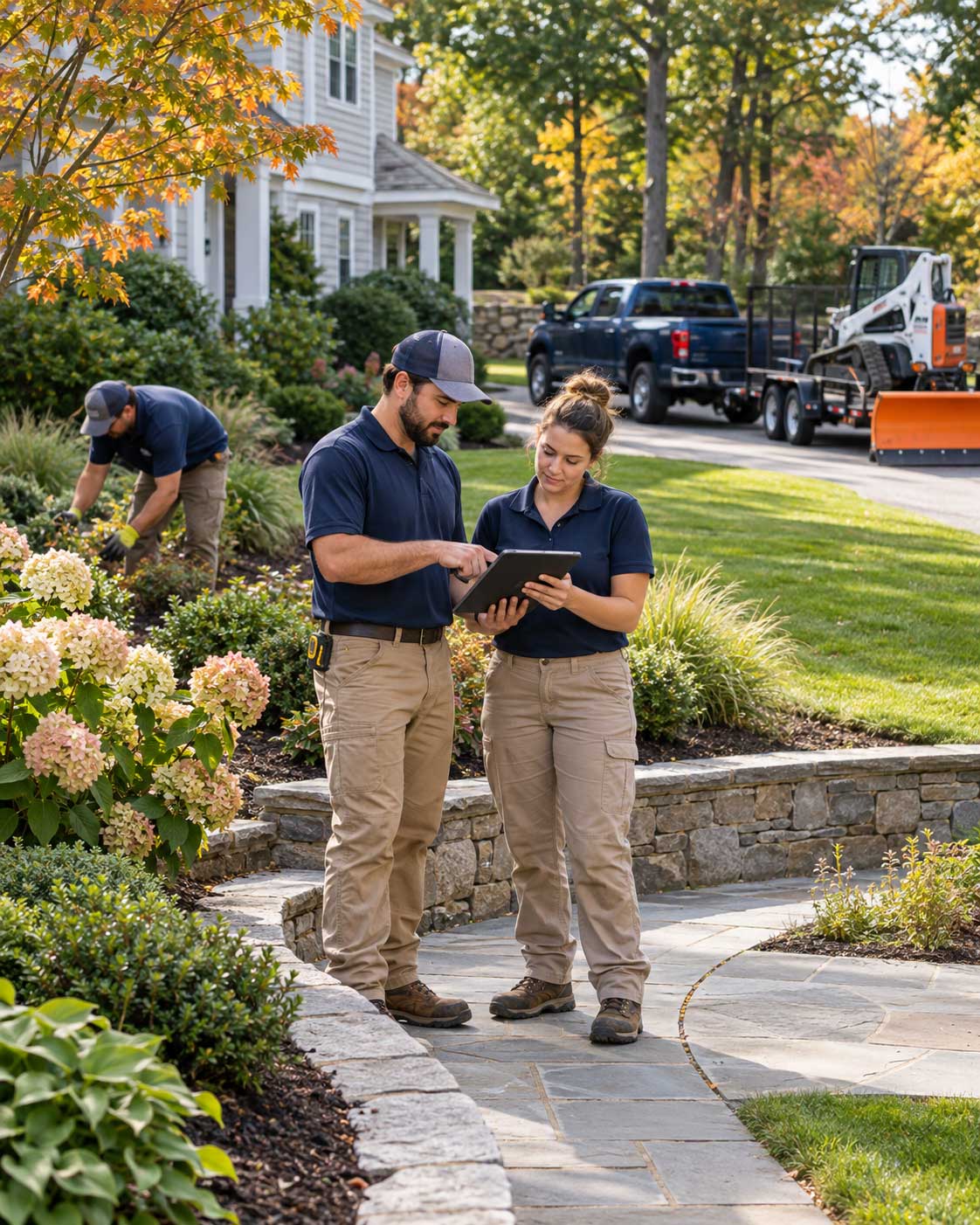
Landscaping insurance in Massachusetts is a combination of commercial policies selected for a company's actual services, employees, vehicles, equipment, and contracts. General liability may address certain third-party injury or property damage claims; commercial auto and contractors' equipment coverage address different losses. Massachusetts employers generally need workers' compensation for employees. Installation, hardscaping, chemical applications, tree work, and snow removal should be disclosed separately because eligibility, exclusions, and licensing requirements can change with the work performed.
There is no single policy that automatically covers every landscaper business. The policy mix depends on your work, the property you own, the people you employ, and the requirements in your customer contracts. Coverage always depends on the actual insurer, issued policy, limits, endorsements, and exclusions.
We can review insurance needs for businesses performing services such as:
This list describes activities to discuss, not a promise that every insurer will cover every operation. Substantial tree removal, excavation, design work, chemical applications, and winter maintenance can require different underwriting or policies. Give us a complete list of services, including work you subcontract, so an insurance proposal reflects the business you actually run.
If your business only performs recurring mowing and routine lawn maintenance, the coverage discussion may be narrower. If you also build outdoor features or use heavy machinery, we will review those exposures separately. For broader trade coverage, see our Massachusetts contractor insurance guide.
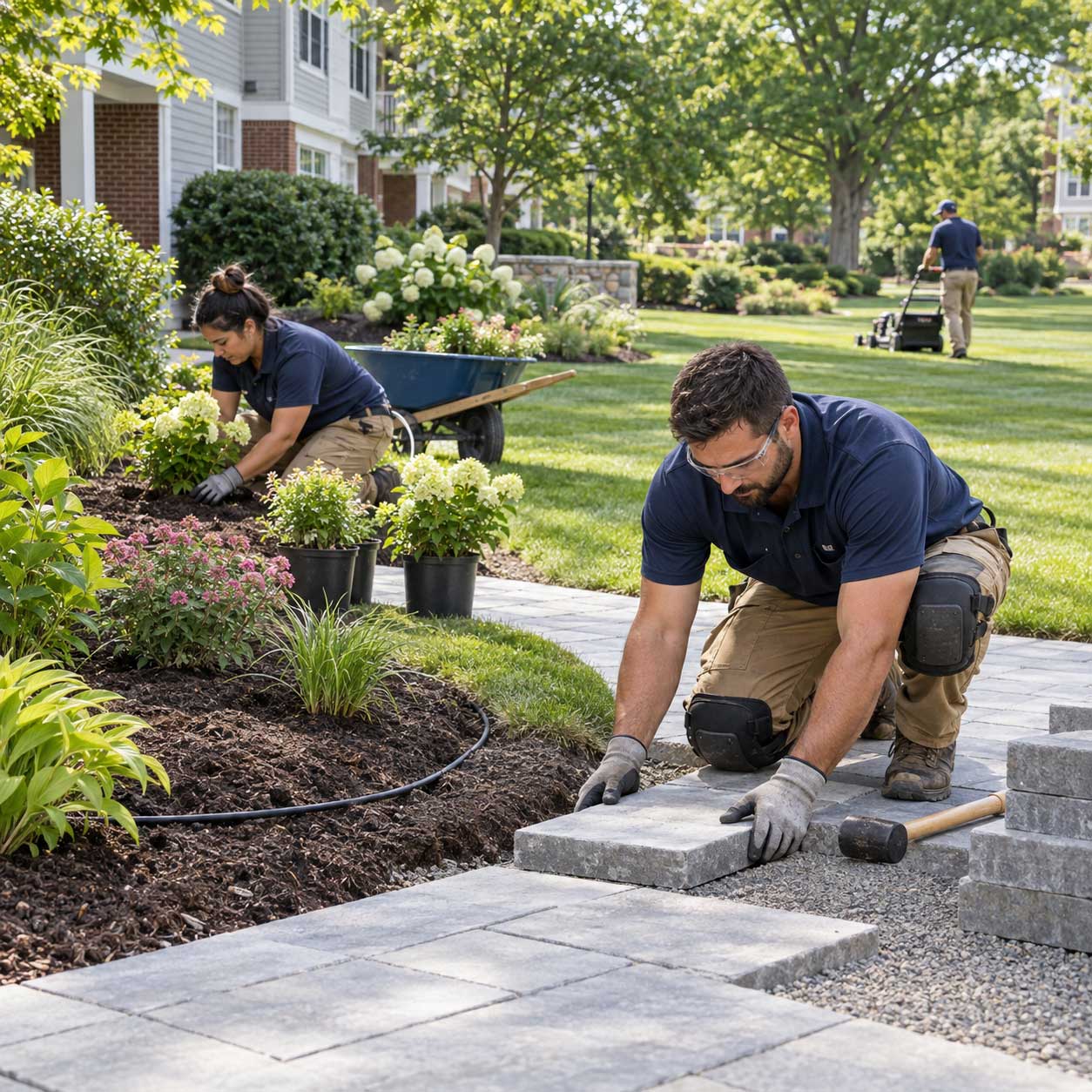
Most landscaping businesses need to consider several policies. The examples below show which coverage to discuss and which questions to ask; they do not determine whether a particular claim will be paid.
| Example exposure | Coverage to discuss | Confirm before relying on it |
|---|---|---|
| A crew damages a client's sprinkler line or neighboring property | Commercial general liability | Covered operations, property-damage exclusions, limits, and completed-work terms |
| A worker is injured while moving stone or operating equipment | Workers' compensation | Employee status, payroll, and the insured operations |
| A company truck causes an accident between job sites | Commercial auto | Listed vehicles and drivers, liability limits, trailers, and physical damage if selected |
| A mower or skid steer is stolen from a trailer or site | Contractors' equipment / inland marine | Item limits, valuation, theft and storage conditions, rented equipment |
| A shop, stored supplies, or business contents are damaged | Commercial property or an eligible BOP | Insured location, values, causes of loss, and deductibles |
| An application drifts or a chemical spill affects another property | Pollution or application-related liability | Products and methods disclosed, endorsements, exclusions, cleanup terms |
| A commercial contract requires higher limits | Umbrella or excess liability | Underlying policies, attachment points, and contract wording |
A crew damages a client's sprinkler line or neighboring property
A worker is injured while moving stone or operating equipment
A company truck causes an accident between job sites
A mower or skid steer is stolen from a trailer or site
A shop, stored supplies, or business contents are damaged
An application drifts or a chemical spill affects another property
A commercial contract requires higher limits

Commercial general liability may respond to certain claims of third-party bodily injury or property damage from covered business operations. Think of a crew accidentally damaging a client's fence, a visitor tripping over worksite materials, or a tool damaging adjacent property. It can also provide defense for covered claims, subject to policy terms.
General liability does not replace coverage for your own equipment, employee injuries, or business vehicles. Some policies may limit or exclude particular operations, such as substantial excavation, chemical applications, or tree work. If you install features or work around utilities and existing structures, make sure those activities are accurately described to the insurer.

Massachusetts generally requires employers to carry workers' compensation insurance for employees. Seasonal or part-time staffing does not, by itself, remove the requirement. The position of an owner or a purported independent contractor requires closer review; calling someone a “1099 worker” does not automatically determine their status. A sole proprietor without employees is generally not required to insure themselves, although they may be able to elect coverage. Review the Massachusetts workers' compensation requirements and owner guidance.
Workers' compensation is commonly arranged as its own policy. Share your employee count, payroll, job duties, seasonal hiring plans, and subcontractor relationships when requesting a quote. The policy and classification should reflect the work your crews perform, from mowing to installation and equipment operation.

Landscape work moves from property to property. Your vehicles may carry crew members, tools, plants, stone, and equipment while towing trailers. Commercial auto can address eligible vehicle liability and, if selected, physical damage to an insured vehicle. The vehicle, trailer, and property being hauled can present separate insurance questions.
Provide vehicle identification, use, driver information, and trailer details. Ask how a borrowed, rented, or employee-owned vehicle used for business should be handled. Do not assume a personal auto policy or coverage on the truck automatically protects all business driving or everything on the trailer.

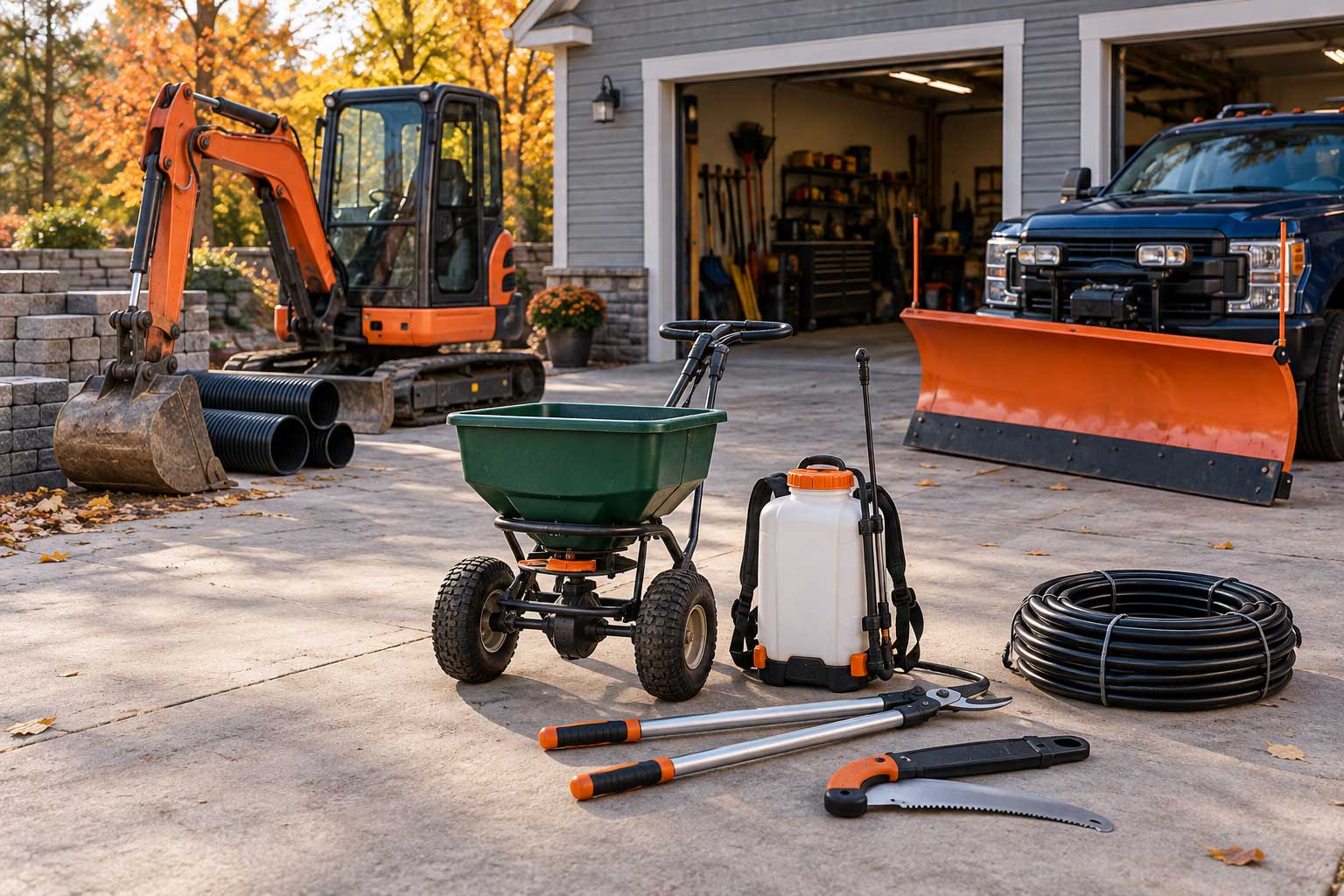
Mowers, compact loaders, skid steers, trenchers, trimmers, and power tools may travel daily and spend nights at a job site, in a trailer, or at a shop. Contractors' equipment coverage, often written as inland marine, may cover eligible movable property under its stated terms. Compare scheduled and unscheduled item limits, replacement-cost or actual-cash-value provisions, deductibles, theft conditions, and coverage for rented or borrowed machines.
An inventory helps. Record major equipment, serial numbers, values, storage locations, and how items move between sites. Revisit the list when you purchase or lease another machine; a general liability policy is not designed to replace your own stolen skid steer.

Commercial property coverage may address eligible losses at a shop, office, or storage facility. Some businesses may qualify for a business owner's policy (BOP) combining specified property and liability protections; eligibility and inclusions vary. Higher-limit commercial accounts may also justify discussing umbrella or excess liability.
If you provide landscape design or advice, sell or apply products, or handle fuels and chemicals, ask whether professional liability, products liability, or pollution-related coverage is appropriate. Those are separate questions, and their availability depends on the services and insurer. Do not assume they are automatically included in a general landscaping package.
Have a contract or existing policy to review? Request a Landscaping Insurance Quote.
Installing a patio, retaining wall, drainage system, or irrigation line involves different property-damage and completed-work concerns from weekly lawn care. A crew may work around buried utilities, structures, and existing landscaping, sometimes with rented machinery. Describe the type of installation, depth of excavation, equipment used, and whether you hire subcontractors. Ask specifically how the proposed policy treats those operations and finished work.
Fertilizer and pesticide work are related but not governed by the same rules. Massachusetts regulates plant nutrient applications to lawns and turf under 330 CMR 31.00. Pesticide application is addressed through a separate state licensing and certification program. The applicable credential and requirements depend on the work and products involved.
Tell your agent what products you apply, who applies them, where you work, and how you document applications. Ask whether the coverage proposal addresses drift, misapplication, runoff, and cleanup, and examine any pollution or chemical exclusions. Licensing compliance and insurance coverage should each be confirmed on their own terms.
Routine pruning, substantial tree removal, and work at height may be treated differently by insurers. Snow plowing and salting also change the business's seasonal exposure, particularly on commercial properties. Disclose these services before taking on a contract. A policy written for summer lawn maintenance should not be assumed to cover every winter or tree-service activity.
Start with workers' compensation if the business has employees. Then review the rules that match the work you perform. Massachusetts lists routine landscaping separately in its Home Improvement Contractor guidance; installation or construction activities require their own applicability review. Do not apply every HIC or Construction Supervisor License rule from a general contractor page to a company that only mows lawns.
Pesticide credentials and lawn nutrient rules are separate state topics, as explained above. Commercial vehicle requirements, municipal rules, and a customer's contract can also affect what a business must provide. A property manager's demand for a particular liability limit or additional-insured endorsement is a contract requirement, not a universal Massachusetts landscaping insurance minimum.
Bring the proposed contract, bid documents, or certificate-of-insurance request to your coverage review. Check the scope of work, required limits, additional-insured wording, waiver requests, and deadlines before you agree to terms. A certificate describes insurance information; it does not expand a policy or create coverage that is absent from it.
The useful number is the quote for your operations, limits, and equipment. A small mowing route and a company installing retaining walls with multiple crews and trucks should not expect the same price or policy mix. Premiums can be affected by:
An “affordable” policy is useful only if the insurer has the correct description of your business and the coverage addresses the risks that matter. Compare proposals using the same list of services and similar limits, deductibles, and property values. Ask about exclusions and any conditions for theft, chemical work, completed operations, or winter services. We will help you identify the differences that matter beyond premium alone.
You do not need to translate your work into insurance terminology before contacting us. A practical description of the business is the best starting point:
As an independent agency in Newton, Kovalev can discuss available insurance options for the work you disclose and help you compare policy terms. If you already have insurance, tell us what is changing—new equipment, more employees, larger commercial accounts, or a service you have never offered before. Those changes are good reasons to review the existing program before the next job begins.
Request a Landscaping Insurance Quote
Call Kovalev Insurance Agency: 617-562-6060
Usually, “landscaping insurance” describes a combination of policies selected for the business. General liability, workers' compensation, commercial auto, property, and equipment coverage address different exposures. Specialized operations may require further options. The exact combination depends on the insurer's eligibility rules and the work you perform.
The terms overlap, but the operations matter more than the label. A lawn care business may focus on recurring mowing, trimming, and turf maintenance. A landscaping contractor may also install plantings, irrigation, drainage, patios, or retaining walls. Disclose every activity so the insurer evaluates the real scope of work rather than a broad business name.
General liability generally addresses certain third-party claims, not theft of your own equipment. Ask about contractors' equipment or inland marine coverage. Verify item values, per-item limits, theft conditions, and whether a loss from a trailer, storage site, or customer's property would meet the policy terms.
Massachusetts generally requires employers to cover their employees, including seasonal or part-time employees. Owner and independent-contractor status can require more careful analysis. A sole proprietor without employees generally need not insure themselves but may be able to obtain coverage. See the state's workers' compensation requirements.
Not automatically. Tell the insurer which fertilizers, herbicides, and pesticides you apply and how the work is performed. Review applicable Massachusetts rules and credentials, then confirm whether the proposed insurance addresses the operation and relevant chemical-related claims. A pesticide credential does not, by itself, add insurance coverage.
It depends on the policy and whether the insurer accepted the winter operation. Plowing, salting, shoveling, and commercial snow contracts can create distinct exposures. Disclose the services, equipment, locations, and contracts, and confirm the policy terms before winter work begins.
Many property managers and commercial clients request a certificate and may specify limits or additional-insured wording. Send the exact request to your agent. A certificate documents policy information; any required endorsement and underlying coverage must be verified separately.
Contact your agent before launching the service. Installing hardscapes, renting heavy machinery, applying pesticides, performing tree removal, or taking on snow work can change eligibility and coverage. Review the new activity and any contract requirements with the insurer rather than assuming the current policy automatically extends to it.
Don't wait for an unexpected accident or a missed contract to force your hand. Protect your equipment, secure your liabilities, and legitimize your professional standing in the Massachusetts market.
Get Your Free, No-Obligation Landscaping & Snow Removal Insurance Quote
X