
You keep your customers’ properties looking their best. Kovalev Insurance Agency can help you protect the business, people, vehicles, and equipment that make that work possible. Whether you mow residential lawns, maintain commercial properties, or run multiple crews, we will review the services you actually provide and help you compare appropriate coverage options.
Request a Lawn Care Insurance QuotePrefer to talk through your work? Call our Newton office at 617-562-6060.
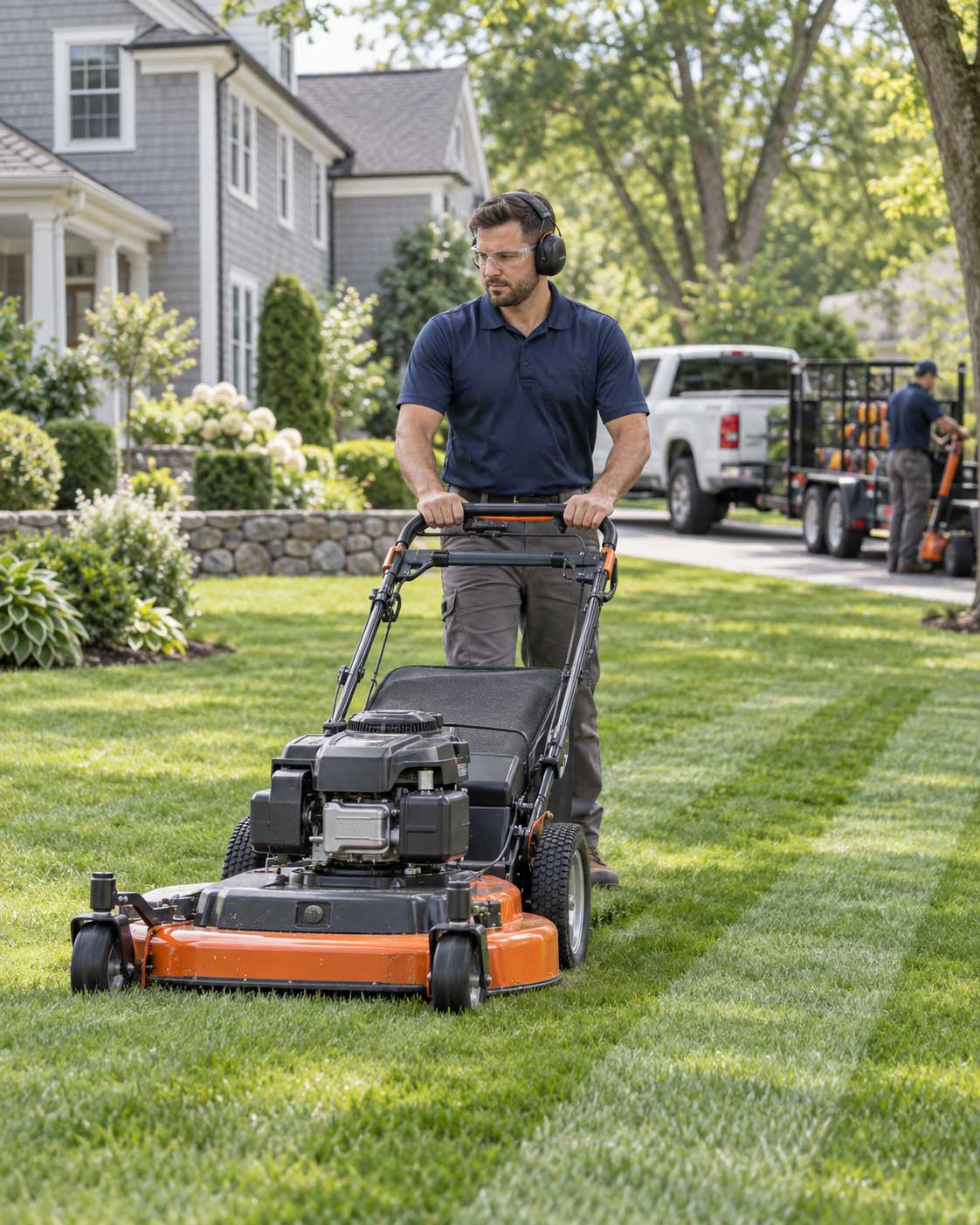
Lawn care business insurance in Massachusetts is a combination of policies selected for the work a company performs, such as mowing, trimming, fertilizing, or seasonal services. General liability can address certain third-party injury and property damage claims, while commercial auto and tools-and-equipment coverage address different risks. Massachusetts employers generally need workers’ compensation for employees. Chemical applications, tree work, and snow removal should be disclosed and reviewed separately because coverage and licensing requirements can differ.
There is no single policy that automatically covers every lawn care operation. A one-person mowing route has different exposures from a company with employees, trucks, pesticide applications, and contracts with property managers. The right starting point is a clear description of your work, followed by a review of policy terms, limits, endorsements, and exclusions.
We can discuss insurance needs with Massachusetts businesses that perform work such as:
Some companies also install patios, retaining walls, drainage systems, or irrigation systems, perform substantial tree work, or design landscapes. Those activities can change underwriting and coverage needs. Tell us about every service you offer, including work performed by subcontractors, so the quote reflects your actual operations. If installation and hardscaping form the core of your business, also review our Massachusetts contractor insurance guide.
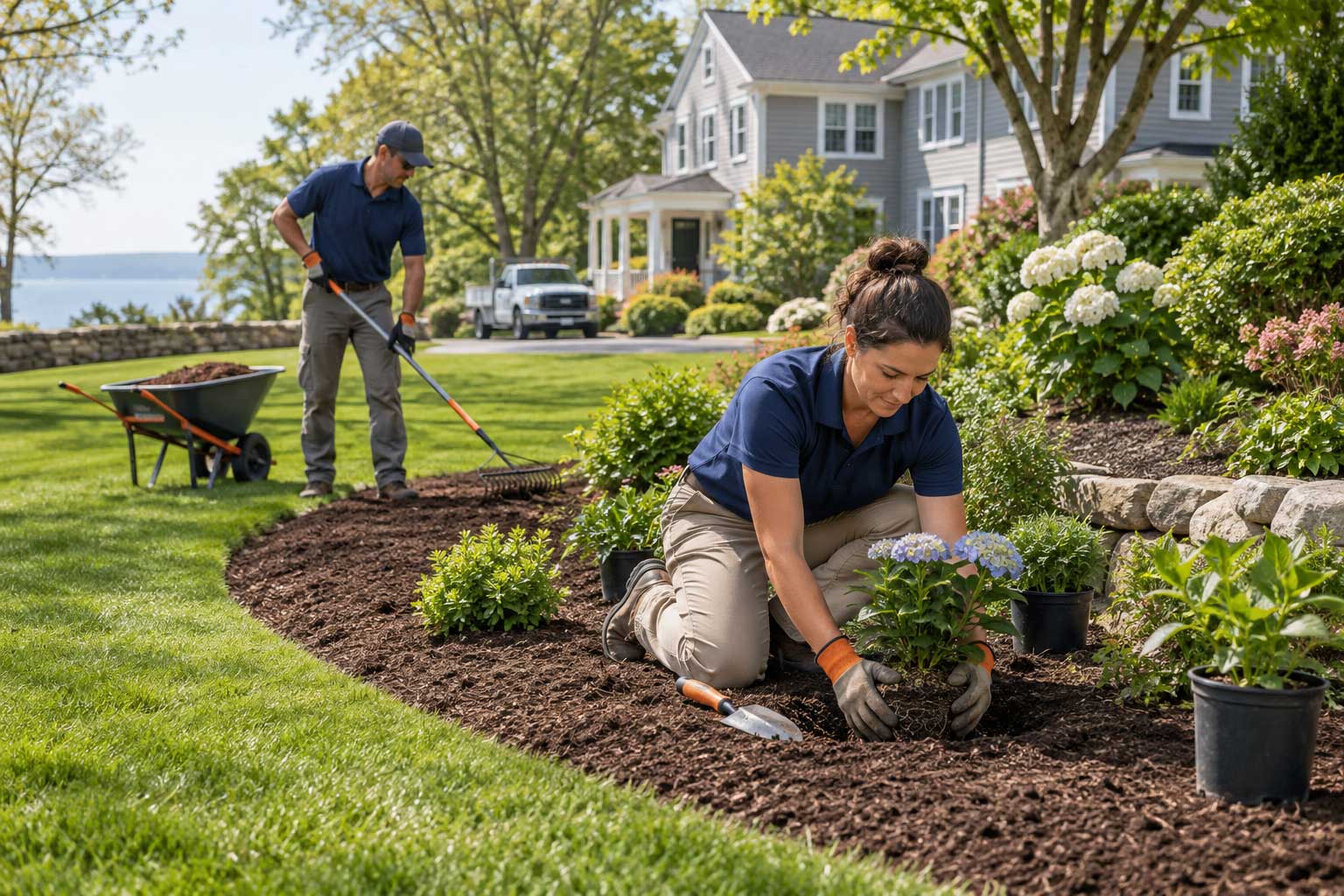
The mix depends on your employees, equipment, vehicles, services, and contracts. This table shows which policy to discuss for common exposures; it does not guarantee that a particular claim is covered.
| Lawn care exposure | Coverage to discuss | Detail to confirm |
|---|---|---|
| A mower throws a stone through a client’s window | Commercial general liability | Covered operations, property-damage terms, limits, and exclusions |
| An employee is injured while loading equipment | Workers’ compensation | Employee status, payroll, and the scope of the policy |
| A company truck is involved in a road accident | Commercial auto | Vehicles, drivers, trailers, and selected liability/physical-damage coverages |
| A mower or trimmer is stolen in transit or at a job site | Contractors’ tools and equipment / inland marine | Scheduled items, theft conditions, limits, deductibles, and rented equipment |
| Equipment or inventory at a shop is damaged | Commercial property or an eligible business owner’s policy | Insured location, valuation, and covered causes of loss |
| Herbicide drifts onto another property | Pollution or pesticide-related liability options | Whether the specific chemical-application operation and loss are covered |
| A commercial client asks for higher limits | Commercial umbrella or excess liability | Underlying policies, required limits, and contractual wording |
A mower throws a stone through a client’s window
An employee is injured while loading equipment
A company truck is involved in a road accident
A mower or trimmer is stolen in transit or at a job site
Equipment or inventory at a shop is damaged
Herbicide drifts onto another property
A commercial client asks for higher limits

Commercial general liability may help with certain third-party bodily injury and property damage claims arising from covered operations. A mower damaging a customer’s window is a familiar example. A property manager or customer may also ask for a certificate of insurance and additional-insured status before work begins. The requested limits and wording come from the contract and should be reviewed before you agree to them.
General liability is not a substitute for coverage on your own mower, your employee’s workplace injury, or an accident involving a business vehicle. It may also have exclusions or limitations affecting chemical work, tree work, or professional advice. Describe your services precisely when requesting a quote.

Massachusetts generally requires employers to carry workers’ compensation insurance for their employees. This matters even if a crew is small or a worker is part-time. The status of an owner, corporate officer, or purported independent contractor requires a more specific review; labeling a worker “1099” does not by itself settle whether that person is an employee. A sole proprietor without employees is not generally required to insure themselves, although coverage may be available. See the Massachusetts workers’ compensation requirements and guidance for corporate officers and sole proprietors.
Tell us how many people work in the business, what each does, and whether you use subcontractors. Payroll and the actual work performed affect the workers’ compensation review.

Your workday may involve driving between properties with mowers, trimmers, supplies, and a trailer. Commercial auto insurance addresses eligible vehicle-related risks; the coverage selected can include liability and, where purchased, physical damage to an insured vehicle. The truck, trailer, and equipment on the trailer may raise different coverage questions. Do not assume that insuring the truck automatically insures everything it carries.
Provide your vehicle list, driver information, trailer details, and how each vehicle is used. If employees use personal vehicles for business errands, ask us to review that exposure as well.

Zero-turn mowers, trimmers, blowers, and other tools travel between job sites and may spend nights in a truck, trailer, shop, or storage area. Contractors’ equipment coverage, often written as inland marine, can be tailored to eligible movable property. Review per-item limits, replacement-cost versus actual-cash-value terms, theft conditions, and whether rented or borrowed equipment is included.
Make an equipment inventory before you request a quote. Include high-value mowers, attachments, hand tools, trailers, and items you rent. This helps you identify gaps between what it would cost to replace the gear and the limits you select.

If you have an office, shop, or fixed storage location, commercial property coverage may address eligible property losses there. Some businesses may qualify for a business owner’s policy, or BOP, combining specified property and liability coverages. Eligibility and included coverage vary by insurer. A commercial umbrella or excess liability policy may be worth discussing when a client contract asks for higher limits or your operations create greater liability exposure.
Fertilizer and pesticide applications are distinct activities. Massachusetts has plant nutrient rules for lawns and turf, including restrictions affecting phosphorus applications and professional recordkeeping. The state separately licenses and certifies pesticide applicators. If you apply herbicides or pesticides, confirm the credential required for your work and disclose the products, application methods, and supervision arrangements during underwriting.
An ordinary general liability policy should not be assumed to cover every chemical-related claim. Ask whether pollution liability or a specific endorsement addresses the applications your company performs, and review any exclusions. Keep accurate work records and follow the applicable product and state requirements.
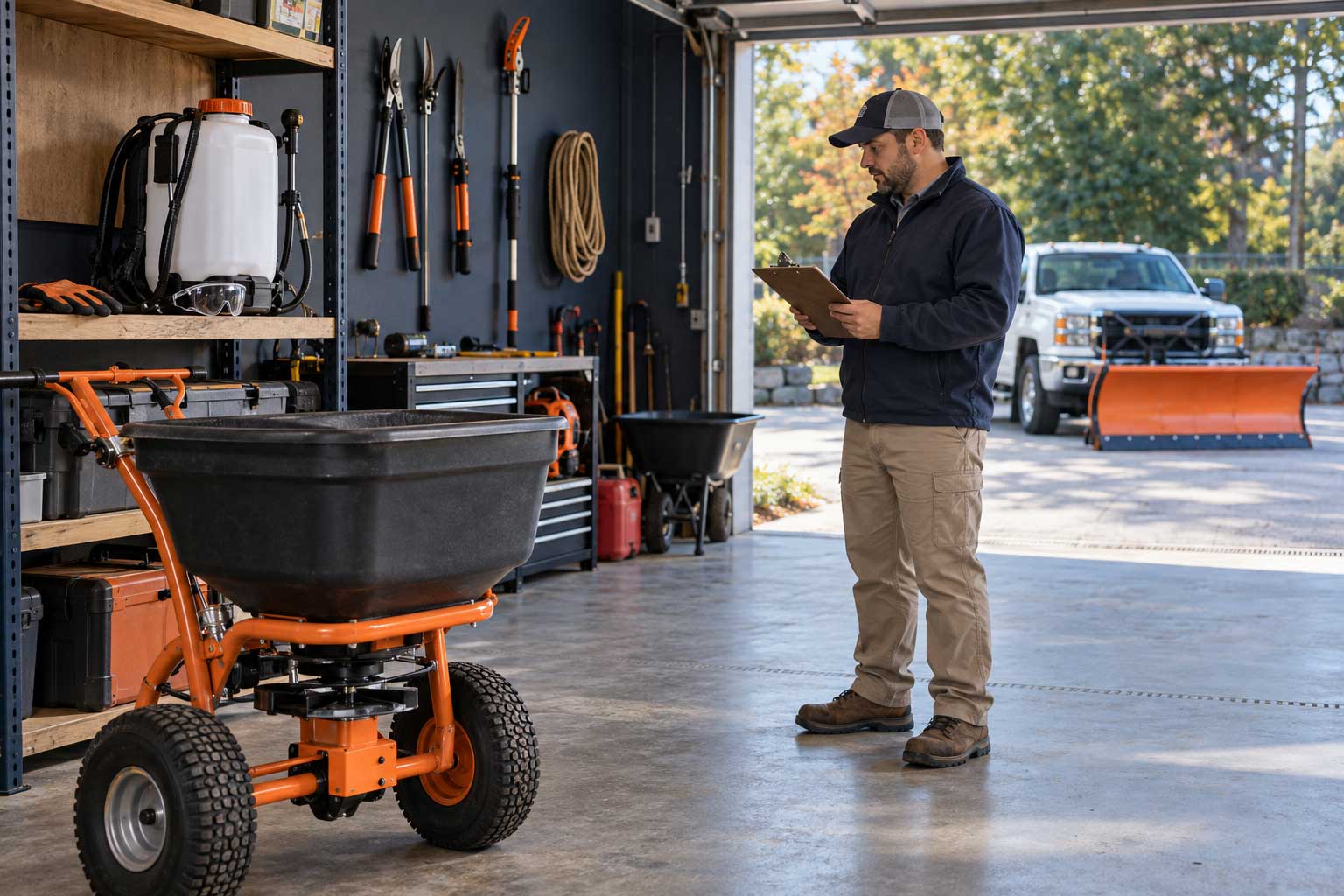
Tree removal, substantial pruning, excavation, irrigation installation, hardscaping, and snow plowing may also be treated differently from routine mowing. Seasonal plowing is particularly easy to overlook when a lawn care company changes services in winter. Discuss each operation before work starts rather than assuming it was included because the business already has a lawn care policy.
Massachusetts workers’ compensation requirements are an important starting point for businesses with employees. Other insurance requirements can arise from a customer’s contract, a commercial property manager’s vendor rules, a vehicle’s use, or the particular regulated service being performed. There is no universal lawn-care liability limit that fits every operator and every contract.
If your company moves beyond routine maintenance into construction or home-improvement work, review the licensing or registration rules that apply to the specific activity. Do not assume that every mowing business needs the same registrations as a building contractor. Likewise, do not assume that a certificate of insurance changes what the underlying policy covers.
Bring us a sample contract or certificate request. We can help you compare its insurance specifications with the policies and endorsements available to your business.
There is no reliable single price for every lawn care business. A solo mowing service with one truck and modest equipment has a different insurance profile from a company with several crews, high-value mowers, pesticide applications, and commercial contracts. Your actual quotes can reflect:
The lowest premium does not necessarily provide the coverage your work or contracts call for. Compare quotes using the same operations, limits, deductibles, and equipment values, and ask about material exclusions. For a deeper look at pricing factors, see our lawn care insurance cost guide.
You can start with an outline of your business. The more accurately you describe the work, the more useful the coverage review will be.
Kovalev is an independent Massachusetts insurance agency. We can review how your lawn care work fits available carrier options and help you compare the resulting coverage. If you already have policies, a review can also identify questions to raise before your next renewal or before you add a new service.
Request a Lawn Care Insurance Quote
Call 617-562-6060 to discuss your business with our Newton office.
A solo operator can still face third-party injury, property damage, vehicle, and equipment losses. General liability may also be requested by customers or commercial accounts. A sole proprietor without employees is generally not required to obtain workers’ compensation solely for themselves under Massachusetts rules, but their situation and contracts should be reviewed individually. Massachusetts guidance on sole proprietors explains the distinction.
Generally, general liability is meant for certain claims by others, rather than loss of your own equipment. Ask about contractors’ tools and equipment or inland marine coverage, and verify the policy’s trailer, transit, overnight-storage, theft, and per-item terms.
Do not assume a personal policy addresses all business use. Tell your agent who owns the vehicle, how it is used, who drives it, and whether it tows a trailer. Review commercial auto options and any other relevant vehicle exposures before relying on a policy for work-related driving.
Coverage depends on the policy, the precise operation disclosed, and any endorsements or exclusions. Massachusetts also has a separate pesticide licensing program. Tell us which products you apply and how; then confirm licensing and ask whether the proposed insurance addresses chemical-related liability. Massachusetts pesticide licensing information is a useful starting point.
Yes. Massachusetts regulates the application of plant nutrients to lawns and turf under 330 CMR 31.00. The rules include limitations on certain phosphorus applications and requirements that can affect professional applicators. Review the state regulation for your particular work; fertilizer rules and pesticide credentials should be evaluated separately.
Massachusetts generally requires employers to insure their employees, including part-time workers. Employee classification and ownership arrangements can affect the analysis. Discuss your staffing before hiring and consult the state workers’ compensation requirements.
Not automatically. Tell your agent whether you plow, shovel, salt, or manage snow for customers, along with the properties and equipment involved. Confirm that the winter operations appear in the insurer’s description of your business and review the applicable policy terms before the season begins.
Kovalev can review a client’s certificate request and the coverage you hold or are seeking. Share the required limits, additional-insured wording, and deadline. A certificate documents policy information; it does not itself broaden coverage or replace an endorsement required by the contract.
Don't wait for an unexpected accident or a missed contract to force your hand. Protect your equipment, secure your liabilities, and legitimize your professional standing in the Massachusetts market.
Get Your Free, No-Obligation Lawn Care Insurance Quote
X