Blog Content

27
Aug
2026
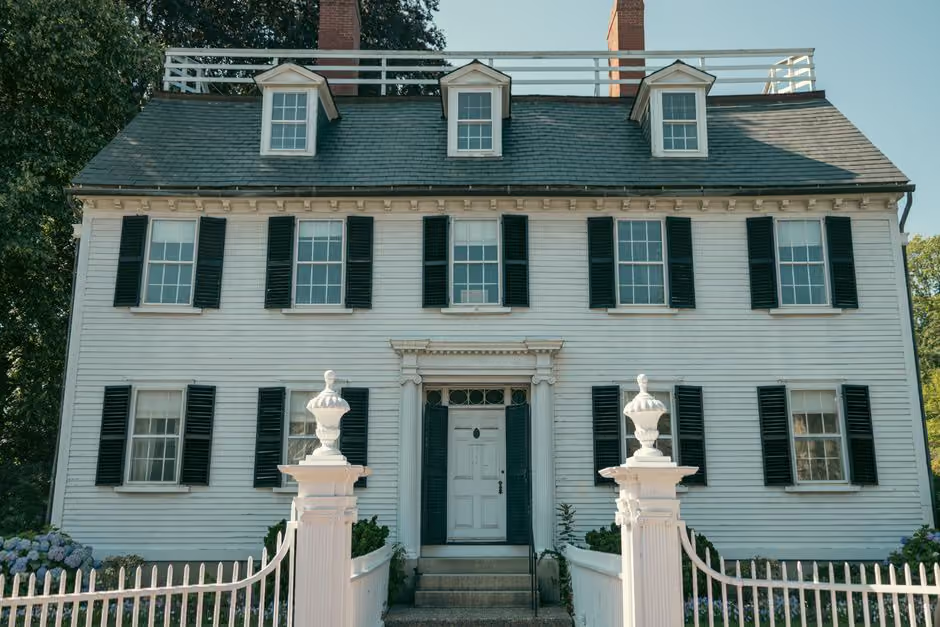
Second home insurance is a separate policy designed to protect a property you own but don't live in full-time — think a Cape Cod beach house, a Berkshires cabin, or a seasonal retreat in Wellesley or Needham.
Here's a quick answer to what most people want to know:
Your existing homeowners policy stops at your front door — meaning your vacation property in Brookline, Belmont, or anywhere else in Massachusetts is likely unprotected right now.
That's a real problem. Homes left unoccupied for weeks or months are more vulnerable to break-ins, slow water leaks, mold, and storm damage — and there's often no one around to catch it early. In Massachusetts, where winters are harsh and seasonal properties sit empty for months at a time, the stakes are especially high.
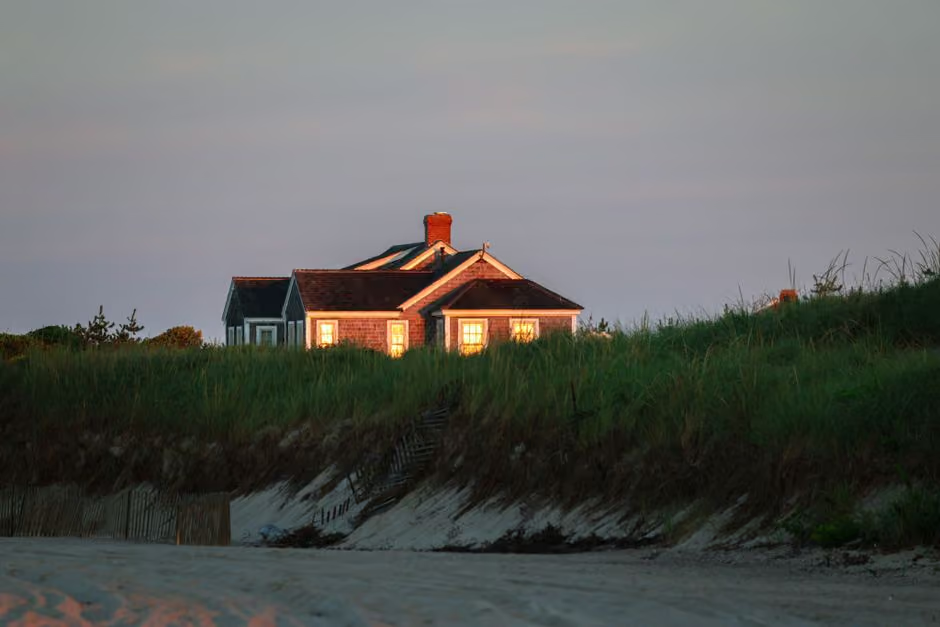
To understand how second home insurance works, we first have to look at what qualifies as a secondary residence. For insurance purposes, a second home is any property you own in addition to your primary residence that you use occasionally throughout the year. This includes a wide range of property types:
To make sure your investment is safe, you need to understand What Does Home Insurance Cover. Generally, a standard homeowners policy is written as an HO3 policy, which covers your primary residence on an "open perils" basis. To learn more about this standard coverage, you can check out our HO3 Home Insurance Guide 2026.
However, secondary residences don't fit neatly into standard primary policies. Because these properties are left unattended for long stretches, insurance companies view them as a completely different class of risk, which often requires a dedicated secondary home insurance policy. Massachusetts property owners can also review general consumer information from the Massachusetts Division of Insurance to better understand state insurance resources and protections.
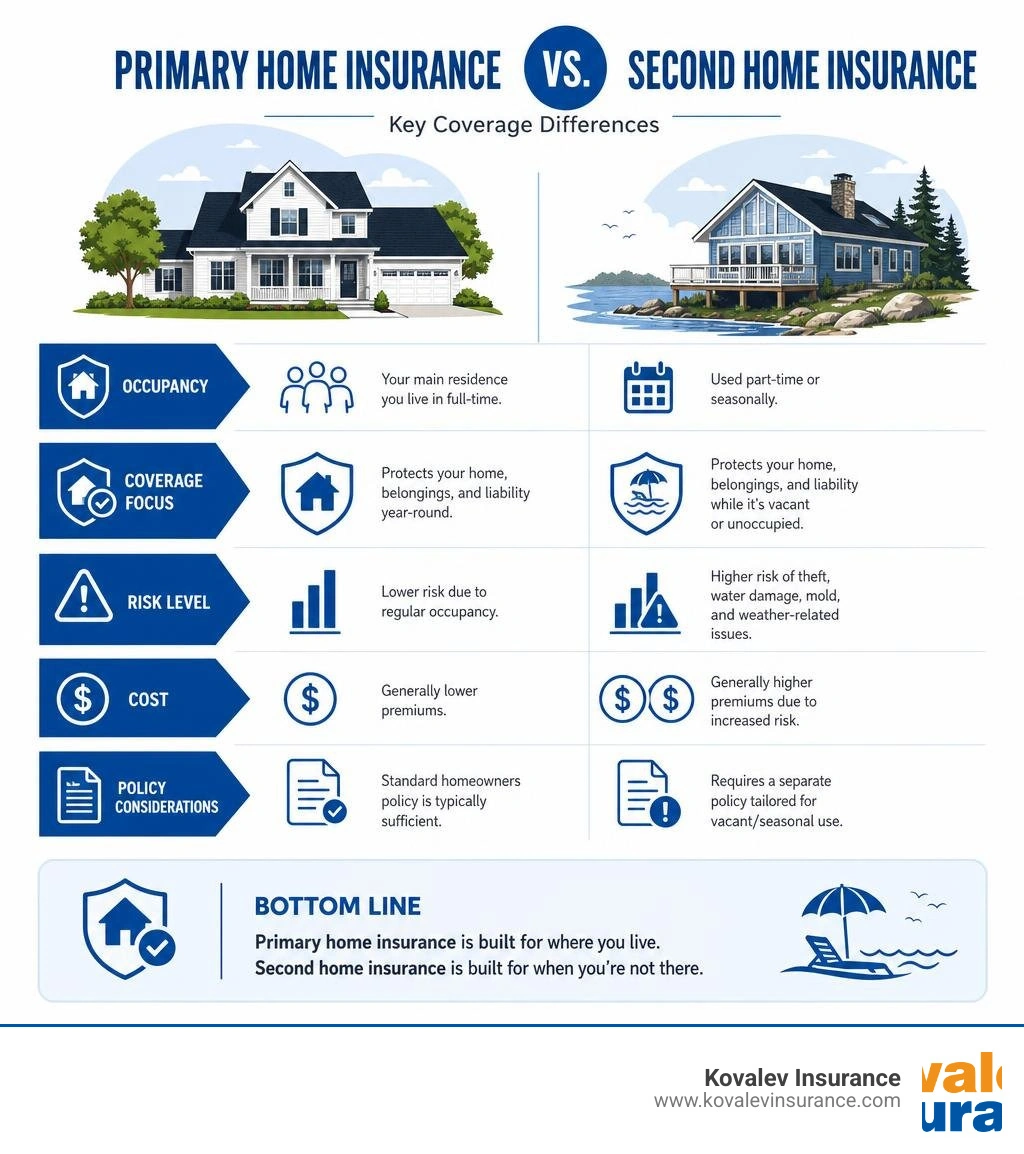
The short answer? Your primary homeowners policy is priced and written under the assumption that you are there almost every day to notice if a pipe starts leaking or a window gets broken.
When you buy a second property, your mortgage lender requirements will almost always mandate that you secure a separate policy before closing. Even if you buy the property in cash, going without coverage is an enormous financial gamble. Seasonal occupancy introduces an entirely different risk profile.
Unattended homes are prime targets for vandals, and a minor plumbing leak can easily turn into a catastrophic flood if left running for three weeks. If you want a deeper look at how Massachusetts property rules operate, our Massachusetts Home Insurance Guide 2025 covers the local landscape in detail. You can also consult with local insurance experts to understand regional underwriting differences and ensure your property is fully protected.
A dedicated second home insurance policy covers many of the same core areas as your primary policy, but often with different limits, exclusions, or premium structures. For a complete breakdown of property limits, read our Property Coverage Mass Guide.
The standard pillars of coverage include:
The biggest difference between your primary home and your vacation getaway is how often the property sits empty. Homes left unoccupied for extended periods are highly susceptible to damage such as leaks, burst pipes, fires, and undetected mold.
If a pipe freezes and bursts in your Newton primary residence, you'll likely hear it or see the water within hours. If the same thing happens in your winterized cabin while you are back home in Belmont, the water could run for weeks, causing tens of thousands of dollars in structural damage and rot.
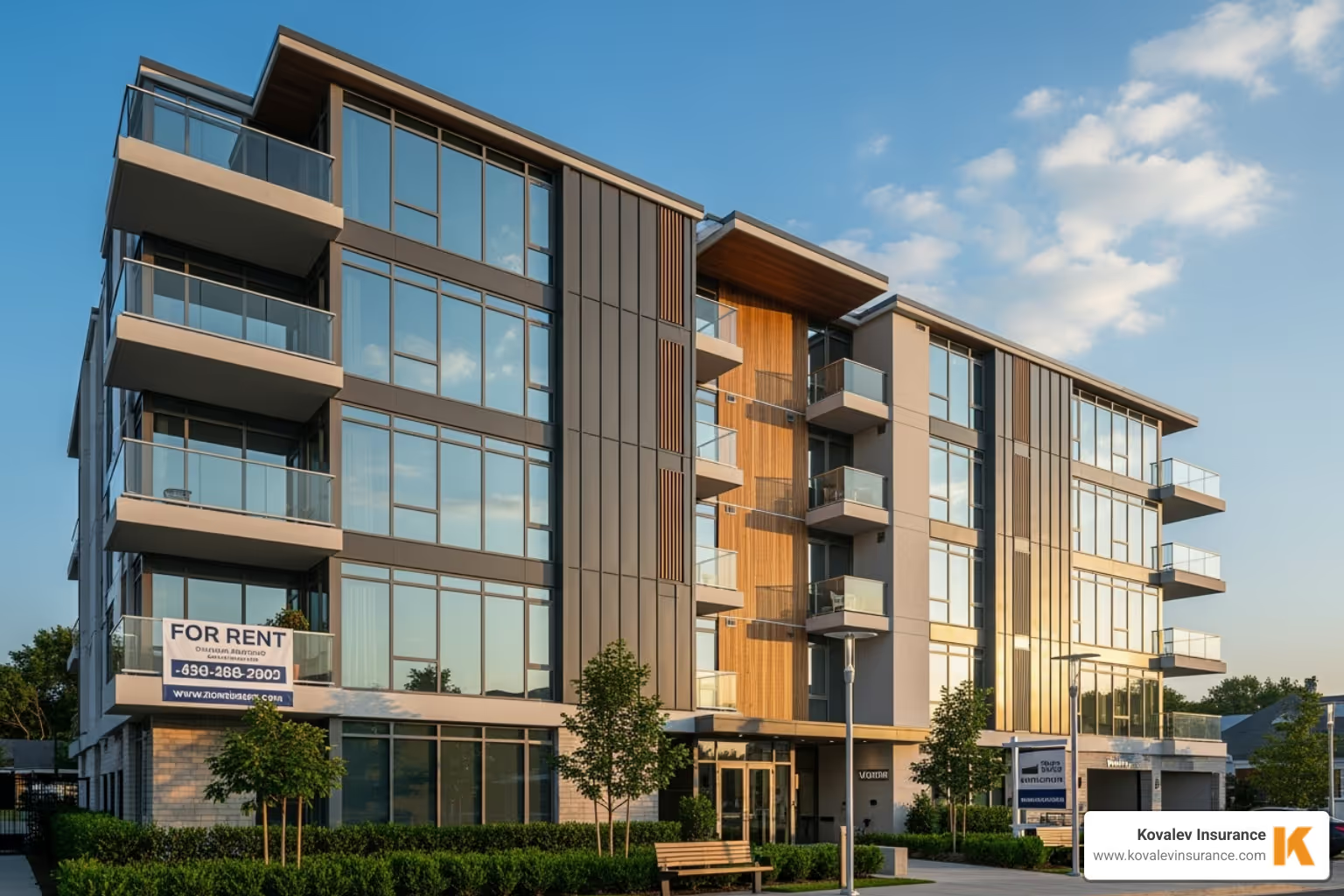
Renting out your second home also changes the insurance game entirely. If you occasionally rent your property on platforms like Airbnb, or if you lease it out long-term, standard property coverage won't cut it. You will likely need landlord insurance or a short-term rental endorsement.
Tenant or guest use can create additional liability and property exposure, especially for second homes in Newton, Belmont, Cape Cod, or the Berkshires that are occupied irregularly. If you manage your second home as a rental, securing your own landlord policy is crucial, and you should speak with local insurance professionals about tenant requirements, short-term rental rules, and coverage gaps before accepting bookings.

Owning a piece of the Bay State is a dream, but New England weather is notoriously unpredictable. From coastal storms on Cape Cod to heavy winter snowpacks in the Berkshires, your second home faces unique environmental threats.
If your secondary property is a high-value estate in Wellesley or Brookline, you'll want to read our guide on High Value MA Home Insurance to ensure your unique architectural details and high-end finishes are fully protected. For properties closer to the city, check out our insights on Home Insurance in Boston MA.
Why does second home insurance often cost more than primary home insurance? It all comes down to risk. Insurers calculate your premium based on several key factors:
To get an idea of standard rates in our state, you can read about the Average Cost of Homeowners Insurance in Massachusetts. To estimate your own costs, we recommend trying a Home Insurance Calculator Mass or reading our breakdown on How Much to Insure Home in Mass. For Massachusetts vacation properties near the coast, it is also wise to review local wind, flood, and storm exposure before choosing limits and deductibles.
Just because second home coverage carries a higher risk profile doesn't mean you have to break the bank. There are several highly effective strategies to lower your premiums:
If your property in Natick or Wellesley sits empty during the winter, complete these essential winterization steps to prevent claims:
At Kovalev Insurance, we don't believe in cookie-cutter insurance templates. Your vacation home is your personal sanctuary, and the policy protecting it should be as unique as the memories you make there.
Whether you need to secure a historic property in Brookline, a seasonal condo in Belmont, or a woodland retreat in Needham, our team brings speed, local expertise, and deep market knowledge to the table. We work with top-rated carriers to find you the best possible rates without compromising on necessary protections.
Ready to secure your peace of mind? Get personalized advice from Kovalev Insurance today, or visit our Kovalev Insurance Homepage to learn more About Kovalev Insurance and how we protect families across Greater Boston.

X